Why Dominic Cummings is Johnson’s most important appointment (Spectator)
The closest analogy to the government Boris Johnson is forming is Blair’s and Brown’s New Labour government of 1997, when they appointed super powerful political advisers – Campbell, Powell, Balls, Whelan – to boss conservative Whitehall.
That is what Johnson is doing – in spades – by making former Vote Leave campaign chief Dominic Cummings his de facto chief executive as senior advisor, because Cummings is NEVER a passive adviser. Cummings has an extraordinary sense of purpose and objectives – and pity those who get in his path.
Cummings’s mandate is to deliver Brexit in 99 days, and in his spare time he’ll endeavour to reform Whitehall, since one of his obsessions is that the civil service is unfit for modern government. Sir Humphrey will be anxious, but so too will ministers and many Tory MPs, including Brexiters, who still nurse bruises from their encounters with him when he ran Vote Leave and earlier when he was an adviser to Michael Gove.
As proof that Johnson is placing serious trust in Cummings is that so many of Cummings’s Vote Leave team are moving in to Downing Street: Lee Cain as director of communications, Rob Oxley as press secretary and Oliver Lewis as a Brexit policy adviser.
Pessimism of the Intellect, Optimism of the Will Favorite posts | Manifold podcast | Twitter: @hsu_steve
Showing posts sorted by relevance for query dominic cummings. Sort by date Show all posts
Wednesday, July 24, 2019
Dominic Cummings "de facto chief executive" for UK Prime Minister Boris Johnson
Dominic Cummings sporting an OpenAI shirt. Great messaging! Go Dom :-)
Tuesday, November 05, 2013
Learning can hurt: UK edition
This BBC Radio 4 discussion focuses on the recent kerfuffle in the UK over revelations that *gasp* genes affect cognitive ability. "Combative, provocative and engaging debate" :-) @28:28 ad hominem attack on Plomin and BGI by leftist activist David King, well handled by moderator.
Genetics and education (BBC Radio 4)It was Dominic Cummings' long essay Some Thoughts on Education and Political Priorities ("leaked" by the Guardian!) that sparked this controversy. See fun Endnote and a few references to this blog.
Duration: 43 minutes
First broadcast: Wednesday 30 October 2013
For centuries philosophers and theologians have wrestled with the question of nature versus nurture. Increasingly and for some controversially, the science of behavioural genetics is starting to come up with some of the answers. The argument is perhaps at its most sensitive when applied to education. When it was revealed that Education Secretary Michael Gove's outgoing special advisor, Dominic Cummings, called for education policy to incorporate the science behind genes and cognitive development he broke a modern taboo and there was a predictable outcry. In a wide ranging paper Mr Cummings cited the work of Professor Robert Plomin who's about to publish a book with psychologist Dr Kathryn Asbury which calls for "genetically sensitive" schooling. It's based on a study of how genes and environment have shaped the development of over 10,000 twins who were studied from birth to early adulthood. The scientists say their work is about probability not prophecy and can be used to personalise education and create better outcomes for all, but fears of genetic determinism are deeply ingrained. How should we use genetics in education? Science is a very long way from knowing exactly which genes influence individual differences in learning but as knowledge in this field advances that time will surely come. We already use genetics to screen for various medical conditions, so why not for learning abilities? And what happens if, or when, the science of genetics becomes so powerful that we can identify different populations that are endowed with different genetic make-ups that we believe are more or less desirable? Is that just a scientific inevitability that we have to come to terms with, or does it open the door to eugenics? How should we use the science of genetics?
Combative, provocative and engaging debate chaired by Michael Buerk. With Michael Portillo, Melanie Phillips, Giles Fraser and Matthew Taylor. DR KATHRYN ASBURY - York University, co-author of 'G is for Genes', DR ANDERS SANDBERG - Research Fellow at the 'Future of Humanity Institute', Oxford University, DR DAVID KING - Founder and Director of the campaign group 'Human Genetics Alert', STEVE DAVY - Teacher at the Wroxham school, Potter's Bar.
Dominic Cummings, Genius or Menace? (Guardian): Dominic Cummings is arguably the most brilliant and most controversial special adviser in the coalition. Long seen as a driving force in the Department for Education, he demanded more from a bureaucracy that Conservatives believe was temperamentally sympathetic to Labour.Ideas and scientific evidence matter, especially (hopefully!) in the long run.
Some see him as a menace, given to frank exchanges with civil servants and, on occasions, journalists. Others see him as a genius, consistently driving higher standards, clearer exams and taking on the "blob", the Tory term of abuse to describe the educational establishment.
Born and educated in Durham, he secured a first in ancient and modern history from Oxford and worked for Iain Duncan Smith when he was leader of the opposition. In his portrait of the coalition, In It Together, Matthew d'Ancona describes Cummings as being "mild mannered by temperament except when he was not. His volcanic outbursts had astonished Duncan Smith in 2002 when he had briefly been the party's director of strategy". Post-election, Andy Coulson, director of communications, blocked Cummings' appointment as a government adviser on the basis that he might be too independent and a disruptive force. But Michael Gove continued to rely on him from afar and, when Coulson resigned, the education secretary rapidly appointed him.
His 250-page screed sprawls across a vast canvas about the future, education, Britain's place in the world and disruptive forces ahead. Quite frankly, much will pass over the average reader's head. It is either mad, bad or brilliant – and probably a bit of all three.
Keynes: "Practical men, who believe themselves to be quite exempt from any intellectual influence, are usually the slaves of some defunct economist. Madmen in authority, who hear voices in the air, are distilling their frenzy from some academic scribbler of a few years back. I am sure that the power of vested interests is vastly exaggerated compared with the gradual encroachment of ideas."
Friday, December 13, 2019
Now it can be told: Dominic Cummings and the Conservative victory 2019
Dominic Cummings has done it again!
The scale of ... triumph cannot be exaggerated. He ... had brought about a complete transformation of the European international order. He had told those who would listen what he intended to do, how he intended to do it, and he did it. He achieved this incredible feat without commanding an army, and without the ability to give an order to the humblest common soldier, without control of a large party, without public support, indeed, in the face of almost universal hostility, without a majority in parliament, without control of his cabinet, and without a loyal following in the bureaucracy. -- Brexit: victory over the Hollow MenA few remarks. As you know I am a Rationalist and a Realist: epistemology, proper calibration of beliefs, accuracy of prediction, Bayesian reasoning, update of priors, etc. etc.
I can tell you that Dom prepared for this outcome as far back as summer 2019, before he joined No 10 Downing Street. They were deadly serious about Brexit. If they could have gotten it done in the fall, they would have. But the larger goal was positioning to win a general election. People vs Parliament, Betrayal of Democracy, Get Brexit Done. Those were the themes carefully prepared in every tactical decision along the way.
There were difficult times in the last months. I was amazed by his courage and quiet stoicism. Look up the Finnish term, Sisu. Familiar to those that attempt something great against difficult odds.
I watched the media report on UK politics, while simultaneously having some knowledge of what was really happening -- prorogation of Parliament, negotiations with the EU, Farage and the Brexit Party. My opinion of the UK and US media cannot be lower. All noise, little signal -- much of what is stated at high confidence is simply not true. (More evidence? Read the latest IG report and compare to what is said about it in national media...)
Everything is in Dom's blog. Out in the open to be read by anyone with enough intelligence to understand him. How many did? Almost none.
Dominic Cummings: You guys should get outside London and go to talk to people who are not rich remainers.What does he want? Why is he doing this? Not for money, not for fame. For love of country and human progress and civilization. Dom's dream is to make the UK a global center for science, technology, and education. He may succeed, he may fail. But he will get his chance to further shape the history -- the future -- of his homeland. Don't bet against him.
On election night, I was told that Dom's small team of physicists / data scientists had called the results more accurately than anyone else ;-)
See also
How Brexit was won, and the unreasonable effectiveness of physicists
Brexit in the Multiverse: Dominic Cummings on the Vote Leave campaign
Dept. of Physicists Can Do Stuff: Brexit!
Added: This article is reasonably accurate, as far as I can tell:
We’re all living in Dominic Cummings’ world now (Politico.eu)
Some Remarks on Brexit: I don't know enough to have a high confidence or high conviction opinion concerning Brexit. Intelligent and thoughtful people disagree strongly over whether it is a good idea or a potential disaster.
Nevertheless, I can admire Dom's effectiveness as a political strategist and chief advisor to the Prime Minister. I do know him well enough to state with high confidence that his intentions are idealistic, not selfish, and that he (someone who has spent decades thinking about UK government, foreign policy, relations with Europe) sincerely thinks Brexit is in the best interests of the British people. Dom has deeper insights and better intuition about these issues than I do!
Being a rationalist, Dom has pointed out on his own blog that it is impossible to know with high confidence what the future implications of most political decisions are... In that sphere one cannot avoid decision making under extreme uncertainty.
Brexit: Down to the Wire (October 2019):
Get ready for the general election!
Over the summer I was at the Tallinn Digital Summit in Estonia. At dinner, sitting across from a UN official, I expressed to his initial incredulity that the victory of Vote Leave three years ago was a triumph of the human spirit: a small team of talented individuals defeated overwhelmingly powerful forces arrayed against them -- the UK government, the media, the elites. After some discussion, he came to understand my perspective. ...
Wednesday, April 28, 2021
Let The Bodies Pile High In Their Thousands (Boris Johnson)
Recording a conversation in secret is not a criminal offence and is not prohibited. As long as the recording is for personal use you don’t need to obtain consent or let the other person know.The security man in the foyer of No 10 Downing Street asks that you turn off your phone and deposit it in a wooden cubby shelf built into the wall. I sometimes wondered what the odds were that someone might walk out with my phone -- a disaster, obviously.
But it is not difficult to keep your phone as close attention is not paid. (Or, one could enter with more than one phone.) I'm not saying I have ever disobeyed the rules but I know that it is possible.
Of course the No 10 staffers all have their phones, which are necessary for their work throughout the day.
Thus every meeting at the heart of British government is in danger of being surreptitiously but legally recorded.
Dominic Cummings 'has audio recordings of key government conversations', ally claims (Daily Mail)
Dominic Cummings 'has audio recordings of key government conversations' and 'can back up a lot of his claims', ally of the former chief adviser says.
Dominic Cummings kept audio recordings of key conversations, an ally claims Former chief adviser is locked in an explosive war of words with Boris Johnson.
Whitehall source said officials did not know extent of material Mr Cummings has.
Dominic Cummings kept audio recordings of key conversations in government, an ally claimed last night. The former chief adviser is locked in an explosive war of words with Boris Johnson after Downing Street accused him of a string of damaging leaks.
No 10 attempted to rubbish his claims on Friday night, saying it was not true that the Prime Minister had discussed ending a leak inquiry after a friend of his fiance Carrie Symonds was identified as the likely suspect. But an ally of Mr Cummings said the PM's former chief adviser had taken a treasure trove of material with him when he left Downing Street last year, including audio recordings of discussions with senior ministers and officials.
'Dom has stuff on tape,' the ally said. 'They are mad to pick a fight with him because he will be able to back up a lot of his claims.Dom is an admirer of Bismarck. Never underestimate him.
"With a gentleman I am always a gentleman and a half, and when I have to do with a pirate, I try to be a pirate and a half."Tories scramble to defend Johnson: Politics Weekly podcast (Guardian)
Note the media have no idea what is really going on, as usual.
Sunday, June 26, 2016
Brexit: victory over the Hollow Men
Congratulations to Dominic Cummings, a formidable man. I met Dominic at SCI FOO in 2014. We talked long into the night, and I came away impressed with his tenacity and capability for long term planning. He urged me to study Bismarck.
The Telegraph: The long war: how Vote Leave and the Eurosceptics wonSee also The Hollow Men:
“Vote Leave, take back control”.
The phrase was the brainchild of the man who masterminded the Brexit campaign: Dominic Cummings. Vote Leave insiders say that Mr Cummings, more than anyone else, is responsible for delivering the result for Brexit.
A former special adviser to Michael Gove, Mr Cummings was already a controversial figure in Westminster. Combative and fiercely intelligent, he clashed repeatedly with the Prime Minister’s advisers, and was blamed by Number 10 for a succession of critical briefings to the media.
He was adamant that Vote Leave would not work with Nigel Farage or the other leave campaign groups which had formed – Leave.EU and Grassroots Out, both of which had Ukip support and money from the wealthy Ukip backer, Arron Banks.
But in February, Mr Cummings faced a crisis. Vote Leave was battling against the rival groups to win official recognition from the Electoral Commission watchdog as the designated Leave campaign. At stake was the entitlement to a free nationwide mailshot, TV referendum campaign broadcasts and a higher spending limit of £7 million during the campaign.
Kate Hoey, the pro-Brexit Labour MP quit Vote Leave to join Grassroots Out, saying she could not work with Mr Cummings or Matthew Elliott, the chief executive of Vote Leave. She accused the pair of spreading “lies” about fellow activists and said they had deliberately undermined attempts unite the rival Brexit groups.
Yet, Mr Cummings won the battle for designation as the official campaign - and went on to win the referendum. With a group of only 60 staff inside Westminster Tower and minimal resources, Mr Cummings virtually single-handedly plotted an “asymmetric” campaign against almost the entire political and financial establishment.
“He is a great guy,” one Vote Leave insider says. “He inspires fierce loyalty from everybody who works with him but he rubs people up the wrong way because he has got no time for fools.”
With a background in science, Mr Cummings bases everything he does on rigorous research. He commissioned detailed surveys, ran "quizzes" on commercial websites to test voters’ views, and oversaw focus groups that tested Vote Leave’s key campaign messages.
By early May, he had settled on the three key points that would form the basis for the final weeks of the campaign: a promise to take back control of £350million a week of taxpayers’ spending from Brussels; a promise to take back control over immigration; and warnings that countries such as Turkey and Serbia were in line to join the European Union in the years ahead.
All these points had been rigorously tested in focus groups. The most striking reaction from voters in the discussions was to Turkey’s accession to the EU.
“When Turkey comes up, light the blue touch paper and take a step back,” one Vote Leave source said at the time.
“People say ‘this is insane, this country is totally wrecked if that happens. These are countries at war, they are full of terrorists.’"
Meanwhile, Mr Cameron’s campaign had recruited Barack Obama to warn that Britain would be at the “back of the queue” for a new trade deal if it voted to leave the EU.
Vote Leave’s focus groups showed that this ploy had backfired. Voters resented the US President’s intervention and did not believe the economic “scaremongering” that the Prime Minister was putting forward, even though it was supported by the International Monetary Fund and the Bank of England, among others.
But the Leave campaign had to transform public support into votes.
Mr Cummings was forced to design and build a database of voters entirely from scratch in order to map exactly the streets and postcodes around the UK which were likely to vote to Leave. This enormous process of building a database of 46million voters could not even begin until February.
But the information was critically important so that on polling day last Thursday, Vote Leave’s army of 20,000 volunteers knew which doors they had to knock on in order to get their voters to turn out.
Mr Cummings also used cutting-edge technology to target his messages at precisely the individuals who were receptive to his messages. He hired data specialists from America and Canada, who analysed polling evidence and information from Facebook in order to build up a picture of their target voters.
By the end of the referendum campaign, Vote Leave had spent well over £1 million on Facebook, YouTube and other online advertising, sources suggested.
Vote Leave had attracted 553,000 “likes” on Facebook, just short of the 556,000 people who supported the official Remain campaign, Britain Stronger In Europe. ...
On Thursday June 23, after years of plotting and months of hard-fought and bitter campaigning, the Eurosceptics had their referendum. Mr Cummings’s volunteers knocked on doors across the country, getting out their voters.
When the polls closed, the atmosphere inside Westminster Tower, with its views over Lambeth Bridge to Big Ben across the Thames, was subdued. The final polls suggested that Remain had just edged ahead.
Michael Gove went to bed early. Boris Johnson stayed up later watching the analysis on television at home. For Vote Leave campaign staff, who had to watch the results all night, a buffet of pasta, cakes and tiramisu was laid out inside the office on the seventh floor.
... When ITV called the result for Leave, the room erupted. “The office went a bit crazy. There was lots of cheering, and hugging. Nobody could believe it.”
Dan Hannan, the MEP and leave campaigner, leapt onto a table and made a speech, thanking the Vote Leave campaign staff, declaring that it was “independence day” and that they had all made history.
Then everyone in the room began calling for Mr Cummings. “Dom, Dom, Dom,” they chanted.
Mr Cummings, who was in a room next door, came into the main open plan office, stood on a desk and told the staff: “This is all about you. You did this.” Then he celebrated by punching the air - and punched a hole in the low ceiling above his head.
... students leave university for politics and the civil service with degrees that reward verbal fluency, some fragments of philosophy, little knowledge of maths or science, and confidence in a sort of arrogant bluffing combined with ignorance about how to get anything done. They think they are prepared to ‘run the country’ but many cannot run their own diaries.From Cummings' Some Thoughts on Education and Political Priorities (footnote 181 page 86):
... Cameron is superficially suitable for the job in the way that ‘experts’ often judge such things – i.e. basic chimp politics skills, height, glibness etc, so we can ‘shove him out to give a statement on X’. That’s it. In a dysfunctional institutional structure, someone without the skills we need in a prime minister can easily get the job with a few breaks like that.
... Our leaders are like 19th Century Germans who had lost religion of whom Nietzsche said, ‘they merely register their existence in the world with a kind of dumb amazement’. They get up every day and react to the media without questioning why: sometimes they are lauded, usually they are trashed, but they carry on in a state of ‘dumb amazement’ without realising how absurd their situation is. Meanwhile, the institutions within which they operate continue with their own momentum and dynamics, and they pretend to themselves that they are, in the phrase they love, ‘running the country’.
181 I read blogs by physicist Steve Hsu from 2005 that were prescient about the sort of collapse that came with the ‘quant meltdown’ of August 2007 and the crash of September 2008, though the issues were so technical I could not assess them usefully. Almost nobody in Westminster who I emailed them to paid any attention (Alistair Heath is an exception) and many then gave speeches saying ‘nobody saw this coming’.I can't resist adding this for Dominic :-)
The scale of Bismarck's triumph cannot be exaggerated. He alone had brought about a complete transformation of the European international order. He had told those who would listen what he intended to do, how he intended to do it, and he did it. He achieved this incredible feat without commanding an army, and without the ability to give an order to the humblest common soldier, without control of a large party, without public support, indeed, in the face of almost universal hostility, without a majority in parliament, without control of his cabinet, and without a loyal following in the bureaucracy. He no longer had the support of the powerful conservative interest groups who had helped him achieve power. The most senior diplomats in the foreign service ... were sworn enemies and he knew it. The Queen and the Royal Family hated him and the King, emotional and unreliable, would soon have his 70th birthday. ... With perfect justice, in August 1866, he punched his fist on his desk and cried "I have beaten then all! All!"
Wednesday, January 11, 2017
Brexit in the Multiverse: Dominic Cummings on the Vote Leave campaign
It's not entirely an exaggeration to say that my friend Dominic Cummings both kept the UK out of the Euro, and allowed it to (perhaps) escape the clutches of the EU. Whether or not you consider these outcomes to be positive, one can't deny the man his influence on history.
Wikipedia: Dominic Mckenzie Cummings (born November 1971)[1] is a British political advisor and strategist.Posts about Dom on this blog.
He served as the Campaign Director of Vote Leave, the official and successful campaign in favour of leaving the European Union for the United Kingdom European Union membership referendum, 2016.[2] He is a former special adviser to Michael Gove. He has a reputation for both his intelligence and divisiveness.
... From 1999 to 2002, Cummings was campaign director at Business for Sterling, the campaign against the UK joining the Euro.
... Cummings worked for Michael Gove from 2007 to January 2014, first in opposition and then as a special adviser in the Department of Education after the 2010 general election. He was Gove's chief of staff,[4] an appointment blocked by Andy Coulson until his own resignation.[5][7] In this capacity Cummings wrote a 240-page essay, "Some thoughts on education and political priorities",[8] about transforming Britain into a "meritocratic technopolis",[4] described by Patrick Wintour as "either mad, bad or brilliant – and probably a bit of all three."[7] He became known for his blunt style and "not suffering fools gladly", and as an idealist.
... Dominic Cummings became Campaign Director of Vote Leave upon the creation of the organisation in October 2015. He is credited with having created the official slogan of Vote Leave, "Take back control" and with being the leading strategist of the campaign.
How did he do it? Perhaps we can learn from Bismarck, a historical figure Dom admires greatly -- see Brexit, Victory over the Hollow Men.
The scale of Bismarck's triumph cannot be exaggerated. He alone had brought about a complete transformation of the European international order. He had told those who would listen what he intended to do, how he intended to do it, and he did it. He achieved this incredible feat without commanding an army, and without the ability to give an order to the humblest common soldier, without control of a large party, without public support, indeed, in the face of almost universal hostility, without a majority in parliament, without control of his cabinet, and without a loyal following in the bureaucracy.For a detailed 20 thousand word account of the Brexit campaign, including a meditation on the problem of causality in History, and the contingency of events in our multiverse, and the unreasonable effectiveness of physicists, and much, much more, see this recent post on Dom's blog:
On the referendum #21: Branching histories of the 2016 referendum and ‘the frogs before the storm’After reading these 20 thousand words, perhaps you'll have an opinion as to whether Dom, one of the most successful and experienced observers (and users!) of democracy, agrees with Robert Heinlein that The Gulf is Deep ;-)
... Why and how? The first draft of history was written in the days and weeks after the 23 June and the second draft has appeared over the past few weeks in the form of a handful of books. There is no competition between them. Shipman’s is by far the best and he is the only one to have spoken to key people. I will review it soon. One of his few errors is to give me the credit for things that were done by others, often people in their twenties like Oliver Lewis, Jonny Suart, and Cleo Watson who, unknown outside the office, made extreme efforts and ran rings around supposed ‘experts’. His book has encouraged people to exaggerate greatly my importance.
I have been urged by some of those who worked on the campaign to write about it. I have avoided it, and interviews, for a few reasons (though I had to write one blog to explain that with the formal closing of VL we had made the first online canvassing software that really works in the UK freely available HERE). For months I couldn’t face it. The idea of writing about the referendum made me feel sick. It still does but a bit less.
For about a year I worked on this project every day often for 18 hours and sometimes awake almost constantly. Most of the ‘debate’ was moronic as political debate always is. Many hours of life I’m never getting back were spent dealing with abysmal infighting among dysfunctional egomaniacs while trying to build a ~£10 million startup in 10 months when very few powerful people thought the probability of victory was worth the risk of helping us. ...
... Discussions about things like ‘why did X win/lose?’ are structured to be misleading and I could not face trying to untangle everything. There are strong psychological pressures that lead people to create post facto stories that seem to add up to ‘I always said X and X happened.’ Even if people do not think this at the start they rapidly construct psychologically appealing stories that overwrite memories. Many involved with this extraordinary episode feel the need to justify themselves and this means a lot of rewriting of history. I also kept no diary so I have no clear source for what I really thought other than some notes here and there. I already know from talking to people that my lousy memory has conflated episodes, tried to impose patterns that did not actually exist and so on – all the usual psychological issues. To counter all this in detail would require going through big databases of emails, printouts of appointment diaries, notebooks and so on, and even then I would rarely be able to reconstruct reliably what I thought. Life’s too short.
I’ve learned over the years that ‘rational discussion’ accomplishes almost nothing in politics, particularly with people better educated than average. Most educated people are not set up to listen or change their minds about politics, however sensible they are in other fields. But I have also learned that when you say or write something, although it has roughly zero effect on powerful/prestigious people or the immediate course of any ‘debate’, you are throwing seeds into a wind and are often happily surprised. A few years ago I wrote something that was almost entirely ignored in SW1 [Southwest London] but someone at Harvard I’d never met read it. This ended up having a decisive effect on the referendum.
A warning. Politics is not a field which meets the two basic criteria for true expertise (see below). An effect of this is that arguments made by people who win are taken too seriously. People in my position often see victory as confirmation of ideas they had before victory but people often win for reasons they never understand or even despite their own efforts. Cameron’s win in 2015 was like this – he fooled himself about some of the reasons why he’d won and this error contributed to his errors on the referendum. Maybe Leave won regardless of or even despite my ideas. Maybe I’m fooling myself like Cameron. Some of my arguments below have as good an empirical support as is possible in politics (i.e. not very good objectively) but most of them do not even have that. Also, it is clear that almost nobody agrees with me about some of my general ideas. It is more likely that I am wrong than 99% of people who work in this field professionally. Still, cognitive diversity is inherently good for political analysis so I’ll say what I think and others will judge if there’s anything to learn. ...
Wednesday, February 06, 2019
Brexit, the movie: Benedict Cumberbatch as Dominic Cummings
The Brexit movie, starring Benedict Cumberbatch as Dominic Cummings, is really good.
I was able to watch it online for free: Channel 4 in the UK. (Perhaps you can do that as well if you don't get HBO.)
I had to see it this afternoon before heading over to Dom's for dinner tonight :-)
See Dom's blog On the referendum #20: the campaign, physics and data science
We created new software. This was a gamble but the whole campaign was a huge gamble and we had to take many calculated risks. One of our central ideas was that the campaign had to do things in the field of data that have never been done before. This included a) integrating data from social media, online advertising, websites, apps, canvassing, direct mail, polls, online fundraising, activist feedback, and some new things we tried such as a new way to do polling (about which I will write another time) and b) having experts in physics and machine learning do proper data science in the way only they can – i.e. far beyond the normal skills applied in political campaigns. We were the first campaign in the UK to put almost all our money into digital communication then have it partly controlled by people whose normal work was subjects like quantum information ...See also these old posts Brexit in the Multiverse: Dominic Cummings on the Vote Leave campaign and Brexit: victory over the Hollow Men.
If you want to make big improvements in communication, my advice is – hire physicists, not communications people from normal companies and never believe what advertising companies tell you about ‘data’ unless you can independently verify it. Physics, mathematics, and computer science are domains in which there are real experts, unlike macro-economic forecasting which satisfies neither of the necessary conditions – 1) enough structure in the information to enable good predictions, 2) conditions for good fast feedback and learning. Physicists and mathematicians regularly invade other fields but other fields do not invade theirs so we can see which fields are hardest for very talented people. It is no surprise that they can successfully invade politics and devise things that rout those who wrongly think they know what they are doing. Vote Leave paid very close attention to real experts. (The theoretical physicist Steve Hsu has a great blog HERE which often has stuff on this theme, e.g. HERE.)
More important than technology is the mindset – the hard discipline of obeying Richard Feynman’s advice: ‘The most important thing is not to fool yourself and you are the easiest person to fool.’ They were a hard floor on ‘fooling yourself’ and I empowered them to challenge everybody including me. They saved me from many bad decisions even though they had zero experience in politics and they forced me to change how I made important decisions like what got what money. We either operated scientifically or knew we were not, which is itself very useful knowledge.
From Dom himself (physicists appear at 13min40 ;-)
Wednesday, May 26, 2021
How Dominic Cummings And The Warner Brothers Saved The UK
Photo above shows the white board in the Prime Minister's office which Dominic Cummings and team (including the brothers Marc and Ben Warner) used to convince Boris Johnson to abandon the UK government COVID herd immunity plan and enter lockdown. Date: March 13 2020.
Only now can the full story be told. In early 2020 the UK government had a COVID herd immunity plan in place that would have resulted in disaster. The scientific experts (SAGE) advising the government strongly supported this plan -- there are public, on the record briefings to this effect. These are people who are not particularly good at order of magnitude estimates and first-principles reasoning.
Fortunately Dom was advised by the brothers Marc and Ben Warner (both physics PhDs, now working in AI and data science), DeepMind founder Demis Hassabis, Fields Medalist Tim Gowers, and others. In the testimony (see ~23m, ~35m, ~1h02m, ~1h06m in the video below) he describes the rather dramatic events that led to a switch from the original herd immunity plan to a lockdown Plan B. More details in this tweet thread.
I checked my emails with Dom during February and March, and they confirm his narrative. I wrote the March 9 blog post Covid-19 Notes in part for Dom and his team, and I think it holds up over time. Tim Gowers' document reaches similar conclusions.
Seven hours of riveting Dominic Cummings testimony from earlier today.
Shorter summary video (Channel 4).
Summary live-blog from the Guardian.
This is a second white board used in the March 14 meeting with Boris Johnson:
Sunday, January 15, 2017
Dangerous Knowledge and Existential Risk (Dominic Cummings)
Dominic Cummings begins a new series of blog posts. Highly recommended!
It's worth noting a few "factor of a million" advances that have happened recently, largely due to physical science, applied mathematics, and engineering:
1. Destructive power of an H-bomb is a million times greater than that of conventional explosives. This advance took ~20 years.
2. Computational power (Moore's Law) has advanced a million times over a roughly similar timescale.
3. Genome sequencing (and editing) capabilities have improved similarly, just in the 21st century.
How much have machine intelligence and AI progressed, say, in the last 20 years? If it isn't a factor of a million (whatever that means in this context), it soon will be ...
It's worth noting a few "factor of a million" advances that have happened recently, largely due to physical science, applied mathematics, and engineering:
1. Destructive power of an H-bomb is a million times greater than that of conventional explosives. This advance took ~20 years.
2. Computational power (Moore's Law) has advanced a million times over a roughly similar timescale.
3. Genome sequencing (and editing) capabilities have improved similarly, just in the 21st century.
How much have machine intelligence and AI progressed, say, in the last 20 years? If it isn't a factor of a million (whatever that means in this context), it soon will be ...
Dominic Cummings: ... The big big problem we face – the world is ‘undersized and underorganised’ because of a collision between four forces: 1) our technological civilisation is inherently fragile and vulnerable to shocks, 2) the knowledge it generates is inherently dangerous, 3) our evolved instincts predispose us to aggression and misunderstanding, and 4) there is a profound mismatch between the scale and speed of destruction our knowledge can cause and the quality of individual and institutional decision-making in ‘mission critical’ political institutions ...Dangers have increased, but quality of decision making and institutions has not:
... Politics is profoundly nonlinear. (I have written a series of blogs about complexity and prediction HERE which are useful background for those interested.) Changing the course of European history via the referendum only involved about 10 crucial people controlling ~£10^7 while its effects over ten years could be on the scale of ~10^8 – 10^9 people and ~£10^12: like many episodes in history the resources put into it are extremely nonlinear in relation to the potential branching histories it creates. Errors dealing with Germany in 1914 and 1939 were costly on the scale of ~100,000,000 (10^8) lives. If we carry on with normal human history – that is, international relations defined as out-groups competing violently – and combine this with modern technology then it is extremely likely that we will have a disaster on the scale of billions (10^9) or even all humans (~10^10). The ultimate disaster would kill about 100 times more people than our failure with Germany. Our destructive power is already much more than 100 times greater than it was then.
Even if we dodge this particular bullet there are many others lurking. New genetic engineering techniques such as CRISPR allow radical possibilities for re-engineering organisms including humans in ways thought of as science fiction only a decade ago. We will soon be able to remake human nature itself. CRISPR-enabled ‘gene drives’ enable us to make changes to the germ-line of organisms permanent such that changes spread through the entire wild population, including making species extinct on demand. Unlike nuclear weapons such technologies are not complex, expensive, and able to be kept secret for a long time. The world’s leading experts predict that people will be making them cheaply at home soon – perhaps they already are.
It is already practically possible to deploy a cheap, autonomous, and anonymous drone with facial-recognition software and a one gram shaped-charge to identify a relevant face and blow it up. Military logic is driving autonomy. ...
... The national institutions we have to deal with such crises are pretty similar to those that failed so spectacularly in summer 1914 yet they now face crises involving 10^2 – 10^3 times more physical destruction moving at least 10^3 times faster. The international institutions developed post-1945 (UN, EU etc) contribute little to solving the biggest problems and in many ways make them worse. These institutions fail constantly and do not – cannot – learn much.
If we keep having crises like we have experienced over the past century then this combination of problems pushes the probability of catastrophe towards ‘overwhelmingly likely’.
... Can a big jump in performance – ‘better and more powerful thinking programs for man and machine’ – somehow be systematised?
Feynman once gave a talk titled ‘There’s plenty of room at the bottom’ about the huge performance improvements possible if we could learn to do engineering at the atomic scale – what is now called nanotechnology. There is also ‘plenty of room at the top’ of political structures for huge improvements in performance. As I explained recently, the victory of the Leave campaign owed more to the fundamental dysfunction of the British Establishment than it did to any brilliance from Vote Leave. Despite having the support of practically every force with power and money in the world (including the main broadcasters) and controlling the timing and legal regulation of the referendum, they blew it. This was good if you support Leave but just how easily the whole system could be taken down should be frightening for everybody .
Creating high performance teams is obviously hard but in what ways is it really hard?
... The real obstacle is that although we can all learn and study HPTs it is extremely hard to put this learning to practical use and sustain it against all the forces of entropy that constantly operate to degrade high performance once the original people have gone. HPTs are episodic. They seem to come out of nowhere, shock people, then vanish with the rare individuals. People write about them and many talk about learning from them but in fact almost nobody ever learns from them – apart, perhaps, from those very rare people who did not need to learn – and nobody has found a method to embed this learning reliably and systematically in institutions that can maintain it. ...
Thursday, January 19, 2023
Dominic Cummings: Vote Leave, Brexit, COVID, and No. 10 with Boris — Manifold #28
Dominic Cummings is a major historical figure in UK politics. He helped save the Pound Sterling, led the Vote Leave campaign, Got Brexit Done, and guided the Tories to a landslide general election victory. His time in No. 10 Downing Street as Boris Johnson's Chief Advisor was one of the most interesting and impactful periods in modern UK political history. Dom and Steve discuss all of this and more in this 2-hour episode.
0:00 Early Life: Oxford, Russia, entering politics
16:49 Keeping the UK out of the Euro
19:41 How Dominic and Steve became acquainted: blogs, 2008 financial crisis, meeting at Google
27:37 Vote Leave, the science of polling
43:46 Cambridge Analytica conspiracy; History is impossible
48:41 Dominic on Benedict Cumberbatch’s portrayal of him and the movie “Brexit: The Uncivil War”
54:05 On joining British Prime Minister Boris Johnson’s office: an ultimatum
1:06:31 The pandemic
1:21:28 The Deep State, talent pipeline for public service
1:47:25 Quants and weirdos invade No.10
1:52:06 Can the Tories win the next election?
1:56:27 Trump in 2024?
References:
Dominic's Substack newsletter: https://dominiccummings.substack.com/
Friday, August 22, 2014
Two reflections on SCI FOO 2014
Two excellent blog posts on SCI FOO by Jacob Vanderplas (Astronomer and Data Scientist at the University of Washington) and Dominic Cummings (former director of strategy for the conservative party in the UK).
Few scientists know how to use the political system to effect change. We need help from people like Cummings.
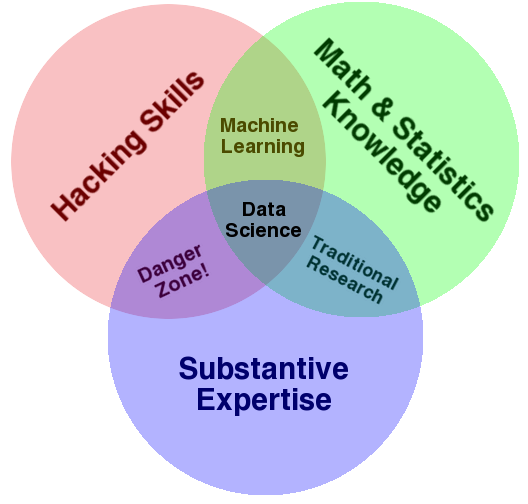
Hacking Academia: Data Science and the University (Vanderplas)
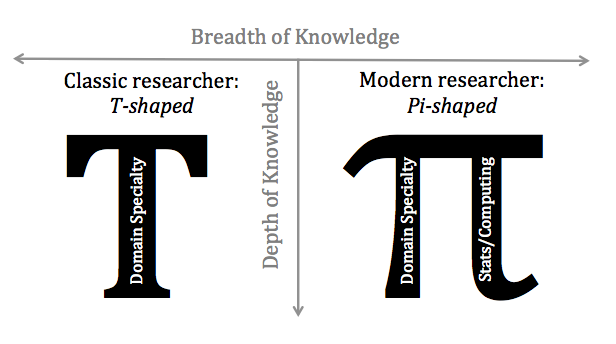
Almost a year ago, I wrote a post I called the Big Data Brain Drain, lamenting the ways that academia is neglecting the skills of modern data-intensive research, and in doing so is driving away many of the men and women who are perhaps best equipped to enable progress in these fields. This seemed to strike a chord with a wide range of people, and has led me to some incredible opportunities for conversation and collaboration on the subject. One of those conversations took place at the recent SciFoo conference, and this article is my way of recording some reflections on that conversation. ...
The problem we discussed is laid out in some detail in my Brain Drain post, but a quick summary is this: scientific research in many disciplines is becoming more and more dependent on the careful analysis of large datasets. This analysis requires a skill-set as broad as it is deep: scientists must be experts not only in their own domain, but in statistics, computing, algorithm building, and software design as well. Many researchers are working hard to attain these skills; the problem is that academia's reward structure is not well-poised to reward the value of this type of work. In short, time spent developing high-quality reusable software tools translates to less time writing and publishing, which under the current system translates to little hope for academic career advancement. ...
Few scientists know how to use the political system to effect change. We need help from people like Cummings.
AUGUST 19, 2014 BY DOMINIC CUMMINGS
... It was interesting that some very eminent scientists, all much cleverer than ~100% of those in politics [INSERT: better to say 'all with higher IQ than ~100% of those in politics'], have naive views about how politics works. In group discussions, there was little focused discussion about how they could influence politics better even though it is clearly a subject that they care about very much. (Gershenfeld said that scientists have recently launched a bid to take over various local government functions in Barcelona, which sounds interesting.)
... To get things changed in politics, scientists need mechanisms a) to agree priorities in order to focus their actions on b) roadmaps with specifics. Generalised whining never works. The way to influence politicians is to make it easy for them to fall down certain paths without much thought, and this means having a general set of goals but also a detailed roadmap the politicians can apply, otherwise they will drift by default to the daily fog of chaos and moonlight.
...
3. High status people have more confidence in asking basic / fundamental / possibly stupid questions. One can see people thinking ‘I thought that but didn’t say it in case people thought it was stupid and now the famous guy’s said it and everyone thinks he’s profound’. The famous guys don’t worry about looking stupid and they want to get down to fundamentals in fields outside their own.
4. I do not mean this critically but watching some of the participants I was reminded of Freeman Dyson’s comment:
‘I feel it myself, the glitter of nuclear weapons. It is irresistible if you come to them as a scientist. To feel it’s there in your hands. To release the energy that fuels the stars. To let it do your bidding. And to perform these miracles, to lift a million tons of rock into the sky, it is something that gives people an illusion of illimitable power, and it is in some ways responsible for all our troubles... this is what you might call ‘technical arrogance’ that overcomes people when they see what they can do with their minds.’
People talk about rationales for all sorts of things but looking in their eyes the fundamental driver seems to be – am I right, can I do it, do the patterns in my mind reflect something real? People like this are going to do new things if they can and they are cleverer than the regulators. As a community I think it is fair to say that outside odd fields like nuclear weapons research (which is odd because it still requires not only a large collection of highly skilled people but also a lot of money and all sorts of elements that are hard (but not impossible) for a non-state actor to acquire and use without detection), they believe that pushing the barriers of knowledge is right and inevitable. ...
Labels:
academia,
blogging,
realpolitik,
science,
scifoo
Friday, August 02, 2019
Different Class Altogether
BBC Radio 4 profile of Dominic Cummings. (Sorry, didn't see any embed code.)
Some interesting comments from Dom's Oxford tutor, Robin James Lane Fox: (@4m50s)
He was extremely sharp, very sure of his own abilities, but had every reason to be... not narrow minded in any way...
BBC: Who is cleverer, Boris Johnson or Dominic Cummings?
Oh Dominic, by a long way.
BBC: A long way?
Different class altogether.
See The Differences are Enormous, Creators and Rulers, and The Gulf is Deep.
Robin James Lane Fox (Wikipedia), FRSL (born 5 October 1946)[1] is an English classicist, ancient historian and gardening writer known for his works on Alexander the Great.[2] Lane Fox is an Emeritus Fellow of New College, Oxford and Reader in Ancient History, University of Oxford. Fellow and Tutor in Ancient History at New College from 1977 to 2014...
How Brexit was won, and the unreasonable effectiveness of physicists.
Sunday, December 15, 2019
Feynman and Tukey (Working Memory); Dom and Brexit
I received this message over the weekend.
Dear Dr. Hsu,The letter:
With great interest I regularly read your excellent Information Processing Blog. With regard to your assessment of Dom Cummings' achievements I am at variance with yours. But I guess you will like the anecdote referring to Feynman.
I tried to comment directly on your blog but the whole procedure was somewhat cumbersome, so I mail my comment directly to you. Please feel free to post it at the comment section under my full name. See the comment attached.
I am a retired psychology prof from University of Mannheim, Germany specializing in intelligence research, research methodology, assessment and evaluation research.
Best regards
Werner W. Wittmann
IQ makes the difference
If you want to learn more about what kind of difference differences in IQ make read the research of Dave Lubinski and Camilla Benbow what differences highly gifted youngsters accomplish after several decades. Dave makes their publications available at https://my.vanderbilt.edu/smpy/publications/david-lubinski/
But let me turn to a funnier anecdote for physicists like Steve Hsu
A 35 year gap:
Physicists are among the smartest high IQ people, there is no doubt. If you want a single case example take Richard Feynman. If we could have lured him to psychology an important concept probably would have been published 35 years earlier.
In 1939 Feynman as a graduate student at Princeton experimented just for fun together with his friend John Tukey (who later became the famous statistician) to assess the ability of measuring time by counting.(Gleick,1992) They run stairs up and down to accelerate their heartbeats and trained themselves at the same time to count seconds and steps. Feynman’s performance deteriorated when he talked but not when he read. Tukey instead performed well when he recited poems aloud and worse when he read. So both have detected what is now known as the two slave systems of working memory, namely the phonological loop and the visuo-spatial sketchpad. Now you get a feeling how much more psychology would have been advanced if brains like theirs had been invested in my discipline at that time.
As a true and convinced European I am really sorry that the English left us, the Scots and the Northern-Irish didn’t want it and maybe one day the fame of tearing the United Kingdom into parts goes to Cummings as well?
What I would say to Cummings:
“If a thing is not worth doing, it is not worth doing well.” ― John W. Tukey
But he did it and now…
Boris Johnson probably to Cummings: “The moor has pled guilty the moor can go” ?
References:
Gleick,J.(1992) Genius. The life and science of Richard Feynman. New York: Pantheon Books.
Lubinski, D., Benbow, C.P., & Kell, H.J. (2014). Life paths and accomplishments of mathematically precocious males and females four decades later. Psychological Science, 25, 2217–2232.
From Wikipedia about Working Memory
In 1974, Baddeley and Hitch[11] introduced the multicomponent model of working memory. The theory proposed a model containing three components: the central executive, the phonological loop, and the visuospatial sketchpad with the central executive functioning as a control center of sorts, directing info between the phonological and visuospatial components.[12] The central executive is responsible inter alia for directing attention to relevant information, suppressing irrelevant information and inappropriate actions, and coordinating cognitive processes when more than one task is simultaneously performed. A "central executive" is responsible for supervising the integration of information and for coordinating "slave systems" that are responsible for the short-term maintenance of information. One slave system, the phonological loop (PL), stores phonological information (that is, the sound of language) and prevents its decay by continuously refreshing it in a rehearsal loop. It can, for example, maintain a seven-digit telephone number for as long as one repeats the number to oneself again and again.[13] The other slave system, the visuospatial sketchpad, stores visual and spatial information. It can be used, for example, for constructing and manipulating visual images and for representing mental maps. The sketchpad can be further broken down into a visual subsystem (dealing with such phenomena as shape, colour, and texture), and a spatial subsystem (dealing with location).
Re: Brexit, see these remarks from Now it can be told: Dominic Cummings and the Conservative victory 2019
I don't know enough to have a high confidence or high conviction opinion concerning Brexit. Intelligent and thoughtful people disagree strongly over whether it is a good idea or a potential disaster.The epistemically careful may end up like Zhou Enlai. When asked about consequences of the French Revolution, the late premier is reported to have said: Too early to tell. Be prepared to find that thoughtful people, pressed for an opinion, can disagree...
Nevertheless, I can admire Dom's effectiveness as a political strategist and chief advisor to the Prime Minister. I do know him well enough to state with high confidence that his intentions are idealistic, not selfish, and that he (someone who has spent decades thinking about UK government, foreign policy, relations with Europe) sincerely thinks Brexit is in the best interests of the British people. Dom has deeper insights and better intuition about these issues than I do!
Being a rationalist, Dom has pointed out on his own blog that it is impossible to know with high confidence what the future implications of most political decisions are... In that sphere one cannot avoid decision making under extreme uncertainty.
Saturday, January 15, 2022
Manifold Returns!
I'm working on the return of Manifold. I just did the first interview yesterday, with James Lee. I'm not sure when it will be released, but soon I hope.
Thanks to everyone who enjoyed the original show. I received a lot of requests to bring it back over the last 18 months since we went on hiatus. Please make suggestions for guests and show topics!
I'll try to get Dominic Cummings for a long interview. For now, see this great piece in the Guardian about his substack:
Intoxicating, insidery and infuriating: everything I learned about Dominic Cummings from his £10-a-month blog
Here are the 51 episodes from our first run, with transcripts: https://manifoldlearning.com/.
Michigan State University owns the copyright to the old stuff, so we may have to create a new channel and web site. This new project will be entirely mine and I will probably allow comments on the YouTube channel -- we turned those off because the university was/is risk averse about free expression ¯\_(ツ)_/¯
I hope to have Corey as a frequent guest on the show, but I will be restarting in solo mode.
Here's the first episode where Corey and I introduced ourselves. Very rough around the edges, but still fun for me to listen to again.
Wednesday, February 27, 2019
To Predict the Future it is useful to understand the Past

Dominic Cummings on genomics, healthcare, and innovation in the UK:
Britain could contribute huge value to the world by leveraging existing assets, including scientific talent and how the NHS is structured, to push the frontiers of a rapidly evolving scientific field — genomic prediction — that is revolutionising healthcare in ways that give Britain some natural advantages over Europe and America. We should plan for free universal ‘SNP’ genetic sequencing as part of a shift to genuinely preventive medicine — a shift that will lessen suffering, save money, help British advanced technology companies in genomics and data science/AI, make Britain more attractive for scientists and global investment, and extend human knowledge in a crucial field to the benefit of the whole world.Those that are interested in the history of science, or in understanding its future, would do well to look at what was being written 10 or so years ago about genomics of complex traits. Whose predictions came true? Whose were dead wrong?
Dominic Cummings: ... Hsu predicted that very large samples of DNA would allow scientists over the next few years to start identifying the actual genes responsible for complex traits, such as diseases and intelligence, and make meaningful predictions about the fate of individuals. Hsu gave estimates of the sample sizes that would be needed. His 2011 talk contains some of these predictions and also provides a physicist’s explanation of ‘what is IQ measuring’. As he said at Google in 2011, the technology is ‘right on the cusp of being able to answer fundamental questions’ and ‘if in ten years we all meet again in this room there’s a very good chance that some of the key questions we’ll know the answers to’. His 2014 paper explains the science in detail. If you spend a little time looking at this, you will know more than 99% of high status economists gabbling on TV about ‘social mobility’ saying things like ‘doing well on IQ tests just proves you can do IQ tests’.(One might ask what fraction of PhD economists knew in 2008 what a CDO was or how they were constructed or priced... I was there, and the answer is: very, very few.)
In 2013, the world of Westminster thought this all sounded like science fiction and many MP said I sounded like ‘a mad scientist’. Hsu’s predictions have come true and just five years later this is no longer ‘science fiction’. (Also NB. Hsu’s blog was one of the very few places where you would have seen discussion of CDOs and the 2008 financial crash long BEFORE it happened. I have followed his blog since ~2004 and this from 2005, two years before the crash started, was the first time I read about things like ‘synthetic CDOs’: ‘we have yet another ill-understood casino running, with trillions of dollars in play’. The quant-physics network had much better insight into the dynamics behind the 2008 Crash than high status mainstream economists like Larry Summers responsible for regulation.)
His group and others have applied machine learning to very large genetic samples and built predictors of complex traits. Complex traits like general intelligence and most diseases are ‘polygenic’ — they depend on many genes each of which contributes a little (unlike diseases caused by a single gene).
‘There are now ~20 disease conditions for which we can identify, e.g, the top 1% outliers with 5-10x normal risk for the disease. The papers reporting these results have almost all appeared within the last year or so.’
As the deep learning pioneer Jurgen Schmidhuber has emphasized,
... machine learning is itself based on accurate credit assignment. Good learning algorithms assign higher weights to features or signals that correctly predict outcomes, and lower weights to those that are not predictive. His analogy between science itself and machine learning is often lost on critics.Therefore, to decide how to weight current claims about the future (such as: accurate genomic prediction of many disease risks and complex traits, even including cognitive ability, are right around the corner), one should carefully study the track record of those offering predictions.
Google TechTalk 2011:
Allen Institute meeting on Genetics of Complex Traits (2018):
Thursday, October 30, 2014
The Hollow Men
I highly recommend The Hollow Men II: Some reflections on Westminster and Whitehall dysfunction by Dominic Cummings. It is full of insights into the failings of bureaucracies, government by crisis and news cycle, and hollow leadership.
The essay is long, but the excerpts below give some of the flavor.
... Most of our politics is still conducted with the morality and the language of the simple primitive hunter-gatherer tribe: ‘which chief shall we shout for to solve our problems?’ Our ‘chimp politics’ has an evolutionary logic: our powerful evolved instinct to conform to a group view is a flip-side of our evolved in-group solidarity and hostility to out-groups (and keeping in with the chief could lead to many payoffs, while making enemies could lead to death, so going along with leaders’ plans was incentivised). This partly explains the persistent popularity of collectivist policies and why ‘groupthink’ is a recurring disaster. Such instincts, which evolved in relatively simple prehistoric environments involving relatively small numbers of known people and relatively simple problems (like a few dozen enemies a few miles away), cause disaster when the problem is something like ‘how to approach an astronomically complex system such as health provision for millions.’
... students leave university for politics and the civil service with degrees that reward verbal fluency, some fragments of philosophy, little knowledge of maths or science, and confidence in a sort of arrogant bluffing combined with ignorance about how to get anything done. They think they are prepared to ‘run the country’ but many cannot run their own diaries.
... Often watching MPs one sees a group of people looking at their phones listening only for a chance to interrupt, dreaming of the stage and applause. They are often persuasive in meetings (with combinations of verbal ability, psychological cunning, and ‘chimp politics’) and can form gangs. Parliaments seem to select for such people despite the obvious dangers. This basic aspect inevitably repels a large fraction of entrepreneurs and scientists who are externally oriented – that is, focused on building things, not social networking and approval.
... It is the startups who, generally, make breakthroughs and solve hard problems – not bureaucrats – but it is the bureaucrats who dominate the upper echelons of large public companies, politics, and public service HR systems. Civil service bureaucracies at senior levels generally select for the worst aspects of chimp politics and against those skills seen in rare successful organisations (e.g the ability to simplify, focus, and admit errors). They recruit ‘people who won’t rock the boat’ but of course the world advances exactly because of the efforts of people who do ‘rock the boat’. They recruit a lot of lawyers, who are trained to focus on process rather than outcome, reinforcing one of the worst aspects of bureaucracies.
... Warren Buffett has proposed institutionalising Red Teams to limit damage done by egomaniac CEOs pursuing flawed mergers and acquisitions: ‘it appears to me that there is only one way to get a rational and balanced discussion. Directors should hire a second advisor to make the case against the proposed acquisition, with its fee contingent on the deal not going through’. This seems to me to be a great idea and MPs and Permanent Secretaries should think hard about how to operationalise it in Whitehall.
... most senior MPs in all three parties are locked into a game in which they spend most of their time on a) launching gimmicks, and b) coping with crises. These two forms of activity are closely related. The only widely understood model of activity in Westminster (and one which fits well psychologically with the desire for publicity) is a string of gimmicks aimed to manipulate the media (given the label ‘strategy’ to make it sound impressive) which are announced between, and in response to, media crises, some of which are trivial and some of which reflect structural problems. Many, drawing perhaps only on the bluffing skills rewarded by PPE, have no idea what else to do.
Powerful people rush from meetings about the latest gimmick they are to announce, to meetings about the latest cockup for which they need to try to dodge the blame
... Cameron is superficially suitable for the job in the way that ‘experts’ often judge such things – i.e. basic chimp politics skills, height, glibness etc, so we can ‘shove him out to give a statement on X’. That’s it. In a dysfunctional institutional structure, someone without the skills we need in a prime minister can easily get the job with a few breaks like that.
... Our leaders are like 19th Century Germans who had lost religion of whom Nietzsche said, ‘they merely register their existence in the world with a kind of dumb amazement’. They get up every day and react to the media without questioning why: sometimes they are lauded, usually they are trashed, but they carry on in a state of ‘dumb amazement’ without realising how absurd their situation is. Meanwhile, the institutions within which they operate continue with their own momentum and dynamics, and they pretend to themselves that they are, in the phrase they love, ‘running the country’.
Tuesday, August 27, 2019
Dept. of Physicists Can Do Stuff: Brexit!
Dominic Cummings on how Vote Leave won the Brexit campaign. (Video should start at 13m30s.)
Dom hired a team of physicists and data scientists who
1. Studied the literature on elections (i.e., entered a well-established subject, studying it de novo, applying real horsepower), figured out which results/beliefs in that field were likely correct (much found was incorrect)
2. Adapted results to the job at hand (Brexit referendum) and invented new techniques for applying them
3. Built a new platform, wrote new code, executed in real time, and won a huge electoral victory against all odds.
Of course, this is the age old story of physicists invading/creating other fields: early computing, electrical engineering, molecular biology, computational biology, quantitative finance, high frequency trading, etc.
This victory will have historical reverberations that are still playing out.
13m35s: ... we had to take risks and we had to do things in a slightly new way so one of the basic things that I did was I brought in a team of physicists who essentially looked at campaigning from complete first principles and what they did was they went they simply scanned around the world and they said what studies have been done on issues of turnout and persuasion that actually have good maths behind them to support and have been replicated and we can actually have confidence in and they basically filtered all when through filtered them all out and came back to me in the team and said here is a small selection of things actually high quality or reasonable quality work which you can rely upon and here are the principles that you can see in these studies that have been replicated with randomised controlled trials and whatnot in the StatesSee also Dept. of Physicists Can Do Stuff: Gene Sequencing, Harold Brown, Ashton Carter.
we basically created a checklist of what these things were and we built the communications team around trying to exploit each of these elements which the physicists found they also constructed models to help direct resources on the ground campaigns to wedge where to send your activists and the digital campaign how do you actually do that in a in a scientific way and essentially you had streams of data coming in from all sorts of different ways the website email on the ground canvassing a social media blah blah all of this stuff could be traditional polling all of the stuff coming in and you had the data science people sitting at the heart of the operation and essentially taking our core messages and just running experimentally a whole bunch of different things on Facebook and elsewhere and then figuring out what what things and what things don't work and we started off with relatively small amounts of money just to run this experimental process
another thing which which I'll go into a little bit of detail because it's from perhaps of interest regarding this election is we did a new kind of polling so I'm sure all of you know the polling methodology used throughout the world essentially the same system that was invented in the late 1930s and the idea of it is yo you take roughly speaking a thousand person sample and if it's random a representative then you can rely on the mathematics of the normal distribution and the famous bell curve and you that should give you a pretty accurate picture of what people think for various reasons that is becoming harder and harder to do happy to answer questions about why that is but leaving that aside what the physicists said was this is actually not the way that you would invent polling if you were going to invent polling now the way actually to do it is take massive samples of hundreds of thousands of people ideally actually millions of people but say hundreds thousands people and then use machine learning and you will actually have a system which is faster cheaper more accurate and never has another great advantage which we exploited which is that if you do these very large sample surveys you then have sub sample you can define the demographics that you interrogate yourself and what we did was we basically use the exact same categories infer demographics that Facebook uses for its digital advertising platform so we sucked in data on the precise same basis that Facebook marketing allows and then we had therefore large sub samples of the overall polling samples which you could actually rely on and then you could take that data and plug it straight back into Facebook so you could say for example we will target women between 35 and 45 who live in these particular geographical entities who don't have a degree or who do have a degree or whatever it's after cetera
and because you've got very large samples you can actually get useful information on those kind of relatively small breakdowns so we did all this and we as I said we essentially ran a whole series of experiments based on what we found at the conventional polling in the focus groups out in the digital world and then filtered what worked and then we held back almost all of our budget and then we basically dumped the entire budget or in the last ten days...
More Dom.
How Brexit was won, and the unreasonable effectiveness of physicists:
The scale of ... triumph cannot be exaggerated. He ... had brought about a complete transformation of the European international order. He had told those who would listen what he intended to do, how he intended to do it, and he did it. He achieved this incredible feat without commanding an army, and without the ability to give an order to the humblest common soldier, without control of a large party, without public support, indeed, in the face of almost universal hostility, without a majority in parliament, without control of his cabinet, and without a loyal following in the bureaucracy.
...
On the eve and day of Brexit I happened to be staying at the estate of a billionaire hedge fund manager, which hosted a meeting of elite capital allocators. At breakfast, more than half of these titans of capital were in shock ... Markets were down 8% or more and my host asked for my view. It will play out over years, I said. No one knows where this is going to go. The market is oversold and it's a buying opportunity. So it was.
Wednesday, May 23, 2018
Dominic Cummings on Fighting, Physics, and Learning from tight feedback loops
Another great post from Dom.
Once something has become widely understood, it is difficult to recreate or fully grasp the mindset that prevailed before. But I can attest to the fact that until the 1990s and the advent of MMA, even "experts" (like boxing coaches, karate and kung fu instructors, Navy SEALs) did not know how to fight -- they were deeply confused as to which techniques were most effective in unarmed combat.
Soon our ability to predict heritable outcomes using DNA alone (i.e., Genomic Prediction) will be well-established. Future generations will have difficulty understanding the mindset of people (even, scientists) today who deny that it is possible.
The same will be true of AGI... For example, see the well-known "Chinese Room" argument against AGI, advanced by Berkeley Philosopher John Searle (discussed before in The Mechanical Turk and Searle's Chinese Room). Searle's confusion as to where, exactly, the understanding resides inside a complex computation seems silly to us today given recent developments with deep neural nets and, e.g., machine translation (the very problem used in his thought experiment). Understanding doesn't exist in any sub-portion of the network, it is embodied in the network. (See also Thought vectors and the dimensionality of the space of concepts :-)
See also Kosen Judo and the origins of MMA.
Choking out a Judo black belt in the tatami room at the Payne Whitney gymnasium at Yale. My favorite gi choke is Okuri eri jime.
Training in Hawaii at Relson Gracie's and Enson Inoue's schools. The shirt says Yale Brazilian Jiujitsu -- a club I founded. I was also the faculty advisor to the already existing Judo Club :-)
Once something has become widely understood, it is difficult to recreate or fully grasp the mindset that prevailed before. But I can attest to the fact that until the 1990s and the advent of MMA, even "experts" (like boxing coaches, karate and kung fu instructors, Navy SEALs) did not know how to fight -- they were deeply confused as to which techniques were most effective in unarmed combat.
Soon our ability to predict heritable outcomes using DNA alone (i.e., Genomic Prediction) will be well-established. Future generations will have difficulty understanding the mindset of people (even, scientists) today who deny that it is possible.
The same will be true of AGI... For example, see the well-known "Chinese Room" argument against AGI, advanced by Berkeley Philosopher John Searle (discussed before in The Mechanical Turk and Searle's Chinese Room). Searle's confusion as to where, exactly, the understanding resides inside a complex computation seems silly to us today given recent developments with deep neural nets and, e.g., machine translation (the very problem used in his thought experiment). Understanding doesn't exist in any sub-portion of the network, it is embodied in the network. (See also Thought vectors and the dimensionality of the space of concepts :-)
Effective action #4a: ‘Expertise’ from fighting and physics to economics, politics and government
Extreme sports: fast feedback = real expertise
In the 1980s and early 1990s, there was an interesting case study in how useful new knowledge jumped from a tiny isolated group to the general population with big effects on performance in a community. Expertise in Brazilian jiu-jitsu was taken from Brazil to southern California by the Gracie family. There were many sceptics but they vanished rapidly because the Gracies were empiricists. They issued ‘the Gracie challenge’.
All sorts of tough guys, trained in all sorts of ways, were invited to come to their garage/academy in Los Angeles to fight one of the Gracies or their trainees. Very quickly it became obvious that the Gracie training system was revolutionary and they were real experts because they always won. There was very fast and clear feedback on predictions. Gracie jiujitsu quickly jumped from an LA garage to TV. At the televised UFC 1 event in 1993 Royce Gracie defeated everyone and a multi-billion dollar business was born.
People could see how training in this new skill could transform performance. Unarmed combat changed across the world. Disciplines other than jiu jitsu have had to make a choice: either isolate themselves and not compete with jiu jitsu or learn from it. If interested watch the first twenty minutes of this documentary (via professor Steve Hsu, physicist, amateur jiu jitsu practitioner, and predictive genomics expert).
...
[[ On politics, a field in which Dom has few peers: ]]
... The faster the feedback cycle, the more likely you are to develop a qualitative improvement in speed that destroys an opponent’s decision-making cycle. If you can reorient yourself faster to the ever-changing environment than your opponent, then you operate inside their ‘OODA loop’ (Observe-Orient-Decide-Act) and the opponent’s performance can quickly degrade and collapse.
This lesson is vital in politics. You can read it in Sun Tzu and see it with Alexander the Great. Everybody can read such lessons and most people will nod along. But it is very hard to apply because most political/government organisations are programmed by their incentives to prioritise seniority, process and prestige over high performance and this slows and degrades decisions. Most organisations don’t do it. Further, political organisations tend to make too slowly those decisions that should be fast and too quickly those decisions that should be slow — they are simultaneously both too sluggish and too impetuous, which closes off favourable branching histories of the future.
See also Kosen Judo and the origins of MMA.
Choking out a Judo black belt in the tatami room at the Payne Whitney gymnasium at Yale. My favorite gi choke is Okuri eri jime.
Training in Hawaii at Relson Gracie's and Enson Inoue's schools. The shirt says Yale Brazilian Jiujitsu -- a club I founded. I was also the faculty advisor to the already existing Judo Club :-)
Sunday, July 22, 2018
London Calling
On my way home from Stockholm / ICML I stopped in London to see my friend Dominic Cummings, give a talk at ASI Data Science, and have some Oligarch meetings. Sorry I can't share more details.
Here are some photos from the British Museum.
Bodhisattva: a person who is able to reach nirvana but delays doing so out of compassion in order to save suffering beings.
Here are some photos from the British Museum.
Bodhisattva: a person who is able to reach nirvana but delays doing so out of compassion in order to save suffering beings.
“Tenfold be your damnation," he said.. "There shall be no rebirth."
His hands came open then. A tall, nobly proportioned man lay upon the floor at his feet, his head resting upon his right shoulder.
His eye had finally closed.
Yama turned the corpse with the toe of his boot. "Build a pyre and burn this body," he said to the monks, not turning toward them. "Spare none of the rites. One of the highest has died this day.”
Lord of Light, Roger Zelazny.
Subscribe to:
Posts (Atom)
Blog Archive
Labels
- physics (420)
- genetics (325)
- globalization (301)
- genomics (295)
- technology (282)
- brainpower (280)
- finance (275)
- american society (261)
- China (249)
- innovation (231)
- ai (206)
- economics (202)
- psychometrics (190)
- science (172)
- psychology (169)
- machine learning (166)
- biology (163)
- photos (162)
- genetic engineering (150)
- universities (150)
- travel (144)
- podcasts (143)
- higher education (141)
- startups (139)
- human capital (127)
- geopolitics (124)
- credit crisis (115)
- political correctness (108)
- iq (107)
- quantum mechanics (107)
- cognitive science (103)
- autobiographical (97)
- politics (93)
- careers (90)
- bounded rationality (88)
- social science (86)
- history of science (85)
- realpolitik (85)
- statistics (83)
- elitism (81)
- talks (80)
- evolution (79)
- credit crunch (78)
- biotech (76)
- genius (76)
- gilded age (73)
- income inequality (73)
- caltech (68)
- books (64)
- academia (62)
- history (61)
- intellectual history (61)
- MSU (60)
- sci fi (60)
- harvard (58)
- silicon valley (58)
- mma (57)
- mathematics (55)
- education (53)
- video (52)
- kids (51)
- bgi (48)
- black holes (48)
- cdo (45)
- derivatives (43)
- neuroscience (43)
- affirmative action (42)
- behavioral economics (42)
- economic history (42)
- literature (42)
- nuclear weapons (42)
- computing (41)
- jiujitsu (41)
- physical training (40)
- film (39)
- many worlds (39)
- quantum field theory (39)
- expert prediction (37)
- ufc (37)
- bjj (36)
- bubbles (36)
- mortgages (36)
- google (35)
- race relations (35)
- hedge funds (34)
- security (34)
- von Neumann (34)
- meritocracy (31)
- feynman (30)
- quants (30)
- taiwan (30)
- efficient markets (29)
- foo camp (29)
- movies (29)
- sports (29)
- music (28)
- singularity (27)
- entrepreneurs (26)
- conferences (25)
- housing (25)
- obama (25)
- subprime (25)
- venture capital (25)
- berkeley (24)
- epidemics (24)
- war (24)
- wall street (23)
- athletics (22)
- russia (22)
- ultimate fighting (22)
- cds (20)
- internet (20)
- new yorker (20)
- blogging (19)
- japan (19)
- scifoo (19)
- christmas (18)
- dna (18)
- gender (18)
- goldman sachs (18)
- university of oregon (18)
- cold war (17)
- cryptography (17)
- freeman dyson (17)
- smpy (17)
- treasury bailout (17)
- algorithms (16)
- autism (16)
- personality (16)
- privacy (16)
- Fermi problems (15)
- cosmology (15)
- happiness (15)
- height (15)
- india (15)
- oppenheimer (15)
- probability (15)
- social networks (15)
- wwii (15)
- fitness (14)
- government (14)
- les grandes ecoles (14)
- neanderthals (14)
- quantum computers (14)
- blade runner (13)
- chess (13)
- hedonic treadmill (13)
- nsa (13)
- philosophy of mind (13)
- research (13)
- aspergers (12)
- climate change (12)
- harvard society of fellows (12)
- malcolm gladwell (12)
- net worth (12)
- nobel prize (12)
- pseudoscience (12)
- Einstein (11)
- art (11)
- democracy (11)
- entropy (11)
- geeks (11)
- string theory (11)
- television (11)
- Go (10)
- ability (10)
- complexity (10)
- dating (10)
- energy (10)
- football (10)
- france (10)
- italy (10)
- mutants (10)
- nerds (10)
- olympics (10)
- pop culture (10)
- crossfit (9)
- encryption (9)
- eugene (9)
- flynn effect (9)
- james salter (9)
- simulation (9)
- tail risk (9)
- turing test (9)
- alan turing (8)
- alpha (8)
- ashkenazim (8)
- data mining (8)
- determinism (8)
- environmentalism (8)
- games (8)
- keynes (8)
- manhattan (8)
- new york times (8)
- pca (8)
- philip k. dick (8)
- qcd (8)
- real estate (8)
- robot genius (8)
- success (8)
- usain bolt (8)
- Iran (7)
- aig (7)
- basketball (7)
- free will (7)
- fx (7)
- game theory (7)
- hugh everett (7)
- inequality (7)
- information theory (7)
- iraq war (7)
- markets (7)
- paris (7)
- patents (7)
- poker (7)
- teaching (7)
- vietnam war (7)
- volatility (7)
- anthropic principle (6)
- bayes (6)
- class (6)
- drones (6)
- econtalk (6)
- empire (6)
- global warming (6)
- godel (6)
- intellectual property (6)
- nassim taleb (6)
- noam chomsky (6)
- prostitution (6)
- rationality (6)
- academia sinica (5)
- bobby fischer (5)
- demographics (5)
- fake alpha (5)
- kasparov (5)
- luck (5)
- nonlinearity (5)
- perimeter institute (5)
- renaissance technologies (5)
- sad but true (5)
- software development (5)
- solar energy (5)
- warren buffet (5)
- 100m (4)
- Poincare (4)
- assortative mating (4)
- bill gates (4)
- borges (4)
- cambridge uk (4)
- censorship (4)
- charles darwin (4)
- computers (4)
- creativity (4)
- hormones (4)
- humor (4)
- judo (4)
- kerviel (4)
- microsoft (4)
- mixed martial arts (4)
- monsters (4)
- moore's law (4)
- soros (4)
- supercomputers (4)
- trento (4)
- 200m (3)
- babies (3)
- brain drain (3)
- charlie munger (3)
- cheng ting hsu (3)
- chet baker (3)
- correlation (3)
- ecosystems (3)
- equity risk premium (3)
- facebook (3)
- fannie (3)
- feminism (3)
- fst (3)
- intellectual ventures (3)
- jim simons (3)
- language (3)
- lee kwan yew (3)
- lewontin fallacy (3)
- lhc (3)
- magic (3)
- michael lewis (3)
- mit (3)
- nathan myhrvold (3)
- neal stephenson (3)
- olympiads (3)
- path integrals (3)
- risk preference (3)
- search (3)
- sec (3)
- sivs (3)
- society generale (3)
- systemic risk (3)
- thailand (3)
- twitter (3)
- alibaba (2)
- bear stearns (2)
- bruce springsteen (2)
- charles babbage (2)
- cloning (2)
- david mamet (2)
- digital books (2)
- donald mackenzie (2)
- drugs (2)
- dune (2)
- exchange rates (2)
- frauds (2)
- freddie (2)
- gaussian copula (2)
- heinlein (2)
- industrial revolution (2)
- james watson (2)
- ltcm (2)
- mating (2)
- mba (2)
- mccain (2)
- monkeys (2)
- national character (2)
- nicholas metropolis (2)
- no holds barred (2)
- offices (2)
- oligarchs (2)
- palin (2)
- population structure (2)
- prisoner's dilemma (2)
- singapore (2)
- skidelsky (2)
- socgen (2)
- sprints (2)
- star wars (2)
- ussr (2)
- variance (2)
- virtual reality (2)
- war nerd (2)
- abx (1)
- anathem (1)
- andrew lo (1)
- antikythera mechanism (1)
- athens (1)
- atlas shrugged (1)
- ayn rand (1)
- bay area (1)
- beats (1)
- book search (1)
- bunnie huang (1)
- car dealers (1)
- carlos slim (1)
- catastrophe bonds (1)
- cdos (1)
- ces 2008 (1)
- chance (1)
- children (1)
- cochran-harpending (1)
- cpi (1)
- david x. li (1)
- dick cavett (1)
- dolomites (1)
- eharmony (1)
- eliot spitzer (1)
- escorts (1)
- faces (1)
- fads (1)
- favorite posts (1)
- fiber optic cable (1)
- francis crick (1)
- gary brecher (1)
- gizmos (1)
- greece (1)
- greenspan (1)
- hypocrisy (1)
- igon value (1)
- iit (1)
- inflation (1)
- information asymmetry (1)
- iphone (1)
- jack kerouac (1)
- jaynes (1)
- jazz (1)
- jfk (1)
- john dolan (1)
- john kerry (1)
- john paulson (1)
- john searle (1)
- john tierney (1)
- jonathan littell (1)
- las vegas (1)
- lawyers (1)
- lehman auction (1)
- les bienveillantes (1)
- lowell wood (1)
- lse (1)
- machine (1)
- mcgeorge bundy (1)
- mexico (1)
- michael jackson (1)
- mickey rourke (1)
- migration (1)
- money:tech (1)
- myron scholes (1)
- netwon institute (1)
- networks (1)
- newton institute (1)
- nfl (1)
- oliver stone (1)
- phil gramm (1)
- philanthropy (1)
- philip greenspun (1)
- portfolio theory (1)
- power laws (1)
- pyschology (1)
- randomness (1)
- recession (1)
- sales (1)
- skype (1)
- standard deviation (1)
- starship troopers (1)
- students today (1)
- teleportation (1)
- tierney lab blog (1)
- tomonaga (1)
- tyler cowen (1)
- venice (1)
- violence (1)
- virtual meetings (1)
- wealth effect (1)