Showing posts with label genetics. Show all posts

Wednesday, February 28, 2024

Awakening Siddhartha (podcast interview)


Really fun conversation! 

Timestamps: 

00:00 Introduction 
02:21 Steve's Encounter with Richard Feynman 
03:31 Discussion on Genetics and Human Improvement 
11:08 The Role of Genetics in Disease Prediction 
18:10 Understanding the Influence of Genetics on Behaviour 
21:37 The Future of Genetic Selection in Embryos 
39:24 The Role of Genetics in Addiction 
41:53 The Importance of Individual Differences and Success 
46:36 The Value of STEM in Indian Culture 
48:02 The Importance of Non-Academic Skills for Success 
49:01 Exploring the World of Embryo Modification 
51:30 The Quest for Immortality: Brian Johnson's Story 
57:20 The Role of Genetics in Aging 
01:01:19 The Power and Potential of Gene Editing 
01:11:37 The Impact of Genetics on Society and Policy 
01:16:36 Understanding the Rise of China in the Global Stage 
01:53:14 The Future of AI and the Impact on Jobs 
01:58:46 The Future of Human and Machine Intelligence 
02:01:54 The Possibility of Living in a Simulation 

Short excerpts below :-)


Thursday, November 17, 2022

Abdel Abdellaoui: Genetics, Psychiatric Traits, and Educational Attainment — Manifold #24


Abdel Abdellaoui is Assistant Professor of Genetics in the Department of Psychiatry, Amsterdam UMC, University of Amsterdam. 

Abdel Abdellaoui is a geneticist who has been involved in a wide range of studies on psychiatric genetics, behavioral genetics, and population genetics. He is particularly interested in how collective behaviors, such as migration and mate choice, influence the genetic makeup of populations and the relationship between genetic risk factors and environmental exposures. 

Steve and Abdel discuss: 

00:00 Abdel’s background: education, family history, research career 
10:23 Abdel’s research focus: polygenic traits, geographical stratification 
21:43 Correlations across geographical regions 
33:21 Educational Attainment 
38:51 Comparisons across data sets 
44:48 Longevity 
52:04 Reaction to NIH restricting access to data on educational attainment 

Abdel Abdellaoui on Google Scholar: 
https://scholar.google.com/citations?user=hsyseKEAAAAJ&hl=en

Tuesday, October 25, 2022

American Society of Human Genetics (ASHG) 2022 Posters


Thursday, June 23, 2022

Polygenic Health Index, General Health, and Disease Risk

See published version: https://www.nature.com/articles/s41598-022-22637-8

Informal summary: We built a polygenic health index using risk predictors weighted by lifespan impact of the specific disease condition. This index seems to characterize general health. Individuals with higher index scores have decreased disease risk across almost all 20 diseases (no significant risk increases), and longer calculated life expectancy. When estimated Disability Adjusted Life Years (DALYs) are used as the performance metric, the gain from selection among 10 individuals (highest index score vs average) is found to be roughly 4 DALYs. We find no statistical evidence for antagonistic trade-offs in risk reduction across these diseases. Correlations between genetic disease risks are found to be mostly positive and generally mild.
 
Polygenic Health Index, General Health, and Disease Risk 
We construct a polygenic health index as a weighted sum of polygenic risk scores for 20 major disease conditions, including, e.g., coronary artery disease, type 1 and 2 diabetes, schizophrenia, etc. Individual weights are determined by population-level estimates of impact on life expectancy. We validate this index in odds ratios and selection experiments using unrelated individuals and siblings (pairs and trios) from the UK Biobank. Individuals with higher index scores have decreased disease risk across almost all 20 diseases (no significant risk increases), and longer calculated life expectancy. When estimated Disability Adjusted Life Years (DALYs) are used as the performance metric, the gain from selection among 10 individuals (highest index score vs average) is found to be roughly 4 DALYs. We find no statistical evidence for antagonistic trade-offs in risk reduction across these diseases. Correlations between genetic disease risks are found to be mostly positive and generally mild. These results have important implications for public health and also for fundamental issues such as pleiotropy and genetic architecture of human disease conditions. 
https://www.medrxiv.org/content/10.1101/2022.06.15.22276102v1

Some figures:


Extrapolating the DALY gain vs Health Index score curve (top figure) to the entire human population (e.g., 10 billion people) results in +30 or +40 DALYs more than average, or something like 120 total years of life.  The individual with the highest Health Index score in the world is predicted to live about 120 years.


I wanted to use this in the paper but my collaborators vetoed me 8-)
The days of our years are threescore years and ten; and if by reason of strength they be fourscore years, yet is their strength labour and sorrow; for it is soon cut off, and we fly away 
Psalm 90:10

Thursday, June 16, 2022

Greg Clark: Genetics and Social Mobility — Manifold Episode #14


Gregory Clark is Distinguished Professor of Economics at UC-Davis. He is an editor of the European Review of Economic History, chair of the steering committee of the All-UC Group in Economic History, and a Research Associate of the Center for Poverty Research at Davis. He was educated at Cambridge University and received a PhD from Harvard University. His areas of research are long-term economic growth, the wealth of nations, economic history, and social mobility. 

Steve and Greg discuss: 

0:00 Introduction 
2:31 Background in economics and genetics 
10:25 The role of genetics in determining social outcomes 
16:27 Measuring social status through marriage and occupation 
36:15 Assortative mating and the industrial revolution 
49:38 Criticisms of empirical data, engagement on genetics and economic history 
1:12:12 Heckman and Landerso study of social mobility in US vs Denmark 
1:24:32 Predicting cognitive traits 
1:33:26 Assortative mating and increase in population variance 

Links: 

For Whom the Bell Curve Tolls: A Lineage of 400,000 English Individuals 1750-2020 shows Genetics Determines most Social Outcomes http://faculty.econ.ucdavis.edu/faculty/gclark/ClarkGlasgow2021.pdf 


A Farewell to Alms: A Brief Economic History of the World https://en.wikipedia.org/wiki/A_Farewell_to_Alms 


Saturday, June 11, 2022

Genomic Prediction on WHYY The Pulse

This 20 minute podcast segment is very well done. Congratulations to science journalist Teresa Carey.


Startup offers genetic testing that promises to predict healthiest embryo 
Aurea toddles around in her pink sparkly sneakers, climbing up the steps that, to her, are nearly waist high. Her tiny t-shirt is the epitome of how adorable she is. It says “you + me + snuggles.” Aurea’s father, Rafal Smigrodzki, watches over his little girl. He is clearly proud of her. “She’s very lively. I think she’s a pretty, pretty happy baby,” Smigrodzki said, “a very often smiley baby.” 
Of course, Smigrodzki thinks his baby is special — most parents do. But Aurea is indeed unique. She was born almost two years ago and happens to be the first child born as the result of a new type of genetic screening, which carefully selected her embryo. Smigrodzki and his girlfriend used in vitro fertilization and an advanced selection process from a startup called Genomic Prediction. 
The New Jersey startup offers genetic tests and promises to help prospective parents select embryos with the best possible genes. The company says its test can screen embryos for a variety of diseases and health conditions, like heart disease, diabetes, or breast cancer. 
Smigrodzki, a neurologist with a PhD in genetics, stumbled across the company in 2017. 
“I was always interested and reading about all kinds of new developments,” he said. “And just happened to read an article in the MIT Technology Review about Genomic Prediction.” 
...
For more information, see (audio + transcript): 


Sunday, May 29, 2022

Genomic Prediction in Bloomberg


A nice article in Bloomberg describing polygenic embryo selection in IVF: DNA Testing for Embryos Promises to Predict Genetic Diseases, by Carey Goldberg.
Bloomberg: Simone Collins knew she was pregnant the moment she answered the phone. ... Embryo 3, the fertilized egg that Collins and her husband, Malcolm, had picked, could soon be their daughter—a little girl with, according to their tests, an unusually good chance of avoiding heart disease, cancer, diabetes, and schizophrenia. 
This isn’t a story about Gattaca-style designer babies. No genes were edited in the creation of Collins’s embryo. The promise, from dozens of fertility clinics around the world, is just that the new DNA tests they’re using can assess, in unprecedented detail, whether one embryo is more likely than the next to develop a range of illnesses long thought to be beyond DNA-based predictions. It’s a new twist on the industry-standard testing known as preimplantation genetic testing, which for decades has checked embryos for rare diseases, such as cystic fibrosis, that are caused by a single gene. 
One challenge with leading killers like cancer and heart disease is that they’re usually polygenic: linked to many different genes with complex interactions. Patients such as Collins can now take tests that assess thousands of DNA data points to decode these complexities and compute the disease risks. Genomic Prediction, the five-year-old New Jersey company that handled the tests for her fertility clinic, generates polygenic risk scores, predicting in percentage terms each embryo’s chances of contracting each disease in the panel, plus a composite score for overall health. Parents with multiple embryos can then weigh the scores when deciding which one to implant. 
... 
This new form of genetic embryo testing appears to move humanity one step closer to control of its evolution. The $14 billion IVF industry brings more than 500,000 babies into the world each year, and with infertility rates rising, the market is expected to more than double this decade. Companies including Genomic Prediction bet many going into that process have seen enough loved ones suffer from a polygenic disease to want risk scoring. 
[ Note I think the number of IVF babies born worldwide each year is more like 1 million, but there is some uncertainty in estimates. ] 
... 
In December, Genomic Prediction doubled its venture funding to about $25 million and says it will use the cash to expand and add to its testing panel. Boston IVF, one of the biggest fertility networks in the US, recently started offering Genomic Prediction’s polygenic testing to its patients, says CEO David Stern. “Like anything else, you have early adopters,” he says. “We have had patients who worked in the biotech field or the Harvard milieu who came in and asked for it.” Stern predicts that, like egg freezing, polygenic embryo testing will grow slowly at first, but steadily, and eventually demand will reflect the powerful appeal of lowering a child’s odds for disease. 
...
Believers such as Collins and her husband support government subsidies for fertility and parenthood but aren’t interested in any conversation about slowing down. “This is about the people who care about giving their children every opportunity,” she says. “I do not believe that law or social norms are going to stop parents from giving their kids advantages.”

This article is well-written and informative. It covers polygenic screening from multiple perspectives: the parents who want a healthy child, the IVF doctors and genetic counselors who help the parents toward that goal, the scientists who study polygenic prediction and its ability to differentiate risk among siblings (i.e., embryos), the bioethicists who worry about a slippery slope to GATTACA.

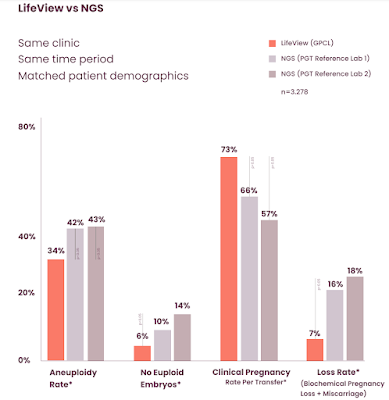
An important point that is not discussed in the article (understandable, given the complexity of the topics listed above), is that precise genotyping of embryos leads to higher success rates in IVF.

... improved success rates resulting from higher accuracy in aneuploidy screening of embryos will affect millions of families around the world, and over 60% of all IVF families in the US.  
The SNP array platform allows very accurate genotyping of each embryo at ~1 million locations in the genome, and the subsequent bioinformatic analysis produces a much more accurate prediction of chromosomal normality than the older methods. 
Millions of embryos are screened each year using PGT-A, about 60% of all IVF embryos in the US. 
Klaus Wiemer is the laborator director for Poma Fertility near Seattle. He conducted this study independently, without informing Genomic Prediction. 
There are ~3000 embryos in the dataset, all biopsied at Poma and samples allocated to three testing labs A,B,C using the two different methods. The family demographics (e.g., maternal age) were similar in all three groups. Lab B is Genomic Prediction and A,C are two of the largest IVF testing labs in the world, using NGS. 
The results imply lower false-positive rates, lower false-negative rates, and higher accuracy overall from our methods. These lead to a significantly higher pregnancy success rate. 
The new technology has the potential to help millions of families all over the world.


This increase in pregnancy success rates was not something we directly aimed for -- rather, we were simply trying to get the most accurate characterization of chromosomal abnormality (aneuploidy) using the high precision genotype from our platform. After Dr. Wiemer surprised us with these results, it became plausible that significant increases in success rates per IVF cycle could still exist as low-hanging fruit. The ~3k embryos used in his study are considered a big sample size in fertility research, whereas in genomics today a big sample is hundreds of thousands or a million individuals. 

Prioritizing research in IVF using large sample sizes could plausibly raise success rates per cycle to, e.g., ~80%. The qualitative experience of parents using IVF will improve with average success rates, perhaps relieving much of the angst and uncertainty.

Sunday, May 01, 2022

Complex Trait Prediction: Methods and Protocols (Springer 2022)


My research group contributed a chapter to this new book on Complex Trait Prediction (see below). The book is somewhat unique, covering applications to humans, plants, and animals all in a single volume. 
Complex Trait Prediction: Methods and Protocols (Springer Nature) 
Editors: 
Nourollah Ahmadi and Jérôme Bartholomé 
CIRAD, UMR AGAP Institut, Montpellier, France


About this book 
This volume explores the conceptual framework and the practical issues related to genomic prediction of complex traits in human medicine and in animal and plant breeding. The book is organized into five parts. Part One reminds molecular genetics approaches intending to predict phenotypic variations. Part Two presents the principles of genomic prediction of complex traits, and reviews factors that affect its reliability. Part Three describes genomic prediction methods, including machine-learning approaches, accounting for different degree of biological complexity, and reviews the associated computer-packages. Part Four reports on emerging trends such as phenomic prediction and incorporation into genomic prediction models of “omics” data and crop growth models. Part Five is dedicated to lessons learned from case studies in the fields of human health and animal and plant breeding, and to methods for analysis of the economic effectiveness of genomic prediction. 
Written in the highly successful Methods in Molecular Biology series format, the book provides theoretical bases and practical guidelines for an informed decision making of practitioners and identifies pertinent routes for further methodological researches. Cutting-edge and thorough, Complex Trait Predictions: Methods and Protocols is a valuable resource for scientists and researchers who are interested in learning more about this important and developing field.
Our article (pp 421–446):
From Genotype to Phenotype: Polygenic Prediction of Complex Human Traits 
T. Raben, L. Lello, E. Widen, and S. Hsu 
Decoding the genome confers the capability to predict characteristics of the organism (phenotype) from DNA (genotype). We describe the present status and future prospects of genomic prediction of complex traits in humans. Some highly heritable complex phenotypes such as height and other quantitative traits can already be predicted with reasonable accuracy from DNA alone. For many diseases, including important common conditions such as coronary artery disease, breast cancer, type I and II diabetes, individuals with outlier polygenic scores (e.g., top few percent) have been shown to have 5 or even 10 times higher risk than average. Several psychiatric conditions such as schizophrenia and autism also fall into this category. We discuss related topics such as the genetic architecture of complex traits, sibling validation of polygenic scores, and applications to adult health, in vitro fertilization (embryo selection), and genetic engineering.
Ungated arXiv version.

Previous discussion: 


See also Big Chickens.

Thursday, February 24, 2022

ManifoldOne Podcast Episode #5: Shai Carmi (Hebrew University): Polygenic risk scores & embryo screening


Shai Carmi is Professor of Statistical and Medical Genetics at Hebrew University (Jerusalem). 


Topics and links: 

1. Shai's educational background. From statistical physics and network theory to genomics. 

2. Shai's paper on embryo selection: Schizophrenia risk. Modeling synthetic sibling genomes. Variance among sibs vs general population. RRR vs ARR, family history and elevated polygenic risk. 

3. Response to the ESHG opinion piece on embryo selection. https://twitter.com/ShaiCarmi/status/1487694576458481664 

4. Pleiotropy, Health Index scores. 

5. Genetic genealogy and DNA forensics. Solving cold cases, Othram, etc.  https://www.science.org/doi/10.1126/science.aau4832

6. Healthcare in Israel. Application of PRS in adult patients.


ManifoldOne podcast (transcript).

Thursday, February 03, 2022

ManifoldOne podcast Episode#2: Steve Hsu Q&A


Steve answers questions about recent progress in AI/ML prediction of complex traits from DNA, and applications in embryo selection. 

Highlights: 

1. Overview of recent advances in trait prediction 
2. Would cost savings from breast cancer early detection pay for genotyping of all women? 
3. How does IVF work? Economics of embryo selection 
4. Whole embryo genotyping increases IVF success rates (pregnancy per transfer) significantly 
5. Future predictions 


Some relevant scientific papers: 

Preimplantation Genetic Testing for Aneuploidy: New Methods and Higher Pregnancy Rates 

2021 review article on complex trait prediction 

Accurate Genomic Prediction of Human Height 

Genomic Prediction of 16 Complex Disease Risks Including Heart Attack, Diabetes, Breast and Prostate Cancer 

Genetic architecture of complex traits and disease risk predictors 

Sibling validation of polygenic risk scores and complex trait prediction 

Sunday, January 30, 2022

Genetic risk factors have a substantial impact on healthy life years (FinnGen)

This new preprint obtains very interesting results using data from the FinnGen cohort of 300k+ Finns (genotypes + medical records) and UK Biobank. 
Genetic risk factors have a substantial impact on healthy life years 
Sakari Jukarainen et al. 
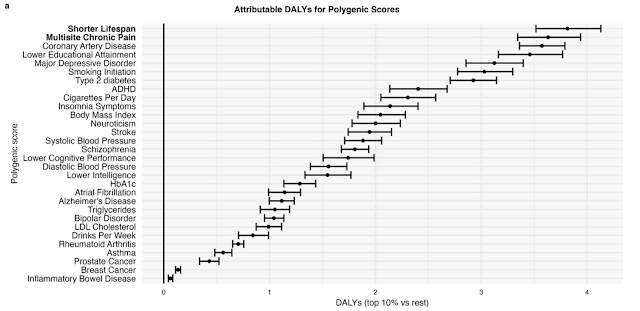
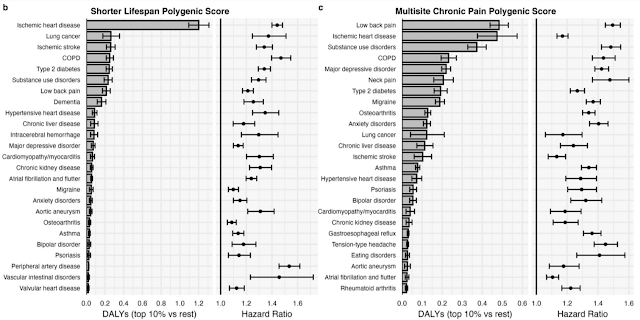
The impact of genetic variation on overall disease burden has not been comprehensively evaluated. Here we introduce an approach to estimate the effect of different types of genetic risk factors on disease burden quantified through disability-adjusted life years (DALYs, “lost healthy life years”). We use genetic information from 735,748 individuals with registry-based follow-up of up to 48 years. At the individual level, rare variants had higher effects on DALYs than common variants, while common variants were more relevant for population-level disease burden. Among common variants, rs3798220 (LPA) had the strongest effect, with 1.18 DALYs attributable to carrying 1 vs 0 copies of the minor allele. Belonging to top 10% vs bottom 90% of a polygenic score for multisite chronic pain had an effect of 3.63 DALYs. Carrying a deleterious rare variant in LDLR, MYBPC3, or BRCA1/2 had an effect of around 4.1-13.1 DALYs. The population-level disease burden attributable to some common variants is comparable to the burden from modifiable risk factors such as high sodium intake and low physical activity. Genetic risk factors can explain a sizeable number of healthy life years lost both at the individual and population level, highlighting the importance of incorporating genetic information into public health efforts.
The figure below shows DALYs attributable to being in the top 10% vs bottom 90% of each PGS. (So, roughly, top 10% vs average individuals.) 

The Shorter Lifespan Polygenic Score is a kind of index similar to the Embryo Health Score used by Genomic Prediction. Note that the difference between 90+ percentile and average individuals is roughly 4 DALYs!  


In our 2019 sibling validation paper we showed that disease risk polygenic scores have roughly as much predictive power to differentiate high and low risk sibs as when applied to pairs of unrelated individuals. 


Thus the results above are indicative of DALY gains from embryo selection.


In 2018 we had Arno Palotie, one of the founders of FinnGen, at MSU to give a talk about the project. 


Wednesday, January 26, 2022

Thursday, January 06, 2022

BOLA2 Copy Number Variation: Phenotype Effects From A Human Accelerated Region

Human Accelerated Regions (HARs) are regions of DNA that were conserved throughout prior (e.g., vertebrate) evolution but are significantly different in the human genome.
Allen Institute: ... of the known 3,171 human accelerated regions, 99 percent of these human-specific mutations fall into "non-coding" regions of DNA, or regions of DNA that don't contain instructions for making a protein. Many of them are in stretches of our genome known as enhancers, regions which regulate nearby genes, and about half of those are nestled in enhancers that are active in the developing human brain.
Our analysis of DNA regions used in predictors for common diseases and complex human traits found that large portions of phenotype variance reside in non-coding regions. This has important consequences for pleiotropy and for our understanding of genetic architecture. 

Regarding HARs, in a 2013 post Neanderthals Dumb? I wrote:

This figure is from the Supplement (p.62) of a recent Nature paper describing a high quality genome sequence obtained from the toe of a female Neanderthal who lived in the Altai mountains in Siberia. Interestingly, copy number variation at 16p11.2 is one of the structural variants identified in a recent deCODE study as related to IQ depression; see earlier post Structural genomic variants (CNVs) affect cognition.

From the Supplement (p.62):
Of particular interest is the modern human-specific duplication on 16p11.2 which encompasses the BOLA2 gene. This locus is the breakpoint of the 16p11.2 micro-deletion, which results in developmental delay, intellectual disability, and autism5,6. We genotyped the BOLA2 gene in 675 diverse human individuals sequenced to low coverage as part of the 1000 Genome Project Phase I7 to assess the population distribution of copy numbers in homo-sapiens (Figure S8.3). While both the Altai Neandertal and Denisova individual exhibit the ancestral diploid copy number as seen in all the non-human great apes, only a single human individual exhibits this diploid copy number state.

Modern humans typically have many (e.g., 3-10) copies of BOLA2. In Neanderthals and apes, 2 copies. 
Variation in copy number presumably affects gene expression, even if the actual protein (coding base pairs) structure is not changed. There may be other mechanisms at work, of course.

Mutations in this 16p11.2 region are associated with schizophrenia, autism, brain size, reduced IQ, anemia, and other things. 

Since 2013 a number of papers have investigated the phenotype effects of BOLA2 copy number variation (CNV) and/or the 16p11.2 duplication/deletion. The latter is more complex as it affects multiple genes in addition to BOLA2. In the future, using whole exome or whole genome data in UKB, it should be possible to focus more specifically on effects of BOLA2 CNV.

For reference I note some of the results below.
Phenome-wide Burden of Copy-Number Variation in the UK Biobank (2019) 
16p11.2 C deletion: "We observe significant increases, on the order of one standard deviation, in weight, BMI, hip and waist circumference, reticulocyte count, and Cystatin C measures for these individuals. The larger 593 kb CNV associates with similar measures of body size and fat, as well as hypertension, diabetes/HbA1c, and abdominal hernia. These results are also indicative of effects due to developmental delay; namely, decreased measures of memory, higher Townsend deprivation (an index of material deprivation which considers employment, home/auto ownership, and household overcrowding in a person's neighborhood) ..."   
Note the effect sizes, e.g., on Townsend deprivation index, are extremely large, roughly 1 SD. The effect size for Prospective Memory score (related to ability to read, remember, and execute directions) is 2 SD!


Medical consequences of pathogenic CNVs in adults: analysis of the UK Biobank (2019)
Population percentage in parenthesis: 

See also:

The Human-Specific BOLA2 Duplication Modifies Iron Homeostasis and Anemia Predisposition in Chromosome 16p11.2 Autism Individuals (2019)
Quantifying the Effects of 16p11.2 Copy Number Variants on Brain Structure: A Multisite Genetic-First Study (2018)

Friday, December 10, 2021

Elizabeth Carr: First US IVF baby and Genomic Prediction patient advocate (The Sunday Times podcast)


I don't have an embed link so click here to listen to the podcast.
Genomic Prediction’s Elizabeth Carr: “Scoring embryos”  
The Sunday Times’ tech correspondent Danny Fortson brings on Elizabeth Carr, America’s first baby conceived by in-vitro fertilization and patient advocate at Genomic Prediction, to talk about the new era of pre-natal screening (5:45), the dawn of in-vitro fertilization (8:40), the technology’s acceptance (12:10), what Genomic Prediction does (13:40), scoring embryos (16:30), the slippery slope (19:20), selecting for smarts (24:15), the cost (25:00), and the future of conception (28:30). PLUS Dan Benjamin, bio economist at UCLA, comes on to talk about why he and others raised the alarm about polygenic scoring (30:20), drawing the line between prevention and enhancement (34:15), limits of the tech (37:15), what else we can select for (40:00), and unexpected consequences (42:00). DEC 3, 2021 

This is an earlier podcast I did with Elizabeth and IVF physician Serena Chen (IRMS and Rutgers University Medical School).

See also

First Baby Born from a Polygenically Screened Embryo (video panel)


Embryo Screening for Polygenic Disease Risk: Recent Advances and Ethical Considerations (Genes 2021 Special Issue)
It is a great honor to co-author a paper with Simon Fishel, the last surviving member of the team that produced the first IVF baby (Louise Brown) in 1978. His mentors and collaborators were Robert Edwards (Nobel Prize 2010) and Patrick Steptoe (passed before 2010). ... 
Today millions of babies are produced through IVF. In most developed countries roughly 3-5 percent of all births are through IVF, and in Denmark the fraction is about 10 percent! But when the technology was first introduced with the birth of Louise Brown in 1978, the pioneering scientists had to overcome significant resistance. 
There may be an alternate universe in which IVF was not allowed to develop, and those millions of children were never born. 
Wikipedia: ...During these controversial early years of IVF, Fishel and his colleagues received extensive opposition from critics both outside of and within the medical and scientific communities, including a civil writ for murder.[16] Fishel has since stated that "the whole establishment was outraged" by their early work and that people thought that he was "potentially a mad scientist".[17] 
I predict that within 5 years the use of polygenic risk scores will become common in some health systems (i.e., for adults) and in IVF. Reasonable people will wonder why the technology was ever controversial at all, just as in the case of IVF.

Saturday, November 27, 2021

Social and Educational Mobility: Denmark vs USA (James Heckman)


Despite generous social programs such as free pre-K education, free college, and massive transfer payments, Denmark is similar to the US in key measures of inequality, such as educational outcomes and cognitive test scores. 

While transfer payments can equalize, to some degree, disposable income, they do not seem to be able to compensate for large family effects on individual differences in development. 

These observations raise the following questions: 

1. What is the best case scenario for the US if all progressive government programs are implemented with respect to child development, free high quality K12 education, free college, etc.?

2. What is the causal mechanism for stubborn inequality of outcomes, transmitted from parent to child (i.e., within families)? 

Re #2: Heckman and collaborators focus on environmental factors, but do not (as far as I can tell) discuss genetic transmission. We already know that polygenic scores are correlated to the education and income levels of parents, and (from adoption studies) that children tend to resemble their biological parents much more strongly than their adoptive parents. These results suggest that genetic transmission of inequality may dominate environmental transmission.
  
See 


The Contribution of Cognitive and Noncognitive Skills to Intergenerational Social Mobility (McGue et al. 2020)


Note: Denmark is very homogenous in ancestry, and the data presented in these studies (e.g., polygenic scores and social mobility) are also drawn from European-ancestry cohorts. The focus here is not on ethnicity or group differences between ancestry groups. The focus is on social and educational mobility within European-ancestry populations, with or without generous government programs supporting free college education, daycare, pre-K, etc.

Lessons for Americans from Denmark about inequality and social mobility 
James Heckman and Rasmus Landersø 
Abstract Many progressive American policy analysts point to Denmark as a model welfare state with low levels of income inequality and high levels of income mobility across generations. It has in place many social policies now advocated for adoption in the U.S. Despite generous Danish social policies, family influence on important child outcomes in Denmark is about as strong as it is in the United States. More advantaged families are better able to access, utilize, and influence universally available programs. Purposive sorting by levels of family advantage create neighborhood effects. Powerful forces not easily mitigated by Danish-style welfare state programs operate in both countries.
Also discussed in this episode of EconTalk podcast. Russ does not ask the obvious question about disentangling family environment from genetic transmission of inequality.
 

The figure below appears in Game Over: Genomic Prediction of Social Mobility. It shows SNP-based polygenic score and life outcome (socioeconomic index, on vertical axis) in four longitudinal cohorts, one from New Zealand (Dunedin) and three from the US. Each cohort (varying somewhat in size) has thousands of individuals, ~20k in total (all of European ancestry). The points displayed are averages over bins containing 10-50 individuals. For each cohort, the individuals have been grouped by childhood (family) social economic status. Social mobility can be predicted from polygenic score. Note that higher SES families tend to have higher polygenic scores on average -- which is what one might expect from a society that is at least somewhat meritocratic. The cohorts have not been used in training -- this is true out-of-sample validation. Furthermore, the four cohorts represent different geographic regions (even, different continents) and individuals born in different decades.


The figure below appears in More on SES and IQ.

Where is the evidence for environmental effects described above in Heckman's abstract: "More advantaged families are better able to access, utilize, and influence universally available programs. Purposive sorting by levels of family advantage create neighborhood effects"? Do parents not seek these advantages for their adopted children as well as for their biological children? Or is there an entirely different causal mechanism based on shared DNA?


Monday, October 18, 2021

Embryo Screening and Risk Calculus

Over the weekend The Guardian and The Times (UK) both ran articles on embryo selection. 


I recommend the first article. Philip Ball is an accomplished science writer and former scientist. He touches on many of the most important aspects of the topic, not easy given the length restriction he was working with. 

However I'd like to cover an aspect of embryo selection which is often missed, for example by the bioethicists quoted in Ball's article.

Several independent labs have published results on risk reduction from embryo selection, and all find that the technique is effective. But some people who are not following the field closely (or are not quantitative) still characterize the benefits -- incorrectly, in my view -- as modest. I honestly think they lack understanding of the actual numbers.

Some examples:
Carmi et al. find a ~50% risk reduction for schizophrenia from selecting the lowest risk embryo from a set of 5. For a selection among 2 embryos the risk reduction is ~30%. (We obtain a very similar result using empirical data: real adult siblings with known phenotype.) 
Visscher et al. find the following results, see Table 1 and Figure 2 in their paper. To their credit they compute results for a range of ancestries (European, E. Asian, African). We have performed similar calculations using siblings but have not yet published the results for all ancestries.  
Relative Risk Reduction (RRR)
Hypertension: 9-18% (ranges depend on specific ancestry) 
Type 2 Diabetes: 7-16% 
Coronary Artery Disease: 8-17% 
Absolute Risk Reduction (ARR)
Hypertension: 4-8.5% (ranges depend on specific ancestry) 
Type 2 Diabetes: 2.6-5.5% 
Coronary Artery Disease: 0.55-1.1%
I don't view these risk reductions as modest. Given that an IVF family is already going to make a selection they clearly benefit from the additional information that comes with genotyping each embryo. The cost is a small fraction of the overall cost of an IVF cycle.

But here is the important mathematical point which many people miss: We buy risk insurance even when the expected return is negative, in order to ameliorate the worst possible outcomes. 

Consider the example of home insurance. A typical family will spend tens of thousands of dollars over the years on home insurance, which protects against risks like fire or earthquake. However, very few homeowners (e.g., ~1 percent) ever suffer a really large loss! At the end of their lives, looking back, most families might conclude that the insurance was "a waste of money"!

So why buy the insurance? To avoid ruin in the event you are unlucky and your house does burn down. It is tail risk insurance.

Now consider an "unlucky" IVF family. At, say, the 1 percent level of "bad luck" they might have some embryos which are true outliers (e.g., at 10 times normal risk, which could mean over 50% absolute risk) for a serious condition like schizophrenia or breast cancer. This is especially likely if they have a family history. 

What is the benefit to this specific subgroup of families? It is enormous -- using the embryo risk score they can avoid having a child with very high likelihood of serious health condition. This benefit is many many times (> 100x!) larger than the cost of the genetic screening, and it is not characterized by the average risk reductions given above.

The situation is very similar to that of aneuploidy testing (screening against Down syndrome), which is widespread, not just in IVF. The prevalence of trisomy 21 (extra copy of chromosome 21) is only ~1 percent, so almost all families doing aneuploidy screening are "wasting their money" if one uses faulty logic! Nevertheless, the families in the affected category are typically very happy to have paid for the test, and even families with no trisomy warning understand that it was worthwhile.

The point is that no one knows ahead of time whether their house will burn down, or that one or more of their embryos has an important genetic risk. The calculus of average return is misleading -- i.e., it says that home insurance is a "rip off" when in fact it serves an important social purpose of pooling risk and helping the unfortunate. 

The same can be said for embryo screening in IVF -- one should focus on the benefit to "unlucky" families to determine the value. We can't identify the "unlucky" in advance, unless we do genetic screening!

Friday, October 01, 2021

DNA forensics, genetic genealogy, and large databases (Veritasium video)


This is a good overview of DNA forensics, genetic genealogy, and existing databases like GEDmatch (Verogen).
@15:35 "Multiple law enforcement agencies have said that this is the most revolutionary tool they've had since the adoption of the fingerprint."
See Othram: the future of DNA forensics (2019):
The existing FBI standard (CODIS) for DNA identification uses only 20 markers (STRs -- previously only 13 loci were used!). By contrast, genome wide sequencing can reliably call millions of genetic variants. 
For the first time, the cost curves for these two methods have crossed: modern sequencing costs no more than extracting CODIS markers using the now ~30 year old technology. 
What can you do with millions of genetic markers? 
1. Determine relatedness of two individuals with high precision. This allows detectives to immediately identify a relative (ranging from distant cousin to sibling or parent) of the source of the DNA sample, simply by scanning through large DNA databases. 
...
More Othram posts.

Sunday, September 26, 2021

Picking Embryos With Best Health Odds Sparks New DNA Debate (Bloomberg Technology)


Bloomberg Technology covers polygenic embryo screening. Note, baby Aurea is well over a year old now. 

I am informed by Genomic Prediction's CEO that the company does genetic testing for ~200 IVF clinics on 6 continents. The overall scale of activity is increasing rapidly and also covers more traditional testing such as PGT-A (testing for aneuploidy or chromosomal normality) and testing for monogenic conditions, PGT-M. Here, PGT = Preimplantation Genetic Testing (standard terminology in IVF). 

I believe that polygenic screening, or PGT-P, will become very common in the near future. It is natural for parents to want as much information as possible to select the embryo that will become their child, and all of these types of testing can be performed simultaneously by GP using the same standard cell biopsy. Currently ~60% of all IVF embryos produced in the US (millions per year, worldwide) undergo some kind of genetic testing.
Picking Embryos With Best Health Odds Sparks New DNA Debate
By Carey Goldberg
Rafal Smigrodzki won’t make a big deal of it, but someday, when his toddler daughter Aurea is old enough to understand, he plans to explain that she likely made medical history at the moment of her birth.
Aurea appears to be the first child born after a new type of DNA testing that gave her a “polygenic risk score.” It’s based on multiple common gene variations that could each have tiny effects; together, they create higher or lower odds for many common diseases.
Her parents underwent fertility treatment in 2019 and had to choose which of four IVF embryos to implant. They turned to a young company called Genomic Prediction and picked the embryo given the best genetic odds of avoiding heart disease, diabetes and cancer in adulthood.
Smigrodzki, a North Carolina neurologist with a doctorate in human genetics, argues that parents have a duty to give a child the healthiest possible start in life, and most do their best. “Part of that duty is to make sure to prevent disease -- that’s why we give vaccinations,” he said. “And the polygenic testing is no different. It’s just another way of preventing disease.”
The choice was simple for him, but recent dramatic advances in the science of polygenic risk scoring raise issues so complex that The New England Journal of Medicine in July published a special report on the problems with using it for embryo selection.
‘Urgent’ Debate
The paper points to a handful of companies in the U.S. and Europe that already are offering embryo risk scores for conditions including schizophrenia, breast cancer and diabetes. It calls for an “urgent society-wide conversation.”
“We need to talk about what sort of regulation we want to have in this space,” said co-author Daniel Benjamin, an economist specializing in genetics -- or “genoeconomist” -- at UCLA.
Unlike the distant prospect of CRISPR-edited designer babies,“this is happening, and it is now,” he said. Many claims by companies that offer DNA-based eating or fitness advice are “basically bunk,” he added, “but this is real. The benefits are real, and the risks are real.”
Among the problems the journal article highlights: Most genetic data is heavily Eurocentric at this point, so parents with other ancestry can’t benefit nearly as much. The science is so new that huge unknowns remain. And selection could exacerbate health disparities among races and classes.
The article also raises concerns that companies marketing embryo selection over-promise, using enticements of “healthy babies” when the scores are only probabilities, not guarantees -- and when most differences among embryos are likely to be very small.
The issues are so complicated and new that the New England Journal article’s 13 authors held differing views on how polygenic embryo scoring should be regulated, said co-first author Patrick Turley, a University of Southern California economist. But all agreed that “potential consumers need to understand what they’re signing up for,” he said. 
...
I have thought this outcome inevitable since laboratory methods became advanced enough to obtain an accurate and inexpensive human genotype from a sample equivalent to the DNA in a few cells (2012 blog post). The information obtained can now be used to predict characteristics of the individual, with applications in assisted reproduction, health science, and even criminal forensics (Othram, Inc.).

Related:

Polygenic Embryo Screening: comments on Carmi et al. and Visscher et al. (discussion of the NEJM paper described in the Bloomberg article). 


Embryo Screening for Polygenic Disease Risk: Recent Advances and Ethical Considerations (Genes 2021 Special Issue)


Carey Goldberg is Boston bureau chief for Bloomberg. She appears in this recent WBUR On Point episode with Kathryn Paige Harden:


Compare to this 2013 "Genius Babies" episode of On Point in which I appeared.
   

Thursday, September 16, 2021

Men Without Women


This short story has it all -- genetic genealogy, ultra high net worth physics quant banker, stripper, cop, marriage, family, New Yorker writer. It's fiction, but based on real characters and stories. 

There is an audio version, read by the author, at the link.
Satellites by Rebecca Curtis (The New Yorker July 5, 2021) 
My husband and Tony were anxiety-ridden workaholics who’d focussed, from a young age, on earning cash. Tony wanted enough for a good life; Conor, enough to feel safe. They were fifty-six years old, though Conor looked forty-five and Tony thirty-five. They were meticulous, but owing to oversights they’d each had five kids by four women. They were two nerds from New Hampshire. ... 
His ancestors, he told me, had founded America. He’d started working at age twelve, as a farmhand, and eventually acquired a Ph.D. in quantum physics from Harvard, then served for decades as the “head quant” at a world-renowned investment bank. But he wasn’t smart enough to be skeptical when go-go dancers said, Don’t worry, I’m on the pill. ... 
After high school, Tony turned down a scholarship to the University of New Hampshire. He wanted to work. He did active duty in the Marines for eight years, then served in the Air National Guard for twenty while working as a cop. Now he collected his police pension and, for fun, drove a delivery truck. 
... 
Conor smiled. By the way, he said, had Tony ever done 23andMe or Ancestry.com? 
Tony squinted. Ancestry. Sinead bought them kits for his birthday. Why? 
Conor peered up at Jupiter, approaching Saturn for the great conjunction, and the murky dimmer stars. I studied shuttered restaurants. A few bars had created outdoor dining rooms and were busy; the 7-Eleven was dark, but the ever-glowing “Fortune Teller!” sign on the adjacent cottage was lit. 
No reason, Conor said. Had Tony, he asked, opted into his family DNA tree, to see his matches who’d already done Ancestry? Or elected to receive text alerts whenever some new supposed relative signed on? 
Tony walked swiftly. Nah, he said. He’d done Ancestry to make Sinead happy. He shrugged. She’d made their accounts, he said. She probably opted him in; he wasn’t sure. 
When we got home, Tony’s phone had twenty missed calls. 
...

Men Without Women, Ernest Hemingway 1927. "Hemingway begins to examine the themes that would occupy his later works: the casualties of war, the often uneasy relationship between men and women, ..."


Rebecca Curtis interview
In “Satellites,” your story in the Fiction Issue, a woman and her husband, a retired banker, host the husband’s friend at their Jersey-shore mansion. The woman is a frustrated writer, and, to inspire her, her husband, Conor, asks the friend, Tony, a retired police officer, to tell her cop stories. How would you describe the woman’s views of these two men? 
The narrator is awed by how smart Tony and her husband are, and by how hard they work. She’s impressed that they’ve read so much and educated themselves about so many diverse topics while performing demanding and often unpleasant jobs, and by the fact that they’re two of the most generous, kind people she knows. She appreciates that they’ve maintained lifelong friendships, something that she wishes she’d done herself. She doesn’t agree with all their political ideas. Earlier in her life, she believed that, one, bankers cared about money but not about art, literature, world hunger, etc.; and, two, that anyone who supported Trumpish policies (or who voted for anyone like Trump) must be an ignorant jerk. Meeting her husband (and Tony) punctured those beliefs. 
The narrator views herself as the proverbial grasshopper: someone—possibly frivolous, vapid, and solipsistic—who wants to enjoy her life, sing, dance, make “art,” while working various hip-but-not-very-remunerative jobs to pay rent, never truly planning for winter. Tony and Conor are ants: anxious, alert to the dangers the world can pose, doing difficult (and sneered-upon) jobs diligently so they’ll be protected when scarcity comes. The narrator aspires to be more ant-like while remaining a grasshopper. 
Tony and Conor are, in some ways, obsessed with genetics and lineage—they discuss Ancestry.com and bloodlines—but their own families (they each have five children by four women) are somewhat of a disappointment, or even an afterthought, to them. Can you say a little about that tension? 
Conor and Tony suffer because—in several cases—they don’t have the ability to see their children. In the case of divorce, a time-sharing agreement may be in place, but, if the mother has principal custody and won’t permit the father’s visits, what can the father do? Possession sometimes is nine-tenths of the law. Hiring lawyers and going to court to try to force a mother who won’t honor custody agreements to do so requires copious energy, oodles of spare time, and a small fortune. Conor and Tony care deeply about their children, but they’ve lost control—in some cases, of seeing their kids, and, in others, of influencing them. They may feel powerless.

Tuesday, September 07, 2021

Kathryn Paige Harden Profile in The New Yorker (Behavior Genetics)

This is a good profile of behavior geneticist Paige Harden (UT Austin professor of psychology, former student of Eric Turkheimer), with a balanced discussion of polygenic prediction of cognitive traits and the culture war context in which it (unfortunately) exists.
Can Progressives Be Convinced That Genetics Matters? 
The behavior geneticist Kathryn Paige Harden is waging a two-front campaign: on her left are those who assume that genes are irrelevant, on her right those who insist that they’re everything. 
Gideon Lewis-Kraus
Gideon Lewis-Kraus is a talented writer who also wrote a very nice article on the NYTimes / Slate Star Codex hysteria last summer.

Some references related to the New Yorker profile:
1. The paper Harden was attacked for sharing while a visiting scholar at the Russell Sage Foundation: Game Over: Genomic Prediction of Social Mobility 

2. Harden's paper on polygenic scores and mathematics progression in high school: Genomic prediction of student flow through high school math curriculum 

3. Vox article; Turkheimer and Harden drawn into debate including Charles Murray and Sam Harris: Scientific Consensus on Cognitive Ability?

A recent talk by Harden, based on her forthcoming book The Genetic Lottery: Why DNA Matters for Social Equality


Regarding polygenic prediction of complex traits 

I first met Eric Turkheimer in person (we had corresponded online prior to that) at the Behavior Genetics Association annual meeting in 2012, which was back to back with the International Conference on Quantitative Genetics, both held in Edinburgh that year (photos and slides [1] [2] [3]). I was completely new to the field but they allowed me to give a keynote presentation (if memory serves, together with Peter Visscher). Harden may have been at the meeting but I don't recall whether we met. 

At the time, people were still doing underpowered candidate gene studies (there were many talks on this at BGA although fewer at ICQG) and struggling to understand GCTA (Visscher group's work showing one can estimate heritability from modestly large GWAS datasets, results consistent with earlier twins and adoption work). Consequently a theoretical physicist talking about genomic prediction using AI/ML and a million genomes seemed like an alien time traveler from the future. Indeed, I was.

My talk is largely summarized here:
On the genetic architecture of intelligence and other quantitative traits 
https://arxiv.org/abs/1408.3421 
How do genes affect cognitive ability or other human quantitative traits such as height or disease risk? Progress on this challenging question is likely to be significant in the near future. I begin with a brief review of psychometric measurements of intelligence, introducing the idea of a "general factor" or g score. The main results concern the stability, validity (predictive power), and heritability of adult g. The largest component of genetic variance for both height and intelligence is additive (linear), leading to important simplifications in predictive modeling and statistical estimation. Due mainly to the rapidly decreasing cost of genotyping, it is possible that within the coming decade researchers will identify loci which account for a significant fraction of total g variation. In the case of height analogous efforts are well under way. I describe some unpublished results concerning the genetic architecture of height and cognitive ability, which suggest that roughly 10k moderately rare causal variants of mostly negative effect are responsible for normal population variation. Using results from Compressed Sensing (L1-penalized regression), I estimate the statistical power required to characterize both linear and nonlinear models for quantitative traits. The main unknown parameter s (sparsity) is the number of loci which account for the bulk of the genetic variation. The required sample size is of order 100s, or roughly a million in the case of cognitive ability.
The predictions in my 2012 BGA talk and in the 2014 review article above have mostly been validated. Research advances often pass through the following phases of reaction from the scientific community:
1. It's wrong ("genes don't affect intelligence! anyway too complex to figure out... we hope")
2. It's trivial ("ofc with lots of data you can do anything... knew it all along")
3. I did it first ("please cite my important paper on this")
Or, as sometimes attributed to Gandhi: "First they ignore you, then they laugh at you, then they fight you, then you win.”


Technical note

In 2014 I estimated that ~1 million genotype | phenotype pairs would be enough to capture most of the common SNP heritability for height and cognitive ability. This was accomplished for height in 2017. However, the sample size of well-phenotyped individuals is much smaller for cognitive ability, even in 2021, than for height in 2017. For example, in UK Biobank the cognitive test is very brief (~5 minutes IIRC, a dozen or so questions), but it has not even been administered to the full cohort as yet. In the Educational Attainment studies the phenotype EA is only moderately correlated (~0.3 ?) or so with actual cognitive ability.

Hence, although the most recent EA4 results use 3 million individuals [1], and produce a predictor which correlates ~0.4 with actual EA, the statistical power available is still less than what I predicted would be required to train a really good cognitive ability predictor.

In our 2017 height paper, which also briefly discussed bone density and cognitive ability prediction, we built a cognitve ability predictor roughly as powerful as EA3 using only ~100k individuals with the noisy UKB test data. So I remain confident that  ~million individuals with good cognitive scores (e.g., SAT, AFQT, full IQ test) would deliver results far beyond what we currently have available. We also found that our predictor, built using actual (albeit noisy) cognitive scores exhibits less power reduction in within-family (sibling) analyses compared to EA. So there is evidence that (no surprise) EA is more influenced by environmental factors, including so-called genetic nurture effects, than is cognitive ability.

A predictor which captures most of the common SNP heritability for cognitive ability might correlate ~0.5 or 0.6 with actual ability. Applications of this predictor in, e.g., studies of social mobility or educational success or even longevity using existing datasets would be extremely dramatic.

Blog Archive

Labels