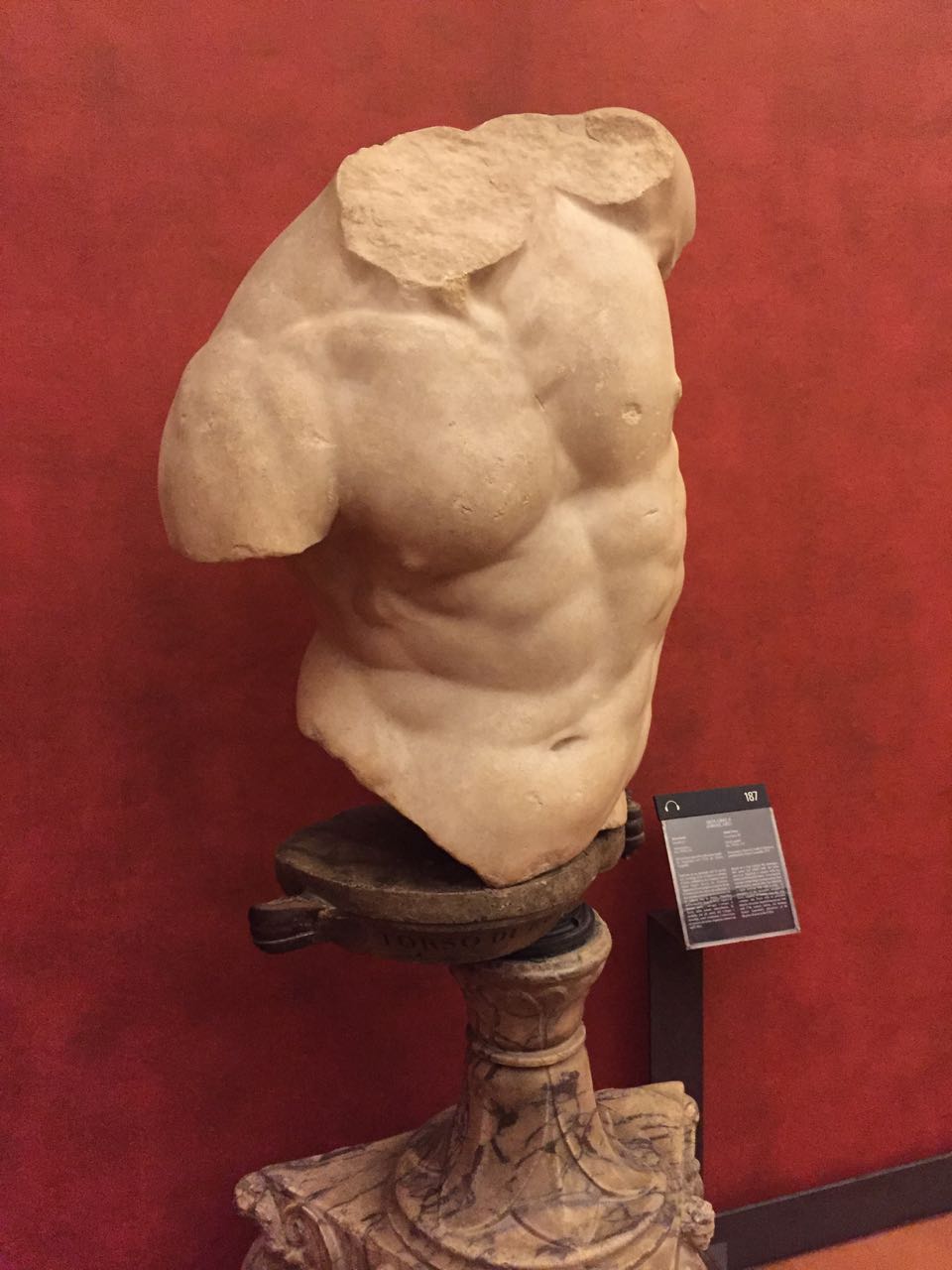
I was in Lake Como for a small meeting of ~30 people, including sovereign wealth, hedge, and pension fund heads, plus a few intellectuals and leading figures from government. Brexit made for extra excitement in our discussions. Hint to scaremongers: the smart money is not as scared as you have tried to make the public.
I can't really share many photos from that meeting, which was held at two large villas on the lake, one a hotel and the other a private estate. Most of the photos below are from Florence. In the first photo below I'm giving some after dinner remarks at the Como meeting.
Pessimism of the Intellect, Optimism of the Will Favorite posts | Manifold podcast | Twitter: @hsu_steve
Showing posts with label italy. Show all posts
Wednesday, June 29, 2016
Wednesday, June 22, 2016
What is great in man is that he is a bridge and not an end
All beings so far have created something beyond themselves; and do you want to be the ebb of this great flood and even go back to the beasts rather than overcome man? What is the ape to man? A laughingstock or a painful embarrassment. And man shall be just that for the superman: a laughingstock or a painful embarrassment. You have made your way from worm to man, and much in you is still worm. Once you were apes, and even now, too, man is more ape than any ape. What is great in man is that he is a bridge and not an end. -- Thus Spoke Zarathustra
The kind of thoughts one has while overlooking Lake Como from a grand villa :-)
The New Atlantis: Friedrich Nietzsche gets a bad rap, for celebrating the will to power and leaving good morals by the wayside; in growing numbers, Americans are beginning to feel the same uneasy skepticism toward the Silicon Valley moguls who have come to thoroughly dominate our economy and imagination. For critics on the left as well as the right, today’s tech titans are uncomfortably squishy, or indifferent, when it comes to partisan, ideological matters. ...
... As Nietzsche knew, a democratic society like ours is supremely unlikely to produce any bona fide supermen. But supernerds? They’re multiplying like rabbits, and they’ve got an open field. Nothing can stop them; certainly not the rest of us.
According to Peter Thiel, however, that scary conclusion is false, for an even scarier reason. In interviews, speeches, and his new book of adapted college lectures, Zero to One, Thiel — the most political and theoretical of the supernerds — raises the prospect of a remarkably comprehensive failure among our best and brightest.
... Thiel’s critique, it turns out, has much in common with Nietzsche’s: Nietzsche worries that Darwinian competition breeds mediocre humans, while Thiel complains that commercial competition breeds mediocre companies. The principle of incremental success produces no true success at all; instead, it suppresses creative genius.
Zero to One is mainly “about how to build companies that create new things,” as Thiel writes in the preface. ...
Thiel begins by distinguishing between two kinds of technological progress: horizontal progress, which means “copying things that work — going from 1 to n,” and vertical progress, which means “doing new things — going from 0 to 1.” The modern world, says Thiel, “experienced relentless [vertical] technological progress from the advent of the steam engine in the 1760s all the way up to about 1970.”
... “Making small changes to things that already exist might lead you to a local maximum,” he writes, “but it won’t help you find the global maximum.” And with limited resources in a global economy, nothing less than the world is at stake. To find the global maximum, entrepreneurs must “transcend the daily brute struggle for survival” by building “creative monopolies” — creating markets where none exist, rather than dumping their energies into wringing the last marginal dollar of value from markets choked with belligerent competitors. For example, Google, as Thiel points out, has basically held a monopoly over Internet search since the early 2000s. For Thiel, the benefits of creative monopolies extend far beyond the companies themselves. While we typically think of monopolies as exploitative and domineering, “creative monopolists give customers more choices by adding entirely new categories of abundance to the world.”
Creative monopolies require what Thiel calls “definite optimism,” which involves making bold, specific plans for the future, and taking risks to fulfill them. ...
... Overtly, we’re increasingly at the mercy of our technological overlords. Covertly, our social life has become crippled by something so powerful that it can render even the most promising supernerd all but powerless, to say nothing of you and me. Our kryptonite is a cosmic idea, one with which Nietzsche was all too familiar: “the people have won — or ‘the slaves’ or ‘the mob’ or ‘the herd’ or whatever you like to call them,” Nietzsche said about the self-styled democratic free spirits. “‘The masters’ have been disposed of; the morality of the common man has won.” Nietzsche despised this mob-ification of morals. ...
As Francis Fukuyama put it in Our Posthuman Future (2002) ... a division between the metaphorical 1 and 99 percent might come about through a biotechnological revolution — something about which even the most assertive of our supernerds at Google are still cagey. ...
“We live in a world,” Thiel told the Dinner for Western Civilization, “in which courage is in far shorter supply than genius.” As he puts it in Zero to One: “Brilliant thinking is rare, but courage is in even shorter supply.” ...
Sunday, October 30, 2011
Festival della Scienza Genova and Italy: final thoughts
Here are the "official" video links from the Festival della Scienza in Genova: my public lecture , interview.
I had a wonderful time in Genova. My visit wasn't very long, because I had to come back to teach.
On the trip I spoke to quite a few young Italians (young here is probably, err, 35 and below), who all expressed pessimism about the future of the country and the economy. On the other hand, at the fancy dinners with Genovese families, I met a number of wealthy business types who reassured me that Italy would be fine and would have no trouble servicing its debt.
On Friday equity markets rallied in relief after the announcement of the latest plan to deal with the Euro debt crisis. However, ominously, bond investors demanded higher rates for Italian 10 year debt.
As often noted by professionals, equity markets are driven by emotion, whereas bond markets are driven by quantitative analysis.
I had a wonderful time in Genova. My visit wasn't very long, because I had to come back to teach.
On the trip I spoke to quite a few young Italians (young here is probably, err, 35 and below), who all expressed pessimism about the future of the country and the economy. On the other hand, at the fancy dinners with Genovese families, I met a number of wealthy business types who reassured me that Italy would be fine and would have no trouble servicing its debt.
On Friday equity markets rallied in relief after the announcement of the latest plan to deal with the Euro debt crisis. However, ominously, bond investors demanded higher rates for Italian 10 year debt.
WSJ: ... Those sorts of concerns played out in Italy's €7.935 billion debt sale on Friday. On each of the four bond issues it sold, Italy was forced to pay higher yields than in the recent past. Most significantly, 10-year debt—a market benchmark—was sold at a yield 6.06%, up from 5.86% only a month ago.
"With a 120% debt-to-GDP ratio and 10-year Italian bonds yielding roughly 6%, they can't do that forever or the borrowing costs will get to an unsustainable level," said Eric Stein, portfolio manager at the Eaton Vance Global Macro Absolute Return Fund. "As your rates go up, it means you're paying more and more to service your debt, and your whole debt dynamics become harder and harder and harder.
As often noted by professionals, equity markets are driven by emotion, whereas bond markets are driven by quantitative analysis.
Sunday, October 23, 2011
Festival della Scienza Genova: videos and photos
Video of my public lecture and an interview, both available in English or Italian translation. The slides for my talk are here.
Some more photos below.
An interview with Rai (Italian version of BBC). Matt Ridley (author and science writer) was also interviewed (the woman sitting between us is the translator).


More views of Genova.

Some more photos below.
An interview with Rai (Italian version of BBC). Matt Ridley (author and science writer) was also interviewed (the woman sitting between us is the translator).


More views of Genova.

Foto di Genova 2
The lecture hall. See here for video and a short interview. (Not up at the moment but should appear later today.)


Translator booth. Most people listened via headset.

The interview studio.


Plaza outside the Palazzo Ducale.

At the pier.

View from the hills. Each night the speakers have been invited to dinners hosted by local Genovese families "of repute" :-) Last night's dinner was one of the best meals I can remember!


Translator booth. Most people listened via headset.

The interview studio.


Plaza outside the Palazzo Ducale.

At the pier.

View from the hills. Each night the speakers have been invited to dinners hosted by local Genovese families "of repute" :-) Last night's dinner was one of the best meals I can remember!
Saturday, October 22, 2011
Foto di Genova
Views from my hotel in central Genova:


Cattedrale di San Lorenzo and Via San Lorenzo:


Palazzo Ducale, where I will give my lecture later today:


Cattedrale di San Lorenzo and Via San Lorenzo:


Palazzo Ducale, where I will give my lecture later today:


Monday, September 13, 2010
Pronto moda
Gritty reporting on the impact of immigrant Chinese on the garment industry in Italy -- click through and read the whole article. Some of this is depicted in the excellent movie Gommorrah. Pronto moda or fast fashion means that manufacturers follow what is hot on the street and get it into stores as fast as possible. More from FT.
See earlier post here (from 2005!).
NYTimes: ... Chinese laborers, first a few immigrants, then tens of thousands, began settling in Prato in the late 1980s. They transformed the textile hub into a low-end garment manufacturing capital — enriching many, stoking resentment and prompting recent crackdowns that in turn have brought cries of bigotry and hypocrisy.
The city is now home to the largest concentration of Chinese in Europe — some legal, many more not. Here in the heart of Tuscany, Chinese laborers work round the clock in some 3,200 businesses making low-end clothes, shoes and accessories, often with materials imported from China, for sale at midprice and low-end retailers worldwide.
It is a “Made in Italy” problem: Enabled by Italy’s weak institutions and high tolerance for rule-bending, the Chinese have blurred the line between “Made in China” and “Made in Italy,” undermining Italy’s cachet and ability to market its goods exclusively as high end.
Part of the resentment is cultural: The city’s classic Italian feel is giving way to that of a Chinatown, with signs in Italian and Chinese, and groceries that sell food imported from China.
But what seems to gall some Italians most is that the Chinese are beating them at their own game — tax evasion and brilliant ways of navigating Italy’s notoriously complex bureaucracy — and have created a thriving, if largely underground, new sector while many Prato businesses have gone under. The result is a toxic combination of residual fears about immigration and the economy.
... The rest of Italy is watching closely. “Lots of businesses from Emilia Romagna, Puglia and the Veneto say, ‘We don’t want to wind up like Prato,’ ” said Silvia Pieraccini, the author of “The Chinese Siege,” a book about the rise of the “pronto moda” or “fast fashion” economy.
Tensions have been running high since the Italian authorities stepped up raids this spring on workshops that use illegal labor, and grew even more when Italian prosecutors arrested 24 people and investigated 100 businesses in the Prato area in late June. The charges included money laundering, prostitution, counterfeiting and classifying foreign-made products as “Made in Italy.”
Yet many Chinese in Prato are offended at the idea that they have ruined the city. Instead, some argue, they have helped rescue Prato from total economic irrelevance, another way of saying that if the Italian state fails to innovate and modernize the economy, somebody else just might.
“If the Chinese hadn’t gone to Prato, would there be pronto moda?” asked Matteo Wong, 30, who was born in China and raised in Prato and runs a consulting office for Chinese immigrants. “Did the Chinese take jobs away from Italians? If anything, they brought lots of jobs to Italians.”
... Resentment runs high. “You take someone from Prato with two unemployed kids and when a Chinese person drives by in a Porsche Cayenne or a Mercedes bought with money earned from illegally exploiting immigrant workers, and this climate is risky,” said Domenico Savi, Prato’s chief of police until June.
According to the Prato mayor’s office, there are 11,500 legal Chinese immigrants, out of Prato’s total population of 187,000. But the office estimates the city has an additional 25,000 illegal immigrants, a majority of them Chinese.
With its bureaucracy, protectionist policies and organized crime, Italy is arguably Western Europe’s least business-friendly country. Yet in Prato, the Chinese have managed to create an entirely new economy from scratch in a matter of years.
A common technique used, often with the aid of knowledgeable Italian tax consultants and lawyers, is to open a business, close it before the tax police can catch up, then reopen the same workspace with a new tax code number.
“The Chinese are very clever. They’re not like other immigrants, who can be pretty thick,” said Riccardo Marini, a textile manufacturer and the head of the Prato branch of Confindustria, the Italian industrialists’ organization.
“The difficulty,” he added ruefully, “is in finding a shared understanding of the rules of the game.”
Prato’s streets have slowly become more and more Chinese, as the Chinese have bought out Italian-owned shops and apartments, often paying in cash. Public schools are increasingly filled with Chinese pupils.
Hypocrisy abounds. “The people in Prato are ostriches,” said Patrizia Bardazzi, who with her husband has run a high-end clothing shop in downtown Prato for 40 years. “I know people who rent space to the Chinese and then say, ‘I don’t come into the center because there are too many Chinese.’ They rent out the space and take the money and go to Forte dei Marmi,” she added, referring to the Tuscan resort town. ...
Friday, September 10, 2010
Coordinating mediocrity
Seth Roberts (a psychology professor who splits his time between Berkeley and Tsinghua in Beijing) points me to an interesting paper by two Italian sociologists.
If you speak to young Italians, particularly scientists and other highly educated people, you will hear terrible stories about just how dysfunctional their academic and research systems have become. At meetings like the one I am currently attending, I often hear the comment that Italy's number one export is talented people, trained at the expense of taxpayers. "Look at all the Italians at this conference -- but they are all working in other countries!"
The paper characterizes the current situation in Italy as a collective outcome (equilibrium) with its own cynical and corrosive social norms. I can easily think of other examples! There is tremendous value to being an efficient "high trust" society (what the authors would call an H-world), and once the equilibrium has shifted in the L direction it is very hard to correct.
One very jarring thing about science and academia is that students entering the field are among the most idealistic of people, yet a significant fraction of senior researchers are among the most cynical. The proportions vary by discipline.
Here is a nice example:
From the conclusions:
See also footnote 3:
If you speak to young Italians, particularly scientists and other highly educated people, you will hear terrible stories about just how dysfunctional their academic and research systems have become. At meetings like the one I am currently attending, I often hear the comment that Italy's number one export is talented people, trained at the expense of taxpayers. "Look at all the Italians at this conference -- but they are all working in other countries!"
The paper characterizes the current situation in Italy as a collective outcome (equilibrium) with its own cynical and corrosive social norms. I can easily think of other examples! There is tremendous value to being an efficient "high trust" society (what the authors would call an H-world), and once the equilibrium has shifted in the L direction it is very hard to correct.
One very jarring thing about science and academia is that students entering the field are among the most idealistic of people, yet a significant fraction of senior researchers are among the most cynical. The proportions vary by discipline.
L-worlds: the curious preference for low quality and its norms
Diego Gambetta and Gloria Origgi
Department of Sociology, Oxford University
Abstract. We investigate a phenomenon which we have experienced as common when dealing with an assortment of Italian public and private institutions: people promise to exchange high quality goods and services (H), but then something goes wrong and the quality delivered is lower than promised (L). While this is perceived as ‘cheating’ by outsiders, insiders seem not only to adapt but to rely on this outcome. They do not resent low quality exchanges, in fact they seem to resent high quality ones, and are inclined to ostracise and avoid dealing with agents who deliver high quality. This equilibrium violates the standard preference ranking associated to the prisoner’s dilemma and similar games, whereby self-interested rational agents prefer to dish out low quality in exchange for high quality. While equally ‘lazy’, agents in our L-worlds are nonetheless oddly ‘pro-social’: to the advantage of maximizing their raw self-interest, they prefer to receive low quality provided that they too can in exchange deliver low quality without embarrassment. They develop a set of oblique social norms to sustain their preferred equilibrium when threatened by intrusions of high quality. We argue that cooperation is not always for the better: high quality collective outcomes are not only endangered by self-interested individual defectors, but by ‘cartels’ of mutually satisfied mediocrities.
Here is a nice example:
... When Federico Varese (1996) revealed that Stefano Zamagni, a well-established Italian economist, had plagiarised verbatim several pages from Robert Nozick, Varese was criticised by several Italian colleagues who together evoked nine norms or reasons that he would have violated by blowing the whistle. None of these include a justification of plagiarism per se. Varese discusses them in an unpublished article (“Economia d’idee II”). They are worth listing, their range is staggering:
1. There is nothing original, everyone plagiarises, so why bother? [journalist]
2. Whistle blowers are always worse than their targets [sociologist]
3. What is the point of targeting Zamagni? They will never punish him anyway.
4. What is the point of blowing the whistle as you will pay the consequences
5. He is a good “barone”, much better than many others, so why target him?
6. Zamagni is a member of the left and you should not weaken the left during election times [economist; various friends]
7. Zamagni shows good intellectual tastes as he plagiarises very good authors, so he does not deserve to be attacked [philosopher]
8. Given that many are guilty of plagiarism, targeting one in particular shows that the whistle blower is driven by base motives.
9. In addition, an economist suggested an explanation rather than a justification saying that the real author of the plagiarism was probably a student of Zamagni who wrote the paper for him. This would, funnily enough, imply that Zamagni was innocent of the plagiarism, but still that he signed a paper he did not write, written by someone who also did not write it!
From the conclusions:
... Whatever its origins, the cost of the L-propensity is proving over time more detrimental than helpful – flexibility shifts to laxness, tolerance to sloppiness, and confusion to breaches of trust – and standards in Italian education, politics, media and cultural creativity in general, although blessed by the occasional geniuses, have never risen and have quite possibly declined further. One does not need to be an incurable perfectionist to appreciate how sadly this is the case.
An implication of this paper is that the threat to good collective outcomes is not just free-riding. There are subtler ones. The L-world we described is not an extra-normative one populated by isolate individual predators free to roam around, but one governed by its own ‘perverse’ social norms. The social sciences have focused on cooperation and on the social norms that sustain it while narrowly conceiving of anti-cooperators as individualistic predators, acting free of normative constraints. Social norms, in the dominant interpretation, would exist as an antidote to our natural antisocial proclivities. The interest of our case is to suggest that this distinction does not stand up, and that those whom we think of as free-riders too operate within a normative structure – a special “cement of society” that glues L-doers together to the detriment of the common good.
See also footnote 3:
Recent experimental research carried out by Herrmann, Thöni & Gächter (2007) has come up with unexpected evidence which may be germane to our case. They ran the so called public-good game with university students in 15 cities in the developed and developing world, from the US to China, from the UK to Russia, Turkey and Saudi Arabia. ... In other words, there were some L-doers who punish H-doers. ... Going in descending order of size of punishment, punishment of more generous contributors was found in Muscat, Athens, Riyadh, Samara, Minsk, Istanbul, Seoul and Dnipropetrovs'k. Although not entirely absent, this type of punishment proved negligible in Boston, Nottingham, St. Gallen, Zurich, Copenhagen, Bonn, and Chengdu.
Sunday, September 07, 2008
Venice photos
I only spent part of a day in Venice. It's a magnificent relic of a bygone era, but overrun by tourists and the types of businesses that cater to (exploit) them.


Tuesday, September 27, 2005
Globalization and high fashion
Predictably, even the high fashion industry has started producing in low-cost countries.
I notice in Eugene that the $3k Natuzzi Italian leather sofa set is competing against a $1.2k Italian leather, but made in China, sofa set made by some company called Shanghai Living. Both have nice modern lines and would look at home in Dwell magazine. Last time I was in Shanghai a few years ago I was amazed at the huge furniture showrooms there, packed with buyers representing furniture distributors from all over the world. The Shanghai Living stuff was brought to Eugene by an enterprising store owner who liked what he saw and "bought an entire container".
According to the WSJ article (excerpt below), hourly fashion manufacturing wages are about $20 in Italy and France, and under a dollar in China. The guy who says it will take 15 years for full delocalization of production is dreaming. There are already armies of good designers (not just armies of workers) in Asia who are ready to take business from these guys.
See here for how design and manufacturing are done today.
I notice in Eugene that the $3k Natuzzi Italian leather sofa set is competing against a $1.2k Italian leather, but made in China, sofa set made by some company called Shanghai Living. Both have nice modern lines and would look at home in Dwell magazine. Last time I was in Shanghai a few years ago I was amazed at the huge furniture showrooms there, packed with buyers representing furniture distributors from all over the world. The Shanghai Living stuff was brought to Eugene by an enterprising store owner who liked what he saw and "bought an entire container".
According to the WSJ article (excerpt below), hourly fashion manufacturing wages are about $20 in Italy and France, and under a dollar in China. The guy who says it will take 15 years for full delocalization of production is dreaming. There are already armies of good designers (not just armies of workers) in Asia who are ready to take business from these guys.
See here for how design and manufacturing are done today.
WSJ: The move out of France and Italy is only just beginning. Fashion executives say some production won't ever move to low-cost countries because Italian craftsmanship is still unparalleled. Sophisticated items made in low volumes -- such as hand-woven leather handbags -- may always be "Made in Italy," for example. For the rest, the industry thinks it's only a matter of time.
"It will take another 15 years until luxury brands' main lines are completely delocalized, but it will happen," said Tonino Perna, chief executive of IT Holding SpA, which manufactures relatively affordable collections for labels such as Versace and Dolce & Gabbana. IT Holding makes about 30% of its clothes and accessories abroad. Executives say privately that more fashion brands are producing outside of Europe than the number who care to admit it.
This shift underscores how the developing world's manufacturing talent is improving to the point where even quintessential luxury products are starting to move offshore. It's also a sign of the extent to which high-end products are under pressure from low-cost alternatives.
Companies from sneaker makers to automotive giants have long outsourced to China and Mexico, but luxury-goods brands have always touted Italian and French production as essential to the luxury experience. The "Made in Italy" label, with its centuries-old history of artisanship, has justified exorbitant prices. If their clothes are stitched at low-cost factories, how will consumers react? Will luxury brands eventually have to bow to pressure and lower prices at the expense of their margins?
Many Italian fashion houses fear a backlash if they're seen hastening the decline of Italy's textile industry. For more than a century, that sector helped power the Italian economy, the fourth-largest in Europe. As companies outsourced production, sales of Italian textiles have fallen more than 10% in the past three years, with 24,000 textile manufacturing jobs lost last year, according to Italy's textile association. How to stop the trend, which is contributing to Italy's current economic malaise, is a hotly debated political issue.
"Our 'Made in Italy' has to be defended with force," Claudio Scajola, Italian Minister for Productive Activities, said at the Milan fashion shows, which started this week.
Subscribe to:
Posts (Atom)
Blog Archive
Labels
- physics (420)
- genetics (325)
- globalization (301)
- genomics (295)
- technology (282)
- brainpower (280)
- finance (275)
- american society (261)
- China (249)
- innovation (231)
- ai (206)
- economics (202)
- psychometrics (190)
- science (172)
- psychology (169)
- machine learning (166)
- biology (163)
- photos (162)
- genetic engineering (150)
- universities (150)
- travel (144)
- podcasts (143)
- higher education (141)
- startups (139)
- human capital (127)
- geopolitics (124)
- credit crisis (115)
- political correctness (108)
- iq (107)
- quantum mechanics (107)
- cognitive science (103)
- autobiographical (97)
- politics (93)
- careers (90)
- bounded rationality (88)
- social science (86)
- history of science (85)
- realpolitik (85)
- statistics (83)
- elitism (81)
- talks (80)
- evolution (79)
- credit crunch (78)
- biotech (76)
- genius (76)
- gilded age (73)
- income inequality (73)
- caltech (68)
- books (64)
- academia (62)
- history (61)
- intellectual history (61)
- MSU (60)
- sci fi (60)
- harvard (58)
- silicon valley (58)
- mma (57)
- mathematics (55)
- education (53)
- video (52)
- kids (51)
- bgi (48)
- black holes (48)
- cdo (45)
- derivatives (43)
- neuroscience (43)
- affirmative action (42)
- behavioral economics (42)
- economic history (42)
- literature (42)
- nuclear weapons (42)
- computing (41)
- jiujitsu (41)
- physical training (40)
- film (39)
- many worlds (39)
- quantum field theory (39)
- expert prediction (37)
- ufc (37)
- bjj (36)
- bubbles (36)
- mortgages (36)
- google (35)
- race relations (35)
- hedge funds (34)
- security (34)
- von Neumann (34)
- meritocracy (31)
- feynman (30)
- quants (30)
- taiwan (30)
- efficient markets (29)
- foo camp (29)
- movies (29)
- sports (29)
- music (28)
- singularity (27)
- entrepreneurs (26)
- conferences (25)
- housing (25)
- obama (25)
- subprime (25)
- venture capital (25)
- berkeley (24)
- epidemics (24)
- war (24)
- wall street (23)
- athletics (22)
- russia (22)
- ultimate fighting (22)
- cds (20)
- internet (20)
- new yorker (20)
- blogging (19)
- japan (19)
- scifoo (19)
- christmas (18)
- dna (18)
- gender (18)
- goldman sachs (18)
- university of oregon (18)
- cold war (17)
- cryptography (17)
- freeman dyson (17)
- smpy (17)
- treasury bailout (17)
- algorithms (16)
- autism (16)
- personality (16)
- privacy (16)
- Fermi problems (15)
- cosmology (15)
- happiness (15)
- height (15)
- india (15)
- oppenheimer (15)
- probability (15)
- social networks (15)
- wwii (15)
- fitness (14)
- government (14)
- les grandes ecoles (14)
- neanderthals (14)
- quantum computers (14)
- blade runner (13)
- chess (13)
- hedonic treadmill (13)
- nsa (13)
- philosophy of mind (13)
- research (13)
- aspergers (12)
- climate change (12)
- harvard society of fellows (12)
- malcolm gladwell (12)
- net worth (12)
- nobel prize (12)
- pseudoscience (12)
- Einstein (11)
- art (11)
- democracy (11)
- entropy (11)
- geeks (11)
- string theory (11)
- television (11)
- Go (10)
- ability (10)
- complexity (10)
- dating (10)
- energy (10)
- football (10)
- france (10)
- italy (10)
- mutants (10)
- nerds (10)
- olympics (10)
- pop culture (10)
- crossfit (9)
- encryption (9)
- eugene (9)
- flynn effect (9)
- james salter (9)
- simulation (9)
- tail risk (9)
- turing test (9)
- alan turing (8)
- alpha (8)
- ashkenazim (8)
- data mining (8)
- determinism (8)
- environmentalism (8)
- games (8)
- keynes (8)
- manhattan (8)
- new york times (8)
- pca (8)
- philip k. dick (8)
- qcd (8)
- real estate (8)
- robot genius (8)
- success (8)
- usain bolt (8)
- Iran (7)
- aig (7)
- basketball (7)
- free will (7)
- fx (7)
- game theory (7)
- hugh everett (7)
- inequality (7)
- information theory (7)
- iraq war (7)
- markets (7)
- paris (7)
- patents (7)
- poker (7)
- teaching (7)
- vietnam war (7)
- volatility (7)
- anthropic principle (6)
- bayes (6)
- class (6)
- drones (6)
- econtalk (6)
- empire (6)
- global warming (6)
- godel (6)
- intellectual property (6)
- nassim taleb (6)
- noam chomsky (6)
- prostitution (6)
- rationality (6)
- academia sinica (5)
- bobby fischer (5)
- demographics (5)
- fake alpha (5)
- kasparov (5)
- luck (5)
- nonlinearity (5)
- perimeter institute (5)
- renaissance technologies (5)
- sad but true (5)
- software development (5)
- solar energy (5)
- warren buffet (5)
- 100m (4)
- Poincare (4)
- assortative mating (4)
- bill gates (4)
- borges (4)
- cambridge uk (4)
- censorship (4)
- charles darwin (4)
- computers (4)
- creativity (4)
- hormones (4)
- humor (4)
- judo (4)
- kerviel (4)
- microsoft (4)
- mixed martial arts (4)
- monsters (4)
- moore's law (4)
- soros (4)
- supercomputers (4)
- trento (4)
- 200m (3)
- babies (3)
- brain drain (3)
- charlie munger (3)
- cheng ting hsu (3)
- chet baker (3)
- correlation (3)
- ecosystems (3)
- equity risk premium (3)
- facebook (3)
- fannie (3)
- feminism (3)
- fst (3)
- intellectual ventures (3)
- jim simons (3)
- language (3)
- lee kwan yew (3)
- lewontin fallacy (3)
- lhc (3)
- magic (3)
- michael lewis (3)
- mit (3)
- nathan myhrvold (3)
- neal stephenson (3)
- olympiads (3)
- path integrals (3)
- risk preference (3)
- search (3)
- sec (3)
- sivs (3)
- society generale (3)
- systemic risk (3)
- thailand (3)
- twitter (3)
- alibaba (2)
- bear stearns (2)
- bruce springsteen (2)
- charles babbage (2)
- cloning (2)
- david mamet (2)
- digital books (2)
- donald mackenzie (2)
- drugs (2)
- dune (2)
- exchange rates (2)
- frauds (2)
- freddie (2)
- gaussian copula (2)
- heinlein (2)
- industrial revolution (2)
- james watson (2)
- ltcm (2)
- mating (2)
- mba (2)
- mccain (2)
- monkeys (2)
- national character (2)
- nicholas metropolis (2)
- no holds barred (2)
- offices (2)
- oligarchs (2)
- palin (2)
- population structure (2)
- prisoner's dilemma (2)
- singapore (2)
- skidelsky (2)
- socgen (2)
- sprints (2)
- star wars (2)
- ussr (2)
- variance (2)
- virtual reality (2)
- war nerd (2)
- abx (1)
- anathem (1)
- andrew lo (1)
- antikythera mechanism (1)
- athens (1)
- atlas shrugged (1)
- ayn rand (1)
- bay area (1)
- beats (1)
- book search (1)
- bunnie huang (1)
- car dealers (1)
- carlos slim (1)
- catastrophe bonds (1)
- cdos (1)
- ces 2008 (1)
- chance (1)
- children (1)
- cochran-harpending (1)
- cpi (1)
- david x. li (1)
- dick cavett (1)
- dolomites (1)
- eharmony (1)
- eliot spitzer (1)
- escorts (1)
- faces (1)
- fads (1)
- favorite posts (1)
- fiber optic cable (1)
- francis crick (1)
- gary brecher (1)
- gizmos (1)
- greece (1)
- greenspan (1)
- hypocrisy (1)
- igon value (1)
- iit (1)
- inflation (1)
- information asymmetry (1)
- iphone (1)
- jack kerouac (1)
- jaynes (1)
- jazz (1)
- jfk (1)
- john dolan (1)
- john kerry (1)
- john paulson (1)
- john searle (1)
- john tierney (1)
- jonathan littell (1)
- las vegas (1)
- lawyers (1)
- lehman auction (1)
- les bienveillantes (1)
- lowell wood (1)
- lse (1)
- machine (1)
- mcgeorge bundy (1)
- mexico (1)
- michael jackson (1)
- mickey rourke (1)
- migration (1)
- money:tech (1)
- myron scholes (1)
- netwon institute (1)
- networks (1)
- newton institute (1)
- nfl (1)
- oliver stone (1)
- phil gramm (1)
- philanthropy (1)
- philip greenspun (1)
- portfolio theory (1)
- power laws (1)
- pyschology (1)
- randomness (1)
- recession (1)
- sales (1)
- skype (1)
- standard deviation (1)
- starship troopers (1)
- students today (1)
- teleportation (1)
- tierney lab blog (1)
- tomonaga (1)
- tyler cowen (1)
- venice (1)
- violence (1)
- virtual meetings (1)
- wealth effect (1)