Showing posts with label new yorker. Show all posts

Thursday, September 16, 2021

Men Without Women


This short story has it all -- genetic genealogy, ultra high net worth physics quant banker, stripper, cop, marriage, family, New Yorker writer. It's fiction, but based on real characters and stories. 

There is an audio version, read by the author, at the link.
Satellites by Rebecca Curtis (The New Yorker July 5, 2021) 
My husband and Tony were anxiety-ridden workaholics who’d focussed, from a young age, on earning cash. Tony wanted enough for a good life; Conor, enough to feel safe. They were fifty-six years old, though Conor looked forty-five and Tony thirty-five. They were meticulous, but owing to oversights they’d each had five kids by four women. They were two nerds from New Hampshire. ... 
His ancestors, he told me, had founded America. He’d started working at age twelve, as a farmhand, and eventually acquired a Ph.D. in quantum physics from Harvard, then served for decades as the “head quant” at a world-renowned investment bank. But he wasn’t smart enough to be skeptical when go-go dancers said, Don’t worry, I’m on the pill. ... 
After high school, Tony turned down a scholarship to the University of New Hampshire. He wanted to work. He did active duty in the Marines for eight years, then served in the Air National Guard for twenty while working as a cop. Now he collected his police pension and, for fun, drove a delivery truck. 
... 
Conor smiled. By the way, he said, had Tony ever done 23andMe or Ancestry.com? 
Tony squinted. Ancestry. Sinead bought them kits for his birthday. Why? 
Conor peered up at Jupiter, approaching Saturn for the great conjunction, and the murky dimmer stars. I studied shuttered restaurants. A few bars had created outdoor dining rooms and were busy; the 7-Eleven was dark, but the ever-glowing “Fortune Teller!” sign on the adjacent cottage was lit. 
No reason, Conor said. Had Tony, he asked, opted into his family DNA tree, to see his matches who’d already done Ancestry? Or elected to receive text alerts whenever some new supposed relative signed on? 
Tony walked swiftly. Nah, he said. He’d done Ancestry to make Sinead happy. He shrugged. She’d made their accounts, he said. She probably opted him in; he wasn’t sure. 
When we got home, Tony’s phone had twenty missed calls. 
...

Men Without Women, Ernest Hemingway 1927. "Hemingway begins to examine the themes that would occupy his later works: the casualties of war, the often uneasy relationship between men and women, ..."


Rebecca Curtis interview
In “Satellites,” your story in the Fiction Issue, a woman and her husband, a retired banker, host the husband’s friend at their Jersey-shore mansion. The woman is a frustrated writer, and, to inspire her, her husband, Conor, asks the friend, Tony, a retired police officer, to tell her cop stories. How would you describe the woman’s views of these two men? 
The narrator is awed by how smart Tony and her husband are, and by how hard they work. She’s impressed that they’ve read so much and educated themselves about so many diverse topics while performing demanding and often unpleasant jobs, and by the fact that they’re two of the most generous, kind people she knows. She appreciates that they’ve maintained lifelong friendships, something that she wishes she’d done herself. She doesn’t agree with all their political ideas. Earlier in her life, she believed that, one, bankers cared about money but not about art, literature, world hunger, etc.; and, two, that anyone who supported Trumpish policies (or who voted for anyone like Trump) must be an ignorant jerk. Meeting her husband (and Tony) punctured those beliefs. 
The narrator views herself as the proverbial grasshopper: someone—possibly frivolous, vapid, and solipsistic—who wants to enjoy her life, sing, dance, make “art,” while working various hip-but-not-very-remunerative jobs to pay rent, never truly planning for winter. Tony and Conor are ants: anxious, alert to the dangers the world can pose, doing difficult (and sneered-upon) jobs diligently so they’ll be protected when scarcity comes. The narrator aspires to be more ant-like while remaining a grasshopper. 
Tony and Conor are, in some ways, obsessed with genetics and lineage—they discuss Ancestry.com and bloodlines—but their own families (they each have five children by four women) are somewhat of a disappointment, or even an afterthought, to them. Can you say a little about that tension? 
Conor and Tony suffer because—in several cases—they don’t have the ability to see their children. In the case of divorce, a time-sharing agreement may be in place, but, if the mother has principal custody and won’t permit the father’s visits, what can the father do? Possession sometimes is nine-tenths of the law. Hiring lawyers and going to court to try to force a mother who won’t honor custody agreements to do so requires copious energy, oodles of spare time, and a small fortune. Conor and Tony care deeply about their children, but they’ve lost control—in some cases, of seeing their kids, and, in others, of influencing them. They may feel powerless.

Tuesday, September 07, 2021

Kathryn Paige Harden Profile in The New Yorker (Behavior Genetics)

This is a good profile of behavior geneticist Paige Harden (UT Austin professor of psychology, former student of Eric Turkheimer), with a balanced discussion of polygenic prediction of cognitive traits and the culture war context in which it (unfortunately) exists.
Can Progressives Be Convinced That Genetics Matters? 
The behavior geneticist Kathryn Paige Harden is waging a two-front campaign: on her left are those who assume that genes are irrelevant, on her right those who insist that they’re everything. 
Gideon Lewis-Kraus
Gideon Lewis-Kraus is a talented writer who also wrote a very nice article on the NYTimes / Slate Star Codex hysteria last summer.

Some references related to the New Yorker profile:
1. The paper Harden was attacked for sharing while a visiting scholar at the Russell Sage Foundation: Game Over: Genomic Prediction of Social Mobility 

2. Harden's paper on polygenic scores and mathematics progression in high school: Genomic prediction of student flow through high school math curriculum 

3. Vox article; Turkheimer and Harden drawn into debate including Charles Murray and Sam Harris: Scientific Consensus on Cognitive Ability?

A recent talk by Harden, based on her forthcoming book The Genetic Lottery: Why DNA Matters for Social Equality


Regarding polygenic prediction of complex traits 

I first met Eric Turkheimer in person (we had corresponded online prior to that) at the Behavior Genetics Association annual meeting in 2012, which was back to back with the International Conference on Quantitative Genetics, both held in Edinburgh that year (photos and slides [1] [2] [3]). I was completely new to the field but they allowed me to give a keynote presentation (if memory serves, together with Peter Visscher). Harden may have been at the meeting but I don't recall whether we met. 

At the time, people were still doing underpowered candidate gene studies (there were many talks on this at BGA although fewer at ICQG) and struggling to understand GCTA (Visscher group's work showing one can estimate heritability from modestly large GWAS datasets, results consistent with earlier twins and adoption work). Consequently a theoretical physicist talking about genomic prediction using AI/ML and a million genomes seemed like an alien time traveler from the future. Indeed, I was.

My talk is largely summarized here:
On the genetic architecture of intelligence and other quantitative traits 
https://arxiv.org/abs/1408.3421 
How do genes affect cognitive ability or other human quantitative traits such as height or disease risk? Progress on this challenging question is likely to be significant in the near future. I begin with a brief review of psychometric measurements of intelligence, introducing the idea of a "general factor" or g score. The main results concern the stability, validity (predictive power), and heritability of adult g. The largest component of genetic variance for both height and intelligence is additive (linear), leading to important simplifications in predictive modeling and statistical estimation. Due mainly to the rapidly decreasing cost of genotyping, it is possible that within the coming decade researchers will identify loci which account for a significant fraction of total g variation. In the case of height analogous efforts are well under way. I describe some unpublished results concerning the genetic architecture of height and cognitive ability, which suggest that roughly 10k moderately rare causal variants of mostly negative effect are responsible for normal population variation. Using results from Compressed Sensing (L1-penalized regression), I estimate the statistical power required to characterize both linear and nonlinear models for quantitative traits. The main unknown parameter s (sparsity) is the number of loci which account for the bulk of the genetic variation. The required sample size is of order 100s, or roughly a million in the case of cognitive ability.
The predictions in my 2012 BGA talk and in the 2014 review article above have mostly been validated. Research advances often pass through the following phases of reaction from the scientific community:
1. It's wrong ("genes don't affect intelligence! anyway too complex to figure out... we hope")
2. It's trivial ("ofc with lots of data you can do anything... knew it all along")
3. I did it first ("please cite my important paper on this")
Or, as sometimes attributed to Gandhi: "First they ignore you, then they laugh at you, then they fight you, then you win.”


Technical note

In 2014 I estimated that ~1 million genotype | phenotype pairs would be enough to capture most of the common SNP heritability for height and cognitive ability. This was accomplished for height in 2017. However, the sample size of well-phenotyped individuals is much smaller for cognitive ability, even in 2021, than for height in 2017. For example, in UK Biobank the cognitive test is very brief (~5 minutes IIRC, a dozen or so questions), but it has not even been administered to the full cohort as yet. In the Educational Attainment studies the phenotype EA is only moderately correlated (~0.3 ?) or so with actual cognitive ability.

Hence, although the most recent EA4 results use 3 million individuals [1], and produce a predictor which correlates ~0.4 with actual EA, the statistical power available is still less than what I predicted would be required to train a really good cognitive ability predictor.

In our 2017 height paper, which also briefly discussed bone density and cognitive ability prediction, we built a cognitve ability predictor roughly as powerful as EA3 using only ~100k individuals with the noisy UKB test data. So I remain confident that  ~million individuals with good cognitive scores (e.g., SAT, AFQT, full IQ test) would deliver results far beyond what we currently have available. We also found that our predictor, built using actual (albeit noisy) cognitive scores exhibits less power reduction in within-family (sibling) analyses compared to EA. So there is evidence that (no surprise) EA is more influenced by environmental factors, including so-called genetic nurture effects, than is cognitive ability.

A predictor which captures most of the common SNP heritability for cognitive ability might correlate ~0.5 or 0.6 with actual ability. Applications of this predictor in, e.g., studies of social mobility or educational success or even longevity using existing datasets would be extremely dramatic.

Thursday, February 13, 2020

Elizabeth Kolbert on Climate Change: Impacts and Mitigation Technologies


Steve and Corey talk to Elizabeth Kolbert, author of The Sixth Extinction, about the current state of the climate debate. All three are pessimistic about the possibility that emissions will be substantively reduced in the near term, and they discuss technologies for removing carbon from the atmosphere. They explore uncertainty in the models regarding temperature rise and precipitation, and contemplate a billion people on the move in response to climate change and population increase. They ask: what is more of a threat to humanity in the coming century, runaway AI or runaway climate change?

Transcript

Elizabeth Kolbert (The New Yorker)

Field Notes from a Catastrophe: Man, Nature, and Climate Change

The Sixth Extinction: An Unnatural History

Jobs and AI

Carbon Capture


Related:

Epistemic Caution and Climate Change

Certainties and Uncertainties in our Energy and Climate Futures: Steve Koonin


man·i·fold /ˈmanəˌfōld/ many and various.

In mathematics, a manifold is a topological space that locally resembles Euclidean space near each point.

Steve Hsu and Corey Washington have been friends for almost 30 years, and between them hold PhDs in Neuroscience, Philosophy, and Theoretical Physics. Join them for wide ranging and unfiltered conversations with leading writers, scientists, technologists, academics, entrepreneurs, investors, and more.

Steve Hsu is VP for Research and Professor of Theoretical Physics at Michigan State University. He is also a researcher in computational genomics and founder of several Silicon Valley startups, ranging from information security to biotech. Educated at Caltech and Berkeley, he was a Harvard Junior Fellow and held faculty positions at Yale and the University of Oregon before joining MSU.

Corey Washington is Director of Analytics in the Office of Research and Innovation at Michigan State University. He was educated at Amherst College and MIT before receiving a PhD in Philosophy from Stanford and a PhD in a Neuroscience from Columbia. He held faculty positions at the University Washington and the University of Maryland. Prior to MSU, Corey worked as a biotech consultant and is founder of a medical diagnostics startup.

Thursday, July 25, 2019

Manifold #15: Daniel Max of The New Yorker on Prion diseases and literary non-fiction


Daniel Max, staff writer at The New Yorker and author of Every Love Story is A Ghost Story, a biography of David Foster Wallace, speaks with Corey and Steve about his first book, The Family that Couldn’t Sleep. The discussion covers the emerging genre of literary non-fiction, Daniel’s process of writing The Family that Couldn’t Sleep, and how he approached and gained the trust of the family at the heart of the story. Corey probes Daniel about how he handled the complex scientific characters, Carl Gajdusek and Stanley Prusiner, who led research into prion disease for 40 years. Daniel recounts how Shirley Glasse (now Lindenbaum) discovered how prions were transmitted through ritual cannibalism in Papua New, a critical step in solving the mystery of what causes of the disease, but how credit was given to Gajdusek. The three discuss the painfully slow pace of research and the inspiring story of a young couple, Eric Minikel and Sonia Vallabh, who have changed careers to dedicate their lives to finding a cure.

Max’s New Yorker Page

Max’s initial 2001 article for the New York Times Magazine on the Italian Family with FFI

Max’s 2013 New Yorker story on Minikel and Vallabh

Transcript


man·i·fold /ˈmanəˌfōld/ many and various.

In mathematics, a manifold is a topological space that locally resembles Euclidean space near each point.

Steve Hsu and Corey Washington have been friends for almost 30 years, and between them hold PhDs in Neuroscience, Philosophy, and Theoretical Physics. Join them for wide ranging and unfiltered conversations with leading writers, scientists, technologists, academics, entrepreneurs, investors, and more.

Steve Hsu is VP for Research and Professor of Theoretical Physics at Michigan State University. He is also a researcher in computational genomics and founder of several Silicon Valley startups, ranging from information security to biotech. Educated at Caltech and Berkeley, he was a Harvard Junior Fellow and held faculty positions at Yale and the University of Oregon before joining MSU.

Corey Washington is Director of Analytics in the Office of Research and Innovation at Michigan State University. He was educated at Amherst College and MIT before receiving a PhD in Philosophy from Stanford and a PhD in a Neuroscience from Columbia. He held faculty positions at the University Washington and the University of Maryland. Prior to MSU, Corey worked as a biotech consultant and is founder of a medical diagnostics startup.

Sunday, May 13, 2018

AI, AGI, and ANI in The New Yorker


A good long read in The New Yorker on AI, AGI, and all that. Note the article appears in the section "Dept. of Speculation" :-)
How Frightened Should We Be of A.I.?

Precisely how and when will our curiosity kill us? I bet you’re curious. A number of scientists and engineers fear that, once we build an artificial intelligence smarter than we are, a form of A.I. known as artificial general intelligence, doomsday may follow. Bill Gates and Tim Berners-Lee, the founder of the World Wide Web, recognize the promise of an A.G.I., a wish-granting genie rubbed up from our dreams, yet each has voiced grave concerns. Elon Musk warns against “summoning the demon,” envisaging “an immortal dictator from which we can never escape.” Stephen Hawking declared that an A.G.I. “could spell the end of the human race.” Such advisories aren’t new. In 1951, the year of the first rudimentary chess program and neural network, the A.I. pioneer Alan Turing predicted that machines would “outstrip our feeble powers” and “take control.” In 1965, Turing’s colleague Irving Good pointed out that brainy devices could design even brainier ones, ad infinitum: “Thus the first ultraintelligent machine is the last invention that man need ever make, provided that the machine is docile enough to tell us how to keep it under control.” It’s that last clause that has claws.

Many people in tech point out that artificial narrow intelligence, or A.N.I., has grown ever safer and more reliable—certainly safer and more reliable than we are. (Self-driving cars and trucks might save hundreds of thousands of lives every year.) For them, the question is whether the risks of creating an omnicompetent Jeeves would exceed the combined risks of the myriad nightmares—pandemics, asteroid strikes, global nuclear war, etc.—that an A.G.I. could sweep aside for us.

The assessments remain theoretical, because even as the A.I. race has grown increasingly crowded and expensive, the advent of an A.G.I. remains fixed in the middle distance. In the nineteen-forties, the first visionaries assumed that we’d reach it in a generation; A.I. experts surveyed last year converged on a new date of 2047. A central tension in the field, one that muddies the timeline, is how “the Singularity”—the point when technology becomes so masterly it takes over for good—will arrive. Will it come on little cat feet, a “slow takeoff” predicated on incremental advances in A.N.I., taking the form of a data miner merged with a virtual-reality system and a natural-language translator, all uploaded into a Roomba? Or will it be the Godzilla stomp of a “hard takeoff,” in which some as yet unimagined algorithm is suddenly incarnated in a robot overlord?

A.G.I. enthusiasts have had decades to ponder this future, and yet their rendering of it remains gauzy: we won’t have to work, because computers will handle all the day-to-day stuff, and our brains will be uploaded into the cloud and merged with its misty sentience, and, you know, like that. ...

Tuesday, May 01, 2018

Gary Shteyngart on Mike Novogratz and Wesley Yang on Jordan Peterson

Two excellent longform articles. Both highly recommended.

One lesson from Jordan Peterson's recent meteoric rise: the self-help market will never saturate.
Wesley Yang profile of Jordan Peterson (Esquire):

...The encouragement that the fifty-five-year-old psychology professor offers to his audiences takes the form of a challenge. To “take on the heaviest burden that you can bear.” To pursue a “voluntary confrontation with the tragedy and malevolence of being.” To seek a strenuous life spent “at the boundary between chaos and order.” Who dares speak of such things without nervous, self-protective irony? Without snickering self-effacement?

“It’s so sad,” he says. “Every time I go to these talks, guys come up and say, ‘Wow, you know, it’s working.’ And I think, Well, yeah. No kidding! Nobody ever fucking told you that.”

"...When he says, ‘Life is suffering,’ that resonates very deeply. You can tell he’s not bullshitting us."
This is a profile of a guy I happen to have met recently at a fancy event (thx for cigars, Mike!), but it's also a reflection on the evolution (or not) of finance over the last few decades.
Novelist Gary Shteyngart on Mike Novogratz (New Yorker):

... And yet the majority of the hedge funders I befriended were not living happier or more interesting lives than my friends who had been exiled from the city. They had devoted their intellects and energies to winning a game that seemed only to diminish the players. One book I was often told to read was “Reminiscences of a Stock Operator,” first published in 1923. Written by Edwin Lefèvre, the novel follows a stockbroker named Lawrence Livingston, widely believed to be based on Jesse Livermore, a colorful speculator who rose from the era of street-corner bucket shops. I was astounded by how little had changed between the days of ticker tape and our own world of derivatives and flash trading, but a facet that none of the book’s Wall Street fans had mentioned was the miserableness of its protagonist. Livingston dreams of fishing off the Florida coast, preferably in his new yacht, but he keeps tacking back up to New York for one more trade. “Trading is addictive,” Novogratz told me at the Princeton reunion. “All these guys get addicted.” Livermore fatally shot himself in New York’s Sherry-Netherland Hotel in 1940.

... Novogratz had described another idea to me, one several magnitudes more audacious—certainly more institutional, and potentially more durable—than a mere half-a-billion-dollar hedge fund. He wanted to launch a publicly traded merchant bank solely for cryptocurrencies, which, with characteristic immodesty, he described as “the Goldman Sachs of crypto,” and was calling Galaxy Digital. “I’m either going to look like a genius or an idiot,” he said.

... On the day we met at his apartment, a regulatory crackdown in China, preceded by one announced in South Korea, was pushing the price of bitcoin down. (It hasn’t returned to its December high, and is currently priced at around seven thousand dollars.) Meanwhile, it appeared that hedge funds, many of which had ended 2016 either ailing or dead, were reporting their best returns in years. After six years of exploring finance, I concluded that, despite the expertise and the intelligence on display, nobody really knows anything. “In two years, this will be a big business,” Novogratz said, of Galaxy Digital. “Or it won’t be.”
Here I am with an espresso, waiting for a meeting with Mike at Galaxy Digital.

Thursday, June 16, 2016

New Yorker on Silicon Valley (HBO)


Almost all the startup people I know watch Silicon Valley (HBO), and they agree with me that it unerringly captures the essence of startup life in a hilarious way. Also good: Billions (Showtime) on the hedge fund world.
New Yorker: ... “The first part of the job is making sure we get the specifics right, because our audience won’t tolerate any mistakes,” ...

Dotan worked part-time for a few weeks, but then came on full-time. At first, he oversaw a staff of four: an expert in file compression; a user-interface engineer, to help write the code on the characters’ screens; a C-level tech executive; and a Silicon Valley lawyer, to draft realistic contracts. By the end of the first season, Dotan’s staff had grown to twelve. “If someone is holding a document on the show, that document is written out, in full, the way that it would be in real life,” ...

“Some Valley big shots have no idea how to react to the show,” Miller told me. “They can’t decide whether to be offended or flattered. And they’re mystified by the fact that actors have a kind of celebrity that they will never have—there’s no rhyme or reason to it, but that’s the way it is, and it kills them.” Miller met Musk at the after-party in Redwood City. “I think he was thrown by the fact that I wasn’t being sycophantic—which I couldn’t be, because I didn’t realize who he was at the time. He said, ‘I have some advice for your show,’ and I went, ‘No thanks, we don’t need any advice,’ which threw him even more. And then, while we’re talking, some woman comes up and says ‘Can I have a picture?’ and he starts to pose—it was kinda sad, honestly—and instead she hands the camera to him and starts to pose with me. It was, like, Sorry, dude, I know you’re a big deal—and, in his case, he actually is a big deal—but I’m the guy from ‘Yogi Bear 3-D,’ and apparently that’s who she wants a picture with.”

The three biggest public companies in the world, as measured by market capitalization, are Apple, the Google parent company Alphabet, and Microsoft. Are they enlightened agents of philanthrocapitalism or robber-baron monopolies? “In the real Silicon Valley, as on the show, there is a cohort of people who have a real sense of purpose and actually think they’re going to change the world, and then there’s a cohort of people who say farcical things about their apps that they clearly don’t believe themselves,” Sam Altman, who runs the startup incubator Y Combinator, told me. The show accurately reflects this complexity because the people who make it—like all thoughtful people, including the most powerful people in Silicon Valley—can’t decide how they feel about Silicon Valley. “I swing back and forth,” Clay Tarver, one of the show’s writers and producers, told me. “The more I meet these people and learn about them, the more I come away thinking that, despite all the bullshit and greed, there actually is something exciting and hopeful going on up there.”

Tuesday, April 26, 2016

New Yorker on epigenetics

This is a fairly balanced account of recent progress in epigenetics (at least the part I excerpt below). But see here for negative reactions.
New Yorker: ... But, if epigenetic information can be transmitted through sperm and eggs, an organism would seem to have a direct conduit to the heritable features of its progeny. Such a system would act as a wormhole for evolution—a shortcut through the glum cycles of mutation and natural selection.

My visit with Allis had ended on a cautionary note. “Much about the transmission of epigenetic information across generations is unknown, and we should be careful before making up theories about the kind of information or memory that is transmitted,” he told me. By bypassing the traditional logic of genetics and evolution, epigenetics can arouse fantasies about warp-speeding heredity: you can make your children taller by straining your neck harder. Such myths abound and proliferate, often dangerously. A child’s autism, the result of genetic mutation, gets attributed to the emotional trauma of his great-grandparents. Mothers are being asked to minimize anxiety during their pregnancy, lest they taint their descendants with anxiety-ridden genes. Lamarck is being rehabilitated into the new Darwin.

These fantasies should invite skepticism. Environmental information can certainly be etched on the genome. But such epigenetic scratch marks are rarely, if ever, carried forward across generations. A man who loses a leg in an accident bears the imprint of that accident in his cells, wounds, and scars, but he does not bear children with shortened legs. A hundred and forty generations of circumcision have not made the procedure any shorter. ...

Saturday, December 12, 2015

CRISPR in the New Yorker


Earlier CRISPR posts here.
New Yorker: At thirty-four, Feng Zhang is the youngest member of the core faculty at the Broad Institute of Harvard and M.I.T. He is also among the most accomplished. In 1999, while still a high-school student, in Des Moines, Zhang found a structural protein capable of preventing retroviruses like H.I.V. from infecting human cells. The project earned him third place in the Intel Science Talent Search, and he applied the fifty thousand dollars in prize money toward tuition at Harvard, where he studied chemistry and physics. By the time he received his doctorate, from Stanford, in 2009, he had shifted gears, helping to create optogenetics, a powerful new discipline that enables scientists to use light to study the behavior of individual neurons.

Zhang decided to become a biological engineer, forging tools to repair the broken genes that are responsible for many of humanity’s most intractable afflictions. The following year, he returned to Harvard, as a member of the Society of Fellows, and became the first scientist to use a modular set of proteins, called TALEs, to control the genes of a mammal. “Imagine being able to manipulate a specific region of DNA . . . almost as easily as correcting a typo,” one molecular biologist wrote, referring to TALEs, which stands for transcription activator-like effectors. He concluded that although such an advance “will probably never happen,” the new technology was as close as scientists might get.

Having already helped assemble two critical constituents of the genetic toolbox used in thousands of labs throughout the world, Zhang was invited, at the age of twenty-nine, to create his own research team at the Broad. One day soon after his arrival, he attended a meeting during which one of his colleagues mentioned that he had encountered a curious region of DNA in some bacteria he had been studying. He referred to it as a CRISPR sequence. ...

... CRISPR has two components. The first is essentially a cellular scalpel that cuts DNA. The other consists of RNA, the molecule most often used to transmit biological information throughout the genome. It serves as a guide, leading the scalpel on a search past thousands of genes until it finds and fixes itself to the precise string of nucleotides it needs to cut. It has been clear at least since Louis Pasteur did some of his earliest experiments into the germ theory of disease, in the nineteenth century, that the immune systems of humans and other vertebrates are capable of adapting to new threats. But few scientists had considered the possibility that single bacterial cells could defend themselves in the same way. The day after Zhang heard about CRISPR, he flew to Florida for a genetics conference. Rather than attend the meetings, however, he stayed in his hotel room and kept Googling. “I just sat there reading every paper on CRISPR I could find,” he said. “The more I read, the harder it was to contain my excitement.”

... Zhang was awarded the patent, but the University of California has requested an official reassessment, and a ruling has not yet been issued. Both he and Doudna described the suit to me as “a distraction” that they wished would go away. Both pledged to release all intellectual property to researchers without charge ...

... “No single person discovers things anymore,” George Church told me when we met in his office at Harvard Medical School. “The whole patent battle is silly. There has been much research. And if anybody should be making a fuss about this I should be making a fuss. But I am not doing that, because I don’t think it matters. They are all nice people. They are all doing important work. It’s a tempest in a teapot.”

... George Church disagrees. “It strikes me as a fake argument to say that something is irreversible,” he told me. “There are tons of technologies that are irreversible. But genetics is not one of them. In my lab, we make mutations all the time and then we change them back. Eleven generations from now, if we alter something and it doesn’t work properly we will simply fix it.”

Monday, November 23, 2015

Contemplating the Future


A great profile of Nick Bostrom in the New Yorker. I often run into Nick at SciFoo and other similar meetings. When Nick is around I know there's a much better chance the discussion will stay on a highbrow, constructive track. It's surprising how often, even at these heavily screened elitist meetings, precious time gets wasted in digressions away from the main points.

The article is long, but very well done. The New Yorker still has it ... sometimes :-(

I was a bit surprised to learn Nick does not like Science Fiction. To take a particular example, Dune explores (very well, I think) a future history in which mankind has a close brush with AI takeover, and ends up banning machines that can think. At the same time, a long term genetic engineering program is taken up in secret to produce a truly superior human intellect. See also Don’t Worry, Smart Machines Will Take Us With Them: Why human intelligence and AI will co-evolve.
New Yorker: ... Bostrom dislikes science fiction. “I’ve never been keen on stories that just try to present ‘wow’ ideas—the equivalent of movie productions that rely on stunts and explosions to hold the attention,” he told me. “The question is not whether we can think of something radical or extreme but whether we can discover some sufficient reason for updating our credence function.”

He believes that the future can be studied with the same meticulousness as the past, even if the conclusions are far less firm. “It may be highly unpredictable where a traveller will be one hour after the start of her journey, yet predictable that after five hours she will be at her destination,” he once argued. “The very long-term future of humanity may be relatively easy to predict.” He offers an example: if history were reset, the industrial revolution might occur at a different time, or in a different place, or perhaps not at all, with innovation instead occurring in increments over hundreds of years. In the short term, predicting technological achievements in the counter-history might not be possible; but after, say, a hundred thousand years it is easier to imagine that all the same inventions would have emerged.

Bostrom calls this the Technological Completion Conjecture: “If scientific- and technological-development efforts do not effectively cease, then all impor­t­­­ant basic capabilities that could be obtained through some possible technology will be obtained.” In light of this, he suspects that the farther into the future one looks the less likely it seems that life will continue as it is. He favors the far ends of possibility: humanity becomes transcendent or it perishes. ...
I've never consumed Futurism as other than entertainment. (In fact I view most Futurism as on the same continuum as Science Fiction.) I think hard scientists tend to be among the most skeptical of medium to long term predictive power, and can easily see the mistakes that Futurists (and pundits and journalists) make about science and technology with great regularity. Bostrom is not in the same category as these others: he's very smart, tries to be careful, but remains willing to consider speculative possibilities.
... When he was a graduate student in London, thinking about how to maximize his ability to communicate, he pursued stand­­up comedy; he has a deadpan sense of humor, which can be found lightly buried among the book’s self-serious passages. “Many of the points made in this book are probably wrong,” he writes, with an endnote that leads to the line “I don’t know which ones.”

Bostrom prefers to act as a cartographer rather than a polemicist, but beneath his exhaustive mapping of scenarios one can sense an argument being built and perhaps a fear of being forthright about it. “Traditionally, this topic domain has been occupied by cranks,” he told me. “By popular media, by science fiction—or maybe by a retired physicist no longer able to do serious work, so he will write a popular book and pontificate. That is kind of the level of rigor that is the baseline. I think that a lot of reasons why there has not been more serious work in this area is that academics don’t want to be conflated with flaky, crackpot type of things. Futurists are a certain type.”

The book begins with an “unfinished” fable about a flock of sparrows that decide to raise an owl to protect and advise them. They go looking for an owl egg to steal and bring back to their tree, but, because they believe their search will be so difficult, they postpone studying how to domesticate owls until they succeed. Bostrom concludes, “It is not known how the story ends.”

The parable is his way of introducing the book’s core question: Will an A.I., if realized, use its vast capability in a way that is beyond human control?

Wednesday, March 04, 2015

Short stories

Yesterday I listened to this interview with the fiction editor of the New Yorker:


Deborah Treisman, fiction editor at The New Yorker, discusses the magazine's 90th anniversary and the canon of fiction it published.

She didn't mention Irwin Shaw's 1939 classic The Girls in Their Summer Dresses. According to James Salter, Shaw wrote it in a single morning.
... "I like the girls in the offices. Neat, with their eyeglasses, smart, chipper, knowing what everything is about, taking care of themselves all the time." He kept his eye on the people going slowly past outside the window. "I like the girls on Forty-fourth Street at lunchtime, the actresses, all dressed up on nothing a week, talking to the good-looking boys, wearing themselves out being young and vivacious outside Sardi's, waiting for producers to look at them. I like the salesgirls in Macy's, paying attention to you first because you're a man, leaving lady customers waiting, flirting with you over socks and books and phonograph needles. I got all this stuff accumulated in me because I've been thinking about it for ten years and now you've asked for it and here it is."

"Go ahead," Frances said.

"When I think of New York City, I think of all the girls, the Jewish girls, the Italian girls, the Irish, Polack, Chinese, German, Negro, Spanish, Russian girls, all on parade in the city. I don't know whether it's something special with me or whether every man in the city walks around with the same feeling inside him, but I feel as though I'm at a picnic in this city. I like to sit near the women in the theaters, the famous beauties who've taken six hours to get ready and look it. And the young girls at the football games, with the red cheeks, and when the warm weather comes, the girls in their summer dresses . . ." He finished his drink. "That's the story. You asked for it, remember. I can't help but look at them. I can't help but want them." ...
Irwin Shaw is largely forgotten now, despite having been a giant in his own time. He was a hero to the young Salter when the two first met in Paris. They stayed friends until the end.
Burning the Days: ... in the winter of his life ... the overarching trees were letting their leaves fall, the large world he knew was closing. Was he going to write these things down? No, he said without hesitation. "Who cares?"

He wanted immortality of course. "What else is there?" Life passes into pages if it passes into anything, and his had been written. ...

From the Paris Review:
I wrote “The Girls in Their Summer Dresses” one morning while Marian was lying in bed and reading. And I knew I had something good there, but I didn’t want her to read it, knowing that the reaction would be violent, to say the least, because it’s about a man who tells his wife that he’s going to be unfaithful to her. So I turned it facedown, and I said, “Don’t read this yet. It’s not ready.” It was the only copy I had. Then I went out and took a walk, had a drink, and came back. She was raging around the room. She said, “It’s a lucky thing you came back just now, because I was going to open the window and throw it out.” Since then she’s become reconciled to it, and I think she reads it with pleasure, too.

Sunday, June 15, 2014

The Age of Ambition and The Fourth Revolution

Evan Osnos (New Yorker China correspondent; successor to Peter Hessler) on his new book Age of Ambition: Chasing Fortune, Truth, and Faith in the New China.


BONUS: Micklethwait and Wooldridge, co-authors of The Fourth Revolution: The Global Race to Reinvent the State, on CELAP (also here).
WSJ: Buried in a Shanghai suburb, close to the city's smoggy Inner Ring Road, the China Executive Leadership Academy Pudong, or Celap, seems to have a military purpose. Razor wire curls along the fences around the huge compound, and guards stand at its gate. But drive into the campus from the curiously named Future Schedule Street, and you enter what looks like Harvard as redesigned by Dr. No.

In the middle of the academy stands a huge, bright-red building in the shape of a desk, with an equally monumental, scarlet inkwell beside it. Surrounding it are lakes and trees, libraries, a sports center and a series of low, brown dormitory buildings, all designed to look like unfolded books. Celap calls this a "campus," but the organization is too disciplined, hierarchical and businesslike to be a university. The locals are closer to the mark: They call it a "Cadre Training School." This is an organization bent on world domination.

Celap's students are China's future leaders. The egalitarian-looking sleeping quarters mask a strict pecking order, with suites for senior visitors from Beijing. The syllabus eschews ideology in favor of technocratic solutions. The two most common questions, says one teacher, are: What works best? And can it be applied here?

Today, Chinese students and officials hurtle around the world, studying successful models from Chile to Sweden. Some 1,300 years ago, Celap's staff remind you, imperial China sought out the brightest young people to become civil servants. For centuries, these mandarins ran the world's most advanced government—until the Europeans and then the Americans forged ahead. Better government has long been one of the West's great advantages. Now the Chinese want that title back.

Western policy makers should look at this effort the same way that Western businessmen looked at Chinese factories in the 1990s: with a mixture of awe and fear. Just as China deliberately set out to remaster the art of capitalism, it is now trying to remaster the art of government. The only difference is a chilling one: Many Chinese think there is far less to be gained from studying Western government than they did from studying Western capitalism. They visit Silicon Valley and Wall Street, not Washington, D.C.

The West pulled ahead of "the rest" because it created a permanent contest to improve its government machinery. In particular, it pioneered four great revolutions. The first was the security revolution of the 16th and 17th centuries, when Europe's princes created modern nation states. As Spain, England and France competed around the globe, they improved statecraft in a way that introverted China never did.

The second great revolution, of the late 18th and 19th centuries, championed liberty and efficiency. Aristocratic patronage systems were replaced with leaner, more meritocratic governments, focused on providing services like schools and police. Under Britain's thrifty Victorians, the world's most powerful country reduced its tax take from £80 million in 1816 to less than £60 million in 1860—even as its population increased by 50%.

This vision of a limited but vigorous state was swept away in the third revolution. In the 20th century, Western government provided people with ever more help: first health care and unemployment pay but eventually college education and what President Lyndon B. Johnson called the Great Society. Despite counterattacks, notably the 1980s half-revolution of Ronald Reagan and Margaret Thatcher, the sprawling welfare state remains the dominant Western model.

In the U.S., government spending increased from 7.5% of GDP in 1913 to 19.7% in 1937, to 27% in 1960, to 34% in 2000 and to 42% in 2011. Voters continue to demand more services, and politicians of all persuasions have indulged them—with the left delivering hospitals and schools, the right building prisons, armies and police forces, and everybody creating regulations like confetti.

In all three of these revolutions, the West led the way. But now, as China's ambitions illustrate, the emerging world is eager to compete again.

And why not? Over the past two years, while the U.S. political system has torn itself apart over Obamacare, China has extended pension coverage to an additional 240 million rural people. Lee Kwan Yew's authoritarian Singapore offers dramatically better education and health care than Uncle Sam, with a state that is a fraction of the U.S.'s size. If you are looking for the future of health care, India's attempt to apply mass-production techniques to hospitals is part of the answer. So too, Brazil's conditional cash transfers are part of the future of welfare. At the very least, the West no longer has a monopoly on ideas. ...

The first is that, while Western voters have overloaded the state with demands, they abhor the result. The U.S. Congress regularly scores an approval rating of 10%. In Britain, membership of the Tory Party slid from 3 million in 1950 to 123,000 today, a performance that would have put a private company into receivership. Voters are frustrated.

Second, government is going broke. The U.S. government has run a surplus only five times since 1960; France hasn't had one since 1974-75. And now the demographic challenge of caring for aging populations will push even left-wing parties toward hard choices about what—and whom—they want to save.

The third reason is more positive. Government can be reformed, but only if Western politicians and electorates decide what they want it to do.

Our own answer is, simply, much less. The overloaded modern state is a threat to democracy: The more responsibilities Leviathan assumes, the worse it performs them, and the angrier citizens get. ...

You may disagree. But this is part of a bigger argument that the West must start having now. A great contest is under way to reinvent the state, and the Chinese have the advantage of knowing what the consequences are if they lose.

Monday, December 30, 2013

The Gene Factory (New Yorker)


LETTER FROM SHENZHEN: THE GENE FACTORY

A Chinese firm’s bid to crack hunger, illness, evolution—and the genetics of human intelligence.

BY MICHAEL SPECTER

A well-balanced article about BGI in the New Yorker.

I am misquoted about our current ability to predict height from genomic information, despite an hour on the phone with the Harvard-educated fact checker. There is also some confusion in that paragraph concerning the correlation between height and IQ and its relevance to the broader discussion  :-(

Chris Chang has the wise, last words in the article :-)  Click for larger version.


Saturday, November 16, 2013

Ulaanbaatar

A beautifully written short memoir from Ariel Levy in the New Yorker. I won't spoil it for you, but here's a sentence:
Sometimes, when I think about it, I still feel a dark hurt from some primal part of myself, and if I’m alone in my apartment when this happens I will hear myself making sounds that I never made before I went to Mongolia.
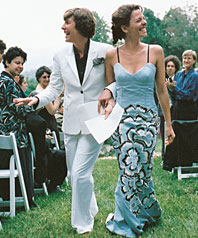
Levy (right) married Amy Norquist (left) in 2007:

Friday, October 14, 2011

Links 10.14.2011

New Yorker: in search of bitcoin creator Satoshi Nakamoto.

BBC In Our Time: the Ming voyages.

Financial Times: "The reputation of economists, never high, has been a casualty of the global crisis ..." See also here.

Steve Weinberg on his work as a JASON

BusinessInsider: 15 charts on US wealth and income inequality (the ugly truth).

NYTimes: "... participants judged women made up in varying intensities of luminance contrast (fancy words for how much eyes and lips stand out compared with skin) as more competent than barefaced women, whether they had a quick glance or a longer inspection."

Sunday, January 17, 2010

Chicago School interviews

John Cassidy has the interviews he did for this article on the Chicago School and the financial crisis up on his New Yorker blog.

I particularly liked the comments of Raghuram Rajan.

... All I am saying is that there are no easy answers in this thing … and one doesn’t have to be corrupt or in the pay of the financial sector to say, hey, wait a minute: it’s not as simple as letting them all go under or taking them all over. That’s my rant about the banking sector. By and large, I think we’ve done all the things that needed to be done. I think the downside of what we haven’t done is that we haven’t made the banks face up to more pain. That would have made it politically easier to do what needed to be done.

When you say, “make the banks face up to more pain,” what do you mean? Tougher regulation? Big equity stakes for the government—along the British lines?

Equity stakes and other things. For example, even now [the government] can require all compensation above a certain amount to be paid in equity, and equity that is real equity. The way banks do it now is they pay people in shares, but they also buy back equal amounts of shares [in the market]. So there is no increase in capital.

What we have right now is a situation where every saver in the country is, essentially, paying a huge tax to bail out the banking system. We are all getting screwed on our money market accounts—getting 0.25 per cent—and the banks are making a huge spread on nearly every asset they hold, because they are financing them at pretty close to zero rates. Another way of doing this—a way that would be nice to try—is to force the banks to load up on capital.

What is the point of all this? The point of all this is to get banks to lend. Well, they have been doing everything else except lending. Now, it may be that there aren’t that many profitable lending opportunities at this point. But if there aren’t, why are all the savers paying for this? Because you are not getting them to lend any more, and you are not getting more investment, which was the whole point of having interest rates so low. In fact, what you are doing is setting up a whole lot of other asset bubbles at this point.

Another way would be to put more direct pain on the banks. For example, if they were flush with capital and found they couldn’t pay bonuses, so all of this [money] went into increasing the capital base, they would have an incentive to make loans to reduce the effective capital that they had. What we have at the moment is that the citizenry is paying for the banks. Get the banks to pay for themselves.

That gets away from the whole Chicago issue. But what I’m arguing is in Chicago you have the extreme, which says, “Let the chips fall they may. What’s the problem with letting a few banks go under?” Whether you hold that view depends on how much you think the banks as an institution matters. Doug Diamond and I think it does matter. There is a lot of organizational and relationship capital embedded in the banks. If you let them go, it is very hard to start them up [again].

I think the average person can (maybe) grasp that we want to recapitalize the banking system, but I don't think anyone understands why bankers should be getting record bonuses just a year or two after nearly destroying our economy and suffering losses equal to many past years of "earnings" that they've already been paid for.

Saturday, January 09, 2010

The Chicago School and the financial crisis

New Yorker economics correspondent John Cassidy has a very balanced piece about the impact of the credit crisis on thinking at The Chicago School. He also uses the term apostasy to describe Posner's turn toward Keynes.

In the article, Heckman, Becker and Rajan seem the most reasonable. Fama is obviously clinging to his priors and Lucas refused to talk to Cassidy.

Cassidy makes additional remarks on his blog, and promises in the near future to publish more detailed notes on the interviews he did with the Chicago economists.

... For people interested in the subject, and there seems to be a lot of you, the good news is that I’m planning on posting here much fuller versions of the interviews I did in Chicago, with the likes of Gene Fama, Gary Becker, and Richard Posner, who recently converted to Keynesianism. It’s the nature of long-form magazine journalism that a lot of interesting stuff gets left out of the finished article, but, thanks to the Web, there’s no reason it shouldn’t appear in some form. Plus, I think it’s a good time to let the Chicago economists speak for themselves. Over the last couple of years, they have taken a battering at the hands of myself, Paul Krugman, Joe Stiglitz, and others. Having just finished writing a book entitled “How Markets Fail,” I went to the Windy City eager to learn first hand how the critiques of Chicago economics were being received. Some of what I was told, I don’t agree with, but at this time of intellectual tumult I think it makes fascinating reading.

In the article Posner notes that few economists knew anything about how real financial markets work. This is certainly true in my experience. In particular, they were naive about individual incentives within the system (see Greenspan comments), and very few academics (with perhaps one or two exceptions; video) had any idea what a CDO or CDS was before 2008. I can't resist a little sniping here. If you want to ask someone about electrons, or how to build a quantum logic gate, or how to fabricate nanostructures, you can't do much better than to head to your local research university and talk to a physics professor. Strangely, if I wanted to learn something about credit markets or securitization or the risk from speculative bubbles, I would have been better off talking to a former physicist on Wall St. than to almost any professor in an economics department or business school. I'm not exaggerating -- I've done both many times. Posner also says:

"Well, one possibility is that they [the economists] have learned nothing [from the financial crisis] ... Because -- how should I put it -- because market correctives work very slowly in dealing with academic markets. Professors have tenure. ... It takes a great deal to drive them out of their accustomed way of doing business."

For more, see my talk on the financial crisis.

Monday, November 16, 2009

Follow that igon value!

Perhaps fittingly, the first use of "igon value" was in a profile of (then obscure) hedge fund philosopher Nassim Taleb. (See earlier post Pinker on Gladwell.)

New Yorker, April 22 & 29, 2002: [this version retrieved from gladwell.com] ... As the day came to an end, Taleb and his team turned their attention once again to the problem of the square root of n. Taleb was back at the whiteboard. Spitznagel was looking on. Pallop was idly peeling a banana. Outside, the sun was beginning to settle behind the trees. "You do a conversion to p1 and p2," Taleb said. His marker was once again squeaking across the whiteboard. "We say we have a Gaussian distribution, and you have the market switching from a low-volume regime to a high-volume. P21. P22. You have your igon value." He frowned and stared at his handiwork. The markets were now closed. Empirica had lost money, which meant that somewhere off in the woods of Connecticut Niederhoffer had no doubt made money. That hurt, but if you steeled yourself, and thought about the problem at hand, and kept in mind that someday the market would do something utterly unexpected because in the world we live in something utterly unexpected always happens, then the hurt was not so bad. Taleb eyed his equations on the whiteboard, and arched an eyebrow. It was a very difficult problem. "Where is Dr. Wu? Should we call in Dr. Wu?"

I doubt the New Yorker and its famous fact checkers caught the error. Possibly not a single New Yorker employee knows any linear algebra. Who needs all that geeky math stuff? [Update: Apparently the New Yorker did correct the electronic version now available on its site, although one can find references to the error online in 2003. See here and comments below for more.]

Leave it for the Asians like Dr. Wu... :-)

... a man whom Taleb refers to, somewhat mysteriously, as Dr. Wu wandered in. Dr. Wu works for another hedge fund, down the hall, and is said to be brilliant. He is thin and squints through black-rimmed glasses. He was asked his opinion on the square root of n but declined to answer. "Dr. Wu comes here for intellectual kicks and to borrow books and to talk music with Mark," Taleb explained after their visitor had drifted away. He added darkly, "Dr. Wu is a Mahlerian."

Sunday, May 31, 2009

Carlos Slim in the New Yorker

There's a great profile of Carlos Slim in the New Yorker this week. Slim is one of the richest men in the world and recently took a big stake in the financially troubled New York Times. Unfortunately, the online version is subscriber only. Here is a brief summary of the article (excerpts from the summary below).

There are a lot of similarities between Slim and Warren Buffet: early interest in investing and business, modest lifestyle, patriotic nationalism, humility, even a Graham and Dodd value style of investing in distressed assets. Slim taught linear programming while still an engineering student at UNAM (Autonomous National University of Mexico) and discovered compound interest at age 10. (He learned that at a 10 percent annual rate of return his money would double in 7 years, not 10 :-)

Near the end of the article the writer describes a meeting between Slim and one of his most visible critics, Denise Dresser, a Princeton-trained academic (Instituto Tecnológico Autónomo de México) and political analyst. I suspect a look through Dresser's work might be of interest for those who want to disentangle the political economy of Mexico.

... The foundation of his empire is Telmex, the telecommunications company, which he acquired in 1990, and the cell-phone business, América Móvil, which is now the third-largest company in Latin America. Although Slim has often been described as a merciless predator, he has never been caught in one of the scandals that periodically spill onto the front pages of Mexican newspapers. His nationalism, humility, and relatively modest personal habits stand as a kind of rebuke to the image that Mexicans typically have of their oligarchs. Tells about Slim’s father, Khalil, who emigrated to Mexico from Lebanon and became a successful merchant. Describes Slim’s childhood and his early interest in numbers and money. He invested from a youthful age and abandoned engineering to go into business. Discusses Slim’s visit to the 1964 World’s Fair and its influence on his interest in technology. Writer gives a brief history of the Times’s recent economic difficulties and considers why Slim would be interested in the paper. Also tells about David Geffen’s bid for the Times. Writer chronicles the growth of Slim’s business holdings from the mid-sixties to his acquisition of Telmex. Slim has often used recessions as an opportunity to buy businesses at reduced prices. Writer interviews Randall Stephenson [current AT&T CEO], who worked for Slim in the nineties. “He’s probably the most intelligent businessman I’ve met,” Stephenson says. ...

Saturday, May 12, 2007

Gladwell and genius

Malcolm Gladwell shows exquisite taste in the subjects he writes and talks about -- he has a nose for great topics. I just wish his logical and analytical capabilities were better (see also here). This talk at the New Yorker's recent Genius 2012 conference is entertaining, but I disagree completely with his conclusion. Ribet, Wiles, Taniyama and Shimura are probably the real geniuses, not Michael Ventris, the guy who decoded Linear B. (Gladwell also can't seem to remember that it's the Taniyama-Shimura conjecture, not Tanimara. He says it incorrectly about 10 times.) My feeling is that Gladwell's work appeals most to people who can't quite understand what he is talking about.

Gladwell is confused about the exact topic discussed in James Gleick's book Genius. In a field where sampling of talents is sparse (e.g., decoding ancient codexes) you might find one giant (even an amateur like Michael Ventris) towering above the others, able to do things others cannot. In a well-developed, highly competitive field like modern mathematics, all the top players are "geniuses" in some sense (rare talents, one in a million), even though they don't stand out very much from each other. In Gleick's book, Feynman, discussing how long it might have taken to develop general relativity had Einstein not done it, says "We are not that much smarter than each other"!

To put it simply, if I sample sparsely from a Gaussian distribution, I might find a super-outlier in the resulting set. If I sample densely and have a high minimum cutoff for acceptable points, I will end up with a set entirely composed of outliers, but who do not stand out much from each other. Every guard in the NBA is an athletic freak of nature, even though they are relatively evenly matched when playing against each other.

To counteract the intelligence-damping effect of Gladwell's talk, I suggest this podcast interview with Nassim Taleb, about his new book The Black Swan. Warning: may be psychologically damaging to people who fool themselves and others about their ability to predict the behavior of nonlinear systems.

Blog Archive

Labels