
Wednesday, July 31, 2019
Jack Kirby Centennial Lecture
The kind of deep and heartfelt tribute only a lifetime fan (fanatic) can deliver. Very insightful history of the greatest American comic book artist.
See also I Love Jack Kirby.


Saturday, July 27, 2019
Brainpower Matters: The French H-Bomb

Michel Carayol, father of the French H-Bomb.
The article below illuminates several mysteries concerning the French development of thermonuclear weapons. Why did it take so long? Did the French really need help from the British? Who had the crucial idea of radiation compression?
The original inventors were Ulam and Teller. In the USSR it was Sakharov. The PRC inventor was Yu Min (see Note Added at bottom).
Without men such as these, how long would it have taken to develop breakthrough technologies that defined the modern age?
See also Les Grandes Ecoles, One hundred thousand brains, and Quantum GDP.
THE REAL STORY BEHIND THE MAKING OF THE FRENCH HYDROGEN BOMB
Nonproliferation Review 15:2 353, DOI 10.1080/10736700802117361
Based on the first-person account of coauthor Pierre Billaud, a prominent French participant, this article describes for the first time in such detail the history of the development of the French hydrogen bomb in the 1960s and the organization of military nuclear research in France. ...
On November 1, 1952, the United States conducted its first thermonuclear test, ‘‘Ivy Mike,’’ seven years and three and a half months after its Trinity test. It took the Soviet Union four years (August 29, 1949 -- August 12, 1953) and the United Kingdom four years and seven months (October 3, 1952 -- May 15, 1957) to achieve thermonuclear capacity. And in the following decade, China did it, with its sixth test, in fewer than three years (October 16, 1964 -- June 17, 1967). Yet after Gerboise Bleue it took France eight and a half years to reach the same landmark, detonating its first thermonuclear device on August 24, 1968. Why such a long delay, especially since the French were pioneers in nuclear research?
1965: What We Knew About the Technical Aspects
From 1955 to 1960, as we prepared for the first French atomic test, we were also pondering thermonuclear weapons. But the prospect of hydrogen weapons seemed so far into the future that we did not work seriously on it. ... Li6D was commonly considered the best fuel for thermonuclear weapons, but we did not have any idea about how to burn it. All the problems with the thermonuclear bomb can be summarized by this question: how to discover the process that will allow the Li6D to undergo a fusion reaction?
... Compared to our American colleagues in 1948, French scientists had many advantages: we knew that hydrogen bombs existed and worked and that they used Li6D, and we understood the reactions at work. We also had powerful computers, of U.S. origin, which were not available in the late 1940s. And we knew, more or less, the dimensions and weights of the nuclear weapons deployed at NATO bases in Europe and their yields. ...
De Gaulle: It’s taking forever! ... I want the first experiment to take place before I leave! Do you hear me? It’s of capital importance. Of the five nuclear powers, are we going to be the only one which hasn’t made it to the thermonuclear level? Are we going to let the Chinese get ahead of us? If we do not succeed while I am still here, we shall never make it! My successors, from whatever side, will not dare to go against the protests of the Anglo-Saxons, the communists, the old spinsters and the Church. And we shall not open the gate. But if a first explosion happens, my successors will not dare to stop halfway into the development of these weapons.
... In January 1967, I published a voluminous report wherein I presented and developed my idea from late 1965, left idle since, explaining why the current studies were going in the wrong direction and producing a ridiculously low thermonuclear efficiency. I proposed a scheme with two consecutive steps: a cold Li6D compression increasing the density, from the normal value of 0.8 g/cm3, by a factor of at least 20, followed by a sufficient temperature increase (the ignition). In this report, I also gave orders of magnitude of the energies involved in each step... [[ One can make the (flawed) analogy of Billaud to Ulam (multi-stage insight, but no mechanism for compression), and Carayol to Teller (proposed the right mechanism for compression, although in Teller's case he may have learned of it from von Neumann and Fuchs!!!). ]]
In early April 1967, Carayol had the idea that the x-rays emitted from the fission explosion could transport the fission energy to the thermonuclear fuel chamber to induce the necessary compression. He published a brief paper wherein he presented, and justified mathematically, his architectural idea. This was the key to the solution for an efficient thermonuclear explosive device, consistent with the current data about U.S. hydrogen weapons. Carayol had rediscovered the radiative coupling concept first introduced by Americans Stanislaw Ulam and Edward Teller in January 1951.But Carayol's insight was ignored! It was British assistance that alerted project leadership to the value of Carayol's ideas. It is not enough for some isolated genius to make a breakthrough -- the people in charge have to understand its value.
Michel Carayol, the Genuine Father of the French H-Bomb
Michel Carayol was born in 1934 and died in 2003. His father was an industrialist and his mother a teacher. He entered Ecole Polytechnique in 1954, graduated in 1956, and joined the Armament. In 1962, he was part of the DEFA assigned to CEA-DAM at Limeil. In 1967, Carayol was part of the advanced studies branch.
... Soon after, in April 1967, Carayol wrote a brief report describing his proposal for a cylindrico-spherical case in dense metal, containing a fission device on one side and a thermonuclear sphere on the other. The report showed that the photons radiated by the primary *still very hot* in the X-ray frequency range, swept into the chamber rapidly enough to surround completely the thermonuclear sphere before the metal case would be vaporized. Carayol had discovered independently a scheme equivalent to the concept developed by Ulam and Teller in the 50s.
... During the first months of 1967, Viard had told me, ‘‘A British physicist is showing some interest in what we do.’’ At several embassy parties, a first-rate British atomic scientist, Sir William Cook, former director during the 1950s of thermonuclear research at Aldermaston, the British center for atomic military applications, had approached the military attache´ at the French Embassy in London, Andre´ Thoulouze, an Air Force colonel, and had hinted to our nuclear research program. Thoulouze had previously been in charge of an air force base and knew Rene´ David, who would later work at the DAM. For this reason, instead of contacting the French main intelligence services, Thoulouze directly contacted our information bureau at CEA, the BRIS, where David was working at the time. In analyzing the fallout from the French tests, the Americans, the British, and the Soviets knew that we had not made any real progress on the thermonuclear path. In 1966 and 1967 we had tested some combination of fission with light elements. Cook told Thoulouze that we had to look for something simpler.Encyclopedia Britannica:
Two weeks after the Valduc seminar, on September 19, and while the work resulting from the Valduc decisions had not yet concretely gotten under way, Thoulouze came from London bearing information from this qualified source. Jacques Robert immediately convened a meeting, in the DAM’s headquarters in Paris, to debrief this information. Only three other people attended the meeting: Viard, Bonnet (DAM’s deputy), and Henri Coleau (head of the BRIS). The information, very brief and of a purely technical nature, did not consist of outlines or precise calculations. Nevertheless, it allowed Bonnet to declare immediately that the Carayol design, proposed unsuccessfully as early as April 1967, could be labeled as correct.23 Had this outline not already been in existence, we would have had a difficult time understanding the information and might have suspected an attempt to mislead us. In fact, this was a reciprocal validation: Carayol’s sketch authenticated the seriousness of the source, while the latter confirmed the value of Carayol’s ideas. Without realizing it, as very few were aware of Carayol’s discovery (and surely not Cook), he had given us a big tip and unexpected assistance, as this information also freed us from the ministerial harassment to which we had been constantly subjected. From that moment, things moved briskly.
Physicist Michel Carayol laid out what would be the fundamental idea of radiation implosion in an April 1967 paper, but neither he nor his colleagues were immediately convinced that it was the solution, and the search continued.
In late September 1967, Carayol’s ideas were validated by an unlikely source, William Cook, who had overseen the British thermonuclear program in the mid-1950s. Cook, no doubt at his government’s behest, verbally passed on the crucial information to the French embassy’s military attaché in London. Presumably, the British provided this information for political reasons. British Prime Minister Harold Wilson was lobbying for the entry of the United Kingdom into the Common Market (European Economic Community), which was being blocked by de Gaulle.
Sakharov sketch:

Note Added: Perhaps someone can translate part of this paper, which gives some details about the Chinese thermonuclear step, credit to Yu Min. Did they invent a mechanism different from Ulam-Teller? I can't tell from this paper, but I suspect the initial Chinese design used U-T. There are claims that Yu Min later developed, in the pursuit of miniaturization and improved safety, a qualitatively different design.
Yu Min was a student of Peng Huanwu (also a key figure in the bomb effort), who was a student of Max Born. Yu Min only recently passed, in early 2019!

Friday, July 26, 2019
RadioLab on embryo selection in IVF
I'm in this RadioLab podcast covering genetic selection of embryos in IVF. Apologies to SSGAC, Robert Plomin, Ian Deary, James Lee, Tom Bouchard, and countless other dedicated scientists for the impression given that progress in genomics of cognitive ability is largely my work. See last paragraph below.
This is the email I sent to RadioLab this morning:
Hi Pat and Michelle,For more on recent progress in genomic prediction, see The Diffusion of Knowledge.
Congratulations on a high quality podcast. I thought you were admirably fair and balanced. I also thought the production (esp. the music) was excellent.
My main comment is that the juxtaposition between my remarks and Benjamin's is misleading: when he says 60-40 or 55% chance of rank ordering properly, that is a very different question than identifying an outlier who is, say, among the 1% highest in risk. We are not trying to rank order embryos, but to warn against unusual risk of a medical condition.
To use the SAT analogy, given two kids with scores 1250 and 1200, only some of the time does the 1250 kid end up with a higher GPA. (You can't predict rank order very well.) But if the engineering dean admits an SAT 770 kid (i.e., a negative outlier compared to the average score of, say, 1300 among engineers) in his freshman class, he knows the likelihood is high that the kid will struggle. Benjamin is talking about the first scenario, and I am talking about the second.
Finally, I realize that to hook listeners you had to make me the focus of the episode. But I want to make clear that many scientists contribute to this work, which I feel will ultimately be beneficial to our species and civilization. I am just a small part of a worldwide research endeavor.
Best wishes,
Steve
Thursday, July 25, 2019
Manifold #15: Daniel Max of The New Yorker on Prion diseases and literary non-fiction
Daniel Max, staff writer at The New Yorker and author of Every Love Story is A Ghost Story, a biography of David Foster Wallace, speaks with Corey and Steve about his first book, The Family that Couldn’t Sleep. The discussion covers the emerging genre of literary non-fiction, Daniel’s process of writing The Family that Couldn’t Sleep, and how he approached and gained the trust of the family at the heart of the story. Corey probes Daniel about how he handled the complex scientific characters, Carl Gajdusek and Stanley Prusiner, who led research into prion disease for 40 years. Daniel recounts how Shirley Glasse (now Lindenbaum) discovered how prions were transmitted through ritual cannibalism in Papua New, a critical step in solving the mystery of what causes of the disease, but how credit was given to Gajdusek. The three discuss the painfully slow pace of research and the inspiring story of a young couple, Eric Minikel and Sonia Vallabh, who have changed careers to dedicate their lives to finding a cure.
Max’s New Yorker Page
Max’s initial 2001 article for the New York Times Magazine on the Italian Family with FFI
Max’s 2013 New Yorker story on Minikel and Vallabh
Transcript
man·i·fold /ˈmanəˌfōld/ many and various.
In mathematics, a manifold is a topological space that locally resembles Euclidean space near each point.
Steve Hsu and Corey Washington have been friends for almost 30 years, and between them hold PhDs in Neuroscience, Philosophy, and Theoretical Physics. Join them for wide ranging and unfiltered conversations with leading writers, scientists, technologists, academics, entrepreneurs, investors, and more.
Steve Hsu is VP for Research and Professor of Theoretical Physics at Michigan State University. He is also a researcher in computational genomics and founder of several Silicon Valley startups, ranging from information security to biotech. Educated at Caltech and Berkeley, he was a Harvard Junior Fellow and held faculty positions at Yale and the University of Oregon before joining MSU.
Corey Washington is Director of Analytics in the Office of Research and Innovation at Michigan State University. He was educated at Amherst College and MIT before receiving a PhD in Philosophy from Stanford and a PhD in a Neuroscience from Columbia. He held faculty positions at the University Washington and the University of Maryland. Prior to MSU, Corey worked as a biotech consultant and is founder of a medical diagnostics startup.
Wednesday, July 24, 2019
Dominic Cummings "de facto chief executive" for UK Prime Minister Boris Johnson
Dominic Cummings sporting an OpenAI shirt. Great messaging! Go Dom :-)


Why Dominic Cummings is Johnson’s most important appointment (Spectator)
The closest analogy to the government Boris Johnson is forming is Blair’s and Brown’s New Labour government of 1997, when they appointed super powerful political advisers – Campbell, Powell, Balls, Whelan – to boss conservative Whitehall.
That is what Johnson is doing – in spades – by making former Vote Leave campaign chief Dominic Cummings his de facto chief executive as senior advisor, because Cummings is NEVER a passive adviser. Cummings has an extraordinary sense of purpose and objectives – and pity those who get in his path.
Cummings’s mandate is to deliver Brexit in 99 days, and in his spare time he’ll endeavour to reform Whitehall, since one of his obsessions is that the civil service is unfit for modern government. Sir Humphrey will be anxious, but so too will ministers and many Tory MPs, including Brexiters, who still nurse bruises from their encounters with him when he ran Vote Leave and earlier when he was an adviser to Michael Gove.
As proof that Johnson is placing serious trust in Cummings is that so many of Cummings’s Vote Leave team are moving in to Downing Street: Lee Cain as director of communications, Rob Oxley as press secretary and Oliver Lewis as a Brexit policy adviser.
Saturday, July 20, 2019
The diffusion of knowledge
Szilard and Wigner told Einstein about their recent calculations... how the fission process might create chain reactions and nuclear bombs. "Daran habe ich gar nicht gedacht," said Einstein -- I did not think about that at all!In the past two weeks I gave talks at ISIR2019 (Minneapolis), the Institute of Biomedical Sciences (Academia Sinica, Taipei -- home of the Taiwan biobank), Innovative Genomics Institute (IGI = CRISPR central, UC Berkeley and UCSF) and at OpenAI (AGI in San Francisco).
Title: Genomic Prediction of Complex Traits and Disease Risks via AI/ML and Large Genomic DatasetsSlides for the first part of the talk.
Abstract: The talk is divided into two parts. The first gives an overview of the rapidly advancing area of genomic prediction of disease risks using polygenic scores. We can now identify risk outliers (e.g., with 5 or 10 times normal risk) for about 20 common disease conditions, ranging from diabetes to heart diseases to breast cancer, using inexpensive SNP genotypes (i.e., as offered by 23andMe). We can also predict some complex quantitative traits (e.g., adult height with accuracy of few cm, using ~20k SNPs). I discuss application of these results in precision medicine as well as embryo selection in IVF, and give some details about genetic architectures. The second part covers the AI/ML used to build these predictors, with an emphasis on "sparse learning" and phase transitions in high dimensional statistics.
I also appeared on Dilbert creator Scott Adams' show.
Wednesday, July 17, 2019
Beijing 2019 Notes -- addendum
I just came across this beautiful video with 4k drone footage of Guangzhou, part of the Guangdong-Hong Kong-Macau Greater Bay Area in the Pearl River delta region.
In my earlier post on Beijing I emphasized the issue of scale in China -- massive scale that is evident in the video above.
I traveled in SE Asia before the 1997 currency / economic crisis. At that time there was plenty of evidence of a bubble in those countries -- unused infrastructure and real estate built on spec, few signs of real technological or productive capability, etc. China had aspects of that 10 years ago, but now it's apparent that earlier infrastructure investment is being put to good use.
As I walked around Beijing I strained to find things around me -- buildings, solar panels, batteries, cars, high speed trains, electronics, software infrastructure, even airplanes -- that couldn't be sourced in China. Other than a few specific tech stacks that will get serious attention in coming years (e.g., CPUs) I was not able to think of many areas in which China has not caught up technologically. See Can the US derail China 2025?
PS I'm back in the US now. Will be giving a talk today at IGI in Berkeley and at OpenAI on Thursday.
Thursday, July 11, 2019
Manifold Episode #14: Stuart Firestein on Why Ignorance and Failure Lead to Scientific Progress
Steve and Corey speak with Stuart Firestein (Professor of Neuroscience at Columbia University, specializing in the olfactory system) about his two books Ignorance: How It Drives Science, and Failure: Why Science Is So Successful. Stuart explains why he thinks that it is a mistake to believe that scientists make discoveries by following the “scientific method” and what he sees as the real relationship between science and art. We discuss Stuart’s recent research showing that current models of olfactory processing are wrong, while Steve delves into the puzzling infinities in calculations that led to the development of quantum electrodynamics. Stuart also makes the case that the theory of intelligent design is more intelligent than most scientists give it credit for and that it would be wise to teach it in science classes.
Stuart Firestein
Failure: Why Science Is so Successful
Ignorance: How it drives science
Transcript
man·i·fold /ˈmanəˌfōld/ many and various.
In mathematics, a manifold is a topological space that locally resembles Euclidean space near each point.
Steve Hsu and Corey Washington have been friends for almost 30 years, and between them hold PhDs in Neuroscience, Philosophy, and Theoretical Physics. Join them for wide ranging and unfiltered conversations with leading writers, scientists, technologists, academics, entrepreneurs, investors, and more.
Steve Hsu is VP for Research and Professor of Theoretical Physics at Michigan State University. He is also a researcher in computational genomics and founder of several Silicon Valley startups, ranging from information security to biotech. Educated at Caltech and Berkeley, he was a Harvard Junior Fellow and held faculty positions at Yale and the University of Oregon before joining MSU.
Corey Washington is Director of Analytics in the Office of Research and Innovation at Michigan State University. He was educated at Amherst College and MIT before receiving a PhD in Philosophy from Stanford and a PhD in a Neuroscience from Columbia. He held faculty positions at the University Washington and the University of Maryland. Prior to MSU, Corey worked as a biotech consultant and is founder of a medical diagnostics startup.
Wednesday, July 03, 2019
Beijing 2019 Notes
I'm at Beijing University in Zhongguancun. Some brief notes and photos below.
I had meetings with Beida professors, prominent tech entrepreneurs and VCs, policy analysts, IVF doctors and genetic scientists. I also had conversations with ordinary people -- drivers, maids, hotel and service staff.
I've been traveling to Beijing for about 15 years now and have observed significant improvements in infrastructure, general economic level, civil society, general behavior. This would of course be obvious to people living in China, which presumably explains the confidence people here have in their government and in continued advances in development. The hypothesis that this society is "brittle" or vulnerable to shocks seems unsupported.
The main thing to comprehend about China is scale. There are easily ~350M (i.e., population of US) people here living roughly first world lives: with access to education, good jobs, climate controlled apartment in major city, good public transportation, fast internet access, etc. Probably the number is twice as large depending on how one defines the category. For one thing, this means that the supply of engineers, technologists, lab scientists, project managers, entrepreneurs, etc. is very large. There are certainly poor people who lack opportunity, but the size of the population for which the education and economic system are working reasonably well is very large. Possibly a billion people out of ~1.4B.
Beijing is a microcosm of this phenomenon of scale. It's a huge city (over 20M people) with the kind of modern metro system only to be found in places like Tokyo or perhaps Seoul or Paris or London. One can ride the longer lines for 90 minutes without exiting, covering the entire extent of the city from one side to the other. Despite the public transport system, the roads are clogged with recent model cars, producing traffic conditions reminiscent of Los Angeles. I don't find the city as a whole all that livable -- it's too enormous for me -- but locals know all the many charming locations (see photos below). Beijing is reaching a level of development that reminds me of Tokyo.
Trump, the trade war, and US-China relations came up frequently in discussion. Chinese opinion tends to focus on the long term. Our driver for a day trip to the Great Wall was an older man from the countryside, who has lived only 3 years in Beijing. I was surprised to hear him expressing a very balanced opinion about the situation. He understood Trump's position remarkably well -- China has done very well trading with the US, and owes much of its technological and scientific development to the West. A recalibration is in order, and it is natural for Trump to negotiate in the interest of US workers.
China's economy is less and less export-dependent, and domestic drivers of growth seem easy to identify. For example, there is still a lot of low-hanging fruit in the form of "catch up growth" -- but now this means not just catching up with the outside developed world, but Tier 2 and Tier 3 cities catching up with Tier 1 cities like Beijing, Shanghai, Shenzhen, etc.
China watchers have noted the rapidly increasing government and private sector debt necessary to drive growth here. Perhaps this portends a future crisis. However, I didn't get any sense of impending doom for the Chinese economy. To be fair there was very little inkling of what would happen to the US economy in 2007-8. Some of the people I met with are highly placed with special knowledge -- they are among the most likely to be aware of problems. Overall I had the impression of normalcy and quiet confidence, but perhaps this would have been different in an export/manufacturing hub like Shenzhen. [ Update: Today after posting this I did hear something about economic concerns... So situation is unclear. ]
Innovation is everywhere here. Perhaps the most obvious is the high level of convenience from the use of e-payment and delivery services. You can pay for everything using your mobile (increasingly, using just your face!), and you can have food and other items (think Amazon on steroids) delivered quickly to your apartment. Even museum admissions can be handled via QR code.
A highly placed technologist told me that in fields like AI or computer science, Chinese researchers and engineers have access to in-depth local discussions of important arXiv papers -- think StackOverflow in Mandarin. Since most researchers here can read English, they have access both to Western advances, and a Chinese language reservoir of knowledge and analysis. He anticipates that eventually the pace and depth of engineering implementation here will be unequaled.
IVF and genetic testing are huge businesses in China. Perhaps I'll comment more on this in the future. New technologies, in genomics as in other areas, tend to be received more positively here than in the US and Europe.
National Museum

Bookstore and Cafe on the grounds of the National Art Museum.


Tiananmen Square (see below for historical note)

An email sent to Julian Assange's attorney, whom I met at CogX in London:
Note Added: In the comments AG points to a Quora post by a user called Janus Dongye Qimeng, an AI researcher in Cambridge UK, who seems to be a real China expert. I found these posts to be very interesting.
Infrastructure development in poor regions of China
Size of Chinese internet social network platforms
Can the US derail China 2025? (Core technology stacks in and outside China)
Huawei smartphone technology stack and impact of US entity list interdiction (software and hardware!)
Agriculture at Massive Scale
US-China AI competition
More recommenations: Bruno Maçães is one of my favorite modern geopolitical thinkers. A Straussian of sorts (PhD under Harvey Mansfield at Harvard), he was Secretary of State for European Affairs in Portugal, and has thought deeply about the future of Eurasia and of US-China relations. He spent the last year in Beijing and I was eager to meet with him while here. His recent essay Equilibrium Americanum appeared in the Berlin Policy Journal. Podcast interview -- we hope to have him on Manifold soon :-)
I had meetings with Beida professors, prominent tech entrepreneurs and VCs, policy analysts, IVF doctors and genetic scientists. I also had conversations with ordinary people -- drivers, maids, hotel and service staff.
I've been traveling to Beijing for about 15 years now and have observed significant improvements in infrastructure, general economic level, civil society, general behavior. This would of course be obvious to people living in China, which presumably explains the confidence people here have in their government and in continued advances in development. The hypothesis that this society is "brittle" or vulnerable to shocks seems unsupported.
The main thing to comprehend about China is scale. There are easily ~350M (i.e., population of US) people here living roughly first world lives: with access to education, good jobs, climate controlled apartment in major city, good public transportation, fast internet access, etc. Probably the number is twice as large depending on how one defines the category. For one thing, this means that the supply of engineers, technologists, lab scientists, project managers, entrepreneurs, etc. is very large. There are certainly poor people who lack opportunity, but the size of the population for which the education and economic system are working reasonably well is very large. Possibly a billion people out of ~1.4B.
Beijing is a microcosm of this phenomenon of scale. It's a huge city (over 20M people) with the kind of modern metro system only to be found in places like Tokyo or perhaps Seoul or Paris or London. One can ride the longer lines for 90 minutes without exiting, covering the entire extent of the city from one side to the other. Despite the public transport system, the roads are clogged with recent model cars, producing traffic conditions reminiscent of Los Angeles. I don't find the city as a whole all that livable -- it's too enormous for me -- but locals know all the many charming locations (see photos below). Beijing is reaching a level of development that reminds me of Tokyo.
Trump, the trade war, and US-China relations came up frequently in discussion. Chinese opinion tends to focus on the long term. Our driver for a day trip to the Great Wall was an older man from the countryside, who has lived only 3 years in Beijing. I was surprised to hear him expressing a very balanced opinion about the situation. He understood Trump's position remarkably well -- China has done very well trading with the US, and owes much of its technological and scientific development to the West. A recalibration is in order, and it is natural for Trump to negotiate in the interest of US workers.
China's economy is less and less export-dependent, and domestic drivers of growth seem easy to identify. For example, there is still a lot of low-hanging fruit in the form of "catch up growth" -- but now this means not just catching up with the outside developed world, but Tier 2 and Tier 3 cities catching up with Tier 1 cities like Beijing, Shanghai, Shenzhen, etc.
China watchers have noted the rapidly increasing government and private sector debt necessary to drive growth here. Perhaps this portends a future crisis. However, I didn't get any sense of impending doom for the Chinese economy. To be fair there was very little inkling of what would happen to the US economy in 2007-8. Some of the people I met with are highly placed with special knowledge -- they are among the most likely to be aware of problems. Overall I had the impression of normalcy and quiet confidence, but perhaps this would have been different in an export/manufacturing hub like Shenzhen. [ Update: Today after posting this I did hear something about economic concerns... So situation is unclear. ]
Innovation is everywhere here. Perhaps the most obvious is the high level of convenience from the use of e-payment and delivery services. You can pay for everything using your mobile (increasingly, using just your face!), and you can have food and other items (think Amazon on steroids) delivered quickly to your apartment. Even museum admissions can be handled via QR code.
A highly placed technologist told me that in fields like AI or computer science, Chinese researchers and engineers have access to in-depth local discussions of important arXiv papers -- think StackOverflow in Mandarin. Since most researchers here can read English, they have access both to Western advances, and a Chinese language reservoir of knowledge and analysis. He anticipates that eventually the pace and depth of engineering implementation here will be unequaled.
IVF and genetic testing are huge businesses in China. Perhaps I'll comment more on this in the future. New technologies, in genomics as in other areas, tend to be received more positively here than in the US and Europe.
National Museum

Bookstore and Cafe on the grounds of the National Art Museum.


Tiananmen Square (see below for historical note)

An email sent to Julian Assange's attorney, whom I met at CogX in London:
Hi Jen,Columbia Journalism Review (1998): The Myth of Tiananmen. See comments for further discussion...
I really enjoyed your Q&A today. Keep fighting the good fight.
Wikileaks diplomatic cables reveal no mass shootings in Tiananmen Square:
https://wikileaks.org/plusd/cables/89BEIJING18828_a.html
https://www.telegraph.co.uk/news/worldnews/wikileaks/8555142/Wikileaks-no-bloodshed-inside-Tiananmen-Square-cables-claim.html
Our media has been misrepresenting this historical event for 30 years
now. There was certainly violence, but not in the square itself.
Best wishes,
Steve
Note Added: In the comments AG points to a Quora post by a user called Janus Dongye Qimeng, an AI researcher in Cambridge UK, who seems to be a real China expert. I found these posts to be very interesting.
Infrastructure development in poor regions of China
Size of Chinese internet social network platforms
Can the US derail China 2025? (Core technology stacks in and outside China)
Huawei smartphone technology stack and impact of US entity list interdiction (software and hardware!)
Agriculture at Massive Scale
US-China AI competition
More recommenations: Bruno Maçães is one of my favorite modern geopolitical thinkers. A Straussian of sorts (PhD under Harvey Mansfield at Harvard), he was Secretary of State for European Affairs in Portugal, and has thought deeply about the future of Eurasia and of US-China relations. He spent the last year in Beijing and I was eager to meet with him while here. His recent essay Equilibrium Americanum appeared in the Berlin Policy Journal. Podcast interview -- we hope to have him on Manifold soon :-)
Thursday, June 27, 2019
Manifold Podcast #13: Joe Cesario on Political Bias and Problematic Research Methods in Social Psychology
Corey and Steve continue their discussion with Joe Cesario and examine methodological biases in the design and conduct of experiments in social psychology and ideological bias in the interpretation of the findings. Joe argues that experiments in his field are designed to be simple, but that in making experimental set ups simple researchers remove critical factors that actually matter for a police officer making a decision in the real world. In consequence, he argues that the results cannot be taken to show anything about actual police behavior. Joe maintains that social psychology as a whole is biased toward the left politically and that this affects how courses are taught and research conducted. Steve points out the university faculty on the whole tend to be shifted left relative to the general population. Joe, Corey, and Steve discuss the current ideological situation on campus and how it can be alienating for students from conservative backgrounds.
Joseph Cesario's Lab
https://www.cesariolab.com/
Transcript
https://manifoldlearning.com/2019/06/27/episode-013-transcript/
man·i·fold /ˈmanəˌfōld/ many and various.
In mathematics, a manifold is a topological space that locally resembles Euclidean space near each point.
Steve Hsu and Corey Washington have been friends for almost 30 years, and between them hold PhDs in Neuroscience, Philosophy, and Theoretical Physics. Join them for wide ranging and unfiltered conversations with leading writers, scientists, technologists, academics, entrepreneurs, investors, and more.
Steve Hsu is VP for Research and Professor of Theoretical Physics at Michigan State University. He is also a researcher in computational genomics and founder of several Silicon Valley startups, ranging from information security to biotech. Educated at Caltech and Berkeley, he was a Harvard Junior Fellow and held faculty positions at Yale and the University of Oregon before joining MSU.
Corey Washington is Director of Analytics in the Office of Research and Innovation at Michigan State University. He was educated at Amherst College and MIT before receiving a PhD in Philosophy from Stanford and a PhD in a Neuroscience from Columbia. He held faculty positions at the University Washington and the University of Maryland. Prior to MSU, Corey worked as a biotech consultant and is founder of a medical diagnostics startup.
Monday, June 24, 2019
Ulam on von Neumann, Godel, and Einstein

Ulam expresses so much in a few sentences! From his memoir, Adventures of a Mathematician. Above: Einstein and Godel. Bottom: von Neumann, Feynman, Ulam.
When it came to other scientists, the person for whom he [vN] had a deep admiration was Kurt Gödel. This was mingled with a feeling of disappointment at not having himself thought of "undecidability." For years Gödel was not a professor at Princeton, merely a visiting fellow, I think it was called. Apparently there was someone on the faculty who was against him and managed to prevent his promotion to a professorship. Johnny would say to me, "How can any of us be called professor when Gödel is not?" ...
As for Gödel, he valued Johnny very highly and was much interested in his views. I believe knowing the importance of his own discovery did not prevent Gödel from a gnawing uncertainty that maybe all he had discovered was another paradox à la Burali Forte or Russell. But it is much, much more. It is a revolutionary discovery which changed both the philosophical and the technical aspects of mathematics.
When we talked about Einstein, Johnny would express the usual admiration for his epochal discoveries which had come to him so effortlessly, for the improbable luck of his formulations, and for his four papers on relativity, on the Brownian motion, and on the photo-electric quantum effect. How implausible it is that the velocity of light should be the same emanating from a moving object, whether it is coming toward you or whether it is receding. But his admiration seemed mixed with some reservations, as if he thought, "Well, here he is, so very great," yet knowing his limitations. He was surprised at Einstein's attitude in his debates with Niels Bohr—at his qualms about quantum theory in general. My own feeling has always been that the last word has not been said and that a new "super quantum theory" might reconcile the different premises.

Saturday, June 22, 2019
Silicon Oligarchs: Winner Take All?

Joel Kotkin is a Presidential Fellow in Urban Futures at Chapman University and Executive Director for the Center for Opportunity Urbanism.
What Do the Oligarchs Have in Mind for Us?
...This tiny sliver of humanity, with their relatively small cadre of financiers, engineers, data scientists, and marketers, now control the exploitation of our personal data, what Alibaba founder, Jack Ma calls the “electricity of the 21st century.” Their “super platforms,” as one analyst noted, “now operate as “digital gatekeepers” lording over “e-monopsonies” that control enormous parts of the economy. Their growing power, notes a recent World Bank Study, is built on “natural monopolies” that adhere to web-based business, and have served to further widen class divides not only in the United States but around the world.
The rulers of the Valley and its Puget Sound doppelganger now account for eight of the 20 wealthiest people on the planet. Seventy percent of the 56 billionaires under 40 live in the state of California, with 12 in San Francisco alone. In 2017, the tech industry, mostly in California, produced 11 new billionaires. The Bay Area has more billionaires on the Forbes 400 list than any metro region other than New York and more millionaires per capita than any other large metropolis.
For an industry once known for competition, the level of concentration is remarkable. Google controls nearly 90 percent of search advertising, Facebook almost 80 percent of mobile social traffic, and Amazon about 75 percent of US e-book sales, and, perhaps most importantly, nearly 40 percent of the world’s “cloud business.” Together, Google and Apple control more than 95 percent of operating software for mobile devices, while Microsoft still accounts for more than 80 percent of the software that runs personal computers around the world.
The wealth generated by these near-monopolies funds the tech oligarchy’s drive to monopolize existing industries such as entertainment, education, and retail, as well as those of the future, such as autonomous cars, drones, space exploration, and most critically, artificial intelligence. Unless checked, they will have accumulated the power to bring about what could best be seen as a “post-human” future, in which society is dominated by artificial intelligence and those who control it.
What Do the Oligarchs Want?
The oligarchs are creating a “a scientific caste system,” not dissimilar to that outlined in Aldous Huxley’s dystopian 1932 novel, Brave New World. Unlike the former masters of the industrial age, they have little use for the labor of middle- and working-class people—they need only their data. Virtually all their human resource emphasis relies on cultivating and retaining a relative handful of tech-savvy operators. “Software,” Bill Gates told Forbes in 2005, “is an IQ business. Microsoft must win the IQ war, or we won’t have a future.”
Perhaps the best insight into the mentality of the tech oligarchy comes from an admirer, researcher Greg Ferenstein, who interviewed 147 digital company founders. The emerging tech world has little place for upward mobility, he found, except for those in the charmed circle at the top of the tech infrastructure; the middle and working classes become, as in feudal times, increasingly marginal.
This reflects their perception of how society will evolve. Ferenstein notes that most oligarchs believe “an increasingly greater share of economic wealth will be generated by a smaller slice of very talented or original people. Everyone else will increasingly subsist on some combination of part-time entrepreneurial ‘gig work’ and government aid.” Such part-time work has been growing rapidly, accounting for roughly 20 percent of the workforce in the US and Europe, and is expected to grow substantially, adds McKinsey. ...
Thursday, June 20, 2019
CRISPR babies: when will the world be ready? (Nature)
This Nature News article gives a nice overview of the current status of CRISPR technology and its potential application in human reproduction. As we discussed in this bioethics conversation (Manifold Podcast #9 with philosopher Sam Kerstein of the University of Maryland), it is somewhat challenging to come up with examples where gene editing is favored over embryo selection (a well-established technology) for avoidance of a disease-linked mutation.


Nature: ... He found out about a process called preimplantation genetic diagnosis or PGD. By conceiving through in vitro fertilization (IVF) and screening the embryos, Carroll and his wife could all but eliminate the chance of passing on the mutation. They decided to give it a shot, and had twins free of the Huntington’s mutation in 2006.
Now Carroll is a researcher at Western Washington University in Bellingham, where he uses another technique that might help couples in his position: CRISPR gene editing. He has been using the powerful tool to tweak expression of the gene responsible for Huntington’s disease in mouse cells. Because it is caused by a single gene and is so devastating, Huntington’s is sometimes held up as an example of a condition in which gene editing a human embryo — controversial because it would cause changes that would be inherited by future generations — could be really powerful. But the prospect of using CRISPR to alter the gene in human embryos still worries Carroll. “That’s a big red line,” he says. “I get that people want to go over it — I do, too. But we have to be super humble about this stuff.” There could be many unintended consequences, both for the health of individuals and for society. It would take decades of research, he says, before the technology could be used safely.


Thursday, June 13, 2019
Manifold Episode #12: James Cham on Venture Capital, Risk Taking, and the Future Impacts of AI
Manifold Show Page YouTube Channel
James Cham is a partner at Bloomberg Beta, a venture capital firm focused on the future of work. James invests in companies applying machine intelligence to businesses and society. Prior to Bloomberg Beta, James was a Principal at Trinity Ventures and a VP at Bessemer Venture Partners. He was educated in computer science at Harvard and at the MIT Sloan School of Business.
James Cham
https://www.linkedin.com/in/jcham/
Bloomberg Beta
https://www.bloombergbeta.com/
man·i·fold /ˈmanəˌfōld/ many and various.
In mathematics, a manifold is a topological space that locally resembles Euclidean space near each point.
Steve Hsu and Corey Washington have been friends for almost 30 years, and between them hold PhDs in Neuroscience, Philosophy, and Theoretical Physics. Join them for wide ranging and unfiltered conversations with leading writers, scientists, technologists, academics, entrepreneurs, investors, and more.
Steve Hsu is VP for Research and Professor of Theoretical Physics at Michigan State University. He is also a researcher in computational genomics and founder of several Silicon Valley startups, ranging from information security to biotech. Educated at Caltech and Berkeley, he was a Harvard Junior Fellow and held faculty positions at Yale and the University of Oregon before joining MSU.
Corey Washington is Director of Analytics in the Office of Research and Innovation at Michigan State University. He was educated at Amherst College and MIT before receiving a PhD in Philosophy from Stanford and a PhD in a Neuroscience from Columbia. He held faculty positions at the University Washington and the University of Maryland. Prior to MSU, Corey worked as a biotech consultant and is founder of a medical diagnostics startup.
Validation of Polygenic Risk Scores for Coronary Artery Disease in French Canadians

This study reports a validation of Polygenic Risk Scores for Coronary Artery Disease in a French Canadian population. Outliers in PRS are much more likely to have CAD than typical individuals.
In our replication tests of a variety of traits (both disease risks and quantitative traits) using European ancestry validation datasets, there is strong consistency in performance of the predictors. (See AUC consistency below.) This suggests that the genomic predictors are robust to differences in environmental conditions and also moderate differences in ethnicity (i.e., within the European population). The results are not brittle, and I believe that widespread clinical applications are coming very soon.
Validation of Genome-wide Polygenic Risk Scores for Coronary Artery Disease in French CanadiansAmerican Heart Association hails potential of PRS:
Florian Wünnemann , Ken Sin Lo , Alexandra Langford-Alevar , David Busseuil , Marie-Pierre Dubé , Jean-Claude Tardif , and Guillaume Lettre
Genomic and Precision Medicine
Abstract
Background: Coronary artery disease (CAD) represents one of the leading causes of morbidity and mortality worldwide. Given the healthcare risks and societal impacts associated with CAD, their clinical management would benefit from improved prevention and prediction tools. Polygenic risk scores (PRS) based on an individual's genome sequence are emerging as potentially powerful biomarkers to predict the risk to develop CAD. Two recently derived genome-wide PRS have shown high specificity and sensitivity to identify CAD cases in European-ancestry participants from the UK Biobank. However, validation of the PRS predictive power and transferability in other populations is now required to support their clinical utility.
Methods: We calculated both PRS (GPSCAD and metaGRSCAD) in French-Canadian individuals from three cohorts totaling 3639 prevalent CAD cases and 7382 controls, and tested their power to predict prevalent, incident and recurrent CAD. We also estimated the impact of the founder French-Canadian familial hypercholesterolemia deletion (LDLR delta > 15kb deletion) on CAD risk in one of these cohorts and used this estimate to calibrate the impact of the PRS.
Results: Our results confirm the ability of both PRS to predict prevalent CAD comparable to the original reports (area under the curve (AUC)=0.72-0.89). Furthermore, the PRS identified about 6-7% of individuals at CAD risk similar to carriers of the LDLR delta > 15kb mutation, consistent with previous estimates. However, the PRS did not perform as well in predicting incident or recurrent CAD (AUC=0.56-0.60), maybe due to confounding because 76% of the participants were on statin treatment. This result suggests that additional work is warranted to better understand how ascertainment biases and study design impact PRS for CAD.
Conclusions: Collectively, our results confirm that novel, genome-wide PRS are able to predict CAD in French-Canadians; with further improvements, this is likely to pave the way towards more targeted strategies to predict and prevent CAD-related adverse events.
"PRSs, built using very large data sets of people with and without heart disease, look for genetic changes in the DNA that influence disease risk, whereas individual genes might have only a small effect on disease predisposition," said Guillaume Lettre, Ph.D., lead author of the study and an associate professor at the Montreal Heart Institute and Université de Montréal in Montreal, Quebec, Canada. "The PRS is like having a snapshot of the whole genetic variation found in one's DNA and can more powerfully predict one's disease risk. Using the score, we can better understand whether someone is at higher or lower risk to develop a heart problem."
Early prediction would benefit prevention, optimal management and treatment strategies for heart disease. Because PRSs are simple and relatively inexpensive, their implementation in the clinical setting holds great promises. For heart disease, early detection could lead to simple yet effective therapeutic interventions such as the use of statins, aspirin or other medications.
... The American Heart Association named the use of polygenic risk scores as one of the biggest advances in heart disease and stroke research in 2018.
Sadly, reaction to these breakthroughs in human genomics will follow the usual pattern:
It's Wrong! Genomes are too complex to decipher, GWAS is a failure, precision medicine is all hype, biology is so ineffably beautiful and incomprehensible, Hey, whaddaya, you're a physicist! ...
It's Trivial! I knew it all along. Of course, everything is heritable to some degree. Well, if you just get enough data...
I did it First! (Please cite my paper...)
Sunday, June 09, 2019
L1 vs Deep Learning in Genomic Prediction
The paper below by some of my MSU colleagues examines the performance of a number of ML algorithms, both linear and nonlinear, including deep neural nets, in genomic prediction across several different species.
When I give talks about prediction of disease risks and complex traits in humans, I am often asked why we are not using fancy (trendy?) methods such as Deep Learning (DL). Instead, we focus on L1 penalization methods ("sparse learning") because 1. the theoretical framework (including theorems providing performance guarantees) is well-developed, and (relatedly) 2. the L1 methods perform as well or better than other methods in our own testing.
The term theoretical framework may seem unusual in ML, which is at the moment largely an empirical subject. Experience in theoretical physics shows that when powerful mathematical results are available, they can be very useful to guide investigation. In the case of sparse learning we can make specific estimates for how much data is required to "solve" a trait -- i.e., capture most of the estimated heritability in the predictor. Five years ago we predicted a threshold of a few hundred thousand genomes for height, and this turned out to be correct. Currently, this kind of performance characterization is not possible for DL or other methods.
What is especially powerful about deep neural nets is that they yield a quasi-convex (or at least reasonably efficient) optimization procedure which can learn high dimensional functions. The class of models is both tractable from a learning/optimization perspective, but also highly expressive. As I wrote here in my ICML notes (see also Elad's work which relates DL to Sparse Learning):
Note, though, that from an information theoretic perspective (see, e.g., any performance theorems in compressed sensing) it is obvious that we will need much more data than we currently have to advance this program. Also, note that Visscher et al.'s recent GCTA work suggests that additive SNP models using rare variants (i.e., extracted from whole genome data), can account for nearly all the expected heritability for height. This implies that the power of nonlinear methods like DL may not yield qualitatively better results than simpler L1 approaches, even in the limit of very large whole genome datasets.


When I give talks about prediction of disease risks and complex traits in humans, I am often asked why we are not using fancy (trendy?) methods such as Deep Learning (DL). Instead, we focus on L1 penalization methods ("sparse learning") because 1. the theoretical framework (including theorems providing performance guarantees) is well-developed, and (relatedly) 2. the L1 methods perform as well or better than other methods in our own testing.
The term theoretical framework may seem unusual in ML, which is at the moment largely an empirical subject. Experience in theoretical physics shows that when powerful mathematical results are available, they can be very useful to guide investigation. In the case of sparse learning we can make specific estimates for how much data is required to "solve" a trait -- i.e., capture most of the estimated heritability in the predictor. Five years ago we predicted a threshold of a few hundred thousand genomes for height, and this turned out to be correct. Currently, this kind of performance characterization is not possible for DL or other methods.
What is especially powerful about deep neural nets is that they yield a quasi-convex (or at least reasonably efficient) optimization procedure which can learn high dimensional functions. The class of models is both tractable from a learning/optimization perspective, but also highly expressive. As I wrote here in my ICML notes (see also Elad's work which relates DL to Sparse Learning):
It may turn out that the problems on which DL works well are precisely those in which the training data (and underlying generative processes) have a hierarchical structure which is sparse, level by level. Layered networks perform a kind of coarse graining (renormalization group flow): first layers filter by feature, subsequent layers by combinations of features, etc. But the whole thing can be understood as products of sparse filters, and the performance under training is described by sparse performance guarantees (ReLU = thresholded penalization?).However, currently in genomic prediction one typically finds that nonlinear interactions are small, which means features more complicated than single SNPs are unnecessary. (In a recent post I discussed a new T1D predictor that makes use of nonlinear haplotype interaction effects, but even there the effects are not large.) Eventually I expect this situation to change -- when we have enough whole genomes to work with, a DL approach which can (automatically) identify important features (motifs?) may allow us to go beyond SNPs and simple linear models.
Note, though, that from an information theoretic perspective (see, e.g., any performance theorems in compressed sensing) it is obvious that we will need much more data than we currently have to advance this program. Also, note that Visscher et al.'s recent GCTA work suggests that additive SNP models using rare variants (i.e., extracted from whole genome data), can account for nearly all the expected heritability for height. This implies that the power of nonlinear methods like DL may not yield qualitatively better results than simpler L1 approaches, even in the limit of very large whole genome datasets.
Benchmarking algorithms for genomic prediction of complex traits
Christina B. Azodi, Andrew McCarren, Mark Roantree, Gustavo de los Campos, Shin-Han Shiu
The usefulness of Genomic Prediction (GP) in crop and livestock breeding programs has led to efforts to develop new and improved GP approaches including non-linear algorithm, such as artificial neural networks (ANN) (i.e. deep learning) and gradient tree boosting. However, the performance of these algorithms has not been compared in a systematic manner using a wide range of GP datasets and models. Using data of 18 traits across six plant species with different marker densities and training population sizes, we compared the performance of six linear and five non-linear algorithms, including ANNs. First, we found that hyperparameter selection was critical for all non-linear algorithms and that feature selection prior to model training was necessary for ANNs when the markers greatly outnumbered the number of training lines. Across all species and trait combinations, no one algorithm performed best, however predictions based on a combination of results from multiple GP algorithms (i.e. ensemble predictions) performed consistently well. While linear and non-linear algorithms performed best for a similar number of traits, the performance of non-linear algorithms vary more between traits than that of linear algorithms. Although ANNs did not perform best for any trait, we identified strategies (i.e. feature selection, seeded starting weights) that boosted their performance near the level of other algorithms. These results, together with the fact that even small improvements in GP performance could accumulate into large genetic gains over the course of a breeding program, highlights the importance of algorithm selection for the prediction of trait values.


Saturday, June 08, 2019
London: CogX, Founders Forum, Healthtech

I'm in London again to give the talk below and attend some meetings, including Founders Forum and their Healthtech event the day before.
CogX: The Festival of AI and Emerging Technology
King's Cross, London, N1C 4BH
When Machine Learning Met Genetic Engineering
3:30 pm Tuesday June 11 Cutting Edge stage
Speakers
Stephen Hsu
Senior Vice-President for Research and Innovation
Michigan State University
Helen O’Neill
Lecturer in Reproductive and Molecular Genetics
UCL
Martin Varsavsky
Executive Chairman
Prelude Fertility
Azeem Azhar (moderator)
Founder
Exponential View
Regent's Canal, Camden Town near King's Cross.


CogX speakers reception, Sunday evening:


HealthTech

Commanding heights of global capital:


Sunset, Camden locks:

Sunday, June 02, 2019
Genomic Prediction: Polygenic Risk Score for Type 1 Diabetes
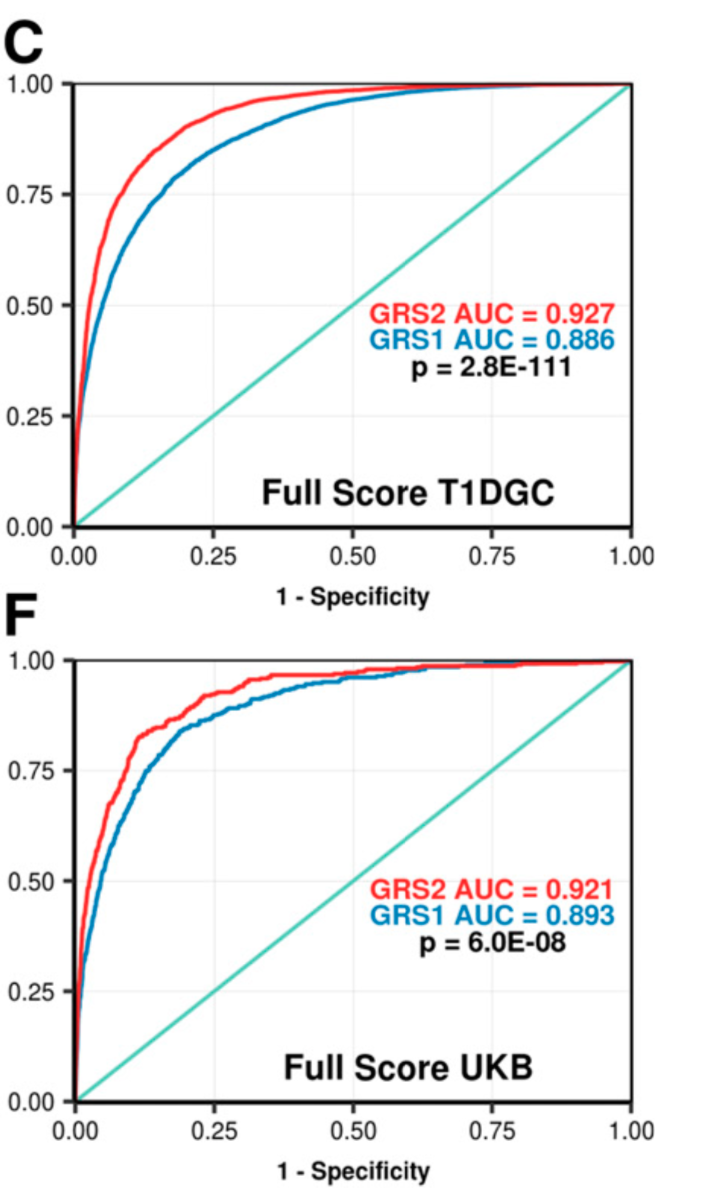
In an earlier post I collected links related to recent progress in Polygenic Risk Scores (PRS) and health care applications. The paper below describes a new (published in 2019) predictor for Type 1 Diabetes (T1D) that achieves impressive accuracy (AUC > 0.9) using 67 SNPs. It incorporates model features such as nonlinear interactions between haplotypes.

T1D is highly heritable and tends to manifest at an early age. One application of this predictor is to differentiate between T1D and the more common (in later life) T2D. Another application is to embryo screening. Genomic Prediction has independently validated this predictor on sibling data and may implement it in their embryo biopsy pipeline, which includes tests for aneuploidy, single gene mutations, and polygenic risk.

T1D is highly heritable and tends to manifest at an early age. One application of this predictor is to differentiate between T1D and the more common (in later life) T2D. Another application is to embryo screening. Genomic Prediction has independently validated this predictor on sibling data and may implement it in their embryo biopsy pipeline, which includes tests for aneuploidy, single gene mutations, and polygenic risk.
Development and Standardization of an Improved Type 1 Diabetes Genetic Risk Score for Use in Newborn Screening and Incident DiagnosisThe figure below gives some idea as to the ability of the new predictor GRS2 (panels B and D) to differentiate cases vs controls, and T1D vs T2D.
Sharp, et al.
Diabetes Care 2019;42:200–207 | https://doi.org/10.2337/dc18-1785
OBJECTIVE
Previously generated genetic risk scores (GRSs) for type 1 diabetes (T1D) have not captured all known information at non-HLA loci or, particularly, at HLA risk loci. We aimed to more completely incorporate HLA alleles, their interactions, and recently discovered non-HLA loci into an improved T1D GRS (termed the “T1D GRS2”) to better discriminate diabetes subtypes and to predict T1D in newborn screening studies.
RESEARCH DESIGN AND METHODS
In 6,481 case and 9,247 control subjects from the Type 1 Diabetes Genetics Consortium, we analyzed variants associated with T1D both in the HLA region and across the genome. We modeled interactions between variants marking strongly associated HLA haplotypes and generated odds ratios to create the improved GRS, the T1D GRS2. We validated our findings in UK Biobank. We assessed the impact of the T1D GRS2 in newborn screening and diabetes classification and sought to provide a framework for comparison with previous scores.
RESULTS
The T1D GRS2 used 67 single nucleotide polymorphisms (SNPs) and accounted for interactions between 18 HLA DR-DQ haplotype combinations. The T1D GRS2 was highly discriminative for all T1D (area under the curve [AUC] 0.92; P < 0.0001 vs. older scores) and even more discriminative for early-onset T1D (AUC 0.96). In simulated newborn screening, the T1D GRS2 was nearly twice as efficient as HLA genotyping alone and 50% better than current genetic scores in general population T1D prediction.
CONCLUSIONS
An improved T1D GRS, the T1D GRS2, is highly useful for classifying adult incident diabetes type and improving newborn screening. Given the cost-effectiveness of SNP genotyping, this approach has great clinical and research potential in T1D.

Thursday, May 30, 2019
Manifold Episode #11: Joe Cesario on Police Decision Making and Racial Bias in Deadly Force Decisions
Manifold Show Page YouTube Channel
Corey and Steve talk with Joe Cesario about his recent work which argues that, contrary to activist claims and media reports, there is no widespread racial bias in police shootings. Joe discusses his analysis of national criminal justice data and his experimental studies with police officers in a specially designed realistic simulator. He maintains that racial bias does exist in other uses of force such as tasering but that the decision to shoot is fundamentally different: it is driven by specific events and context, rather than race.
Cesario is associate professor of Psychology at Michigan State University. He studies social cognition and decision-making. His recent topics of study include police use of deadly force and computational modeling of fast decisions. Cesario is dedicated to reform in the practice, reporting, and publication of psychological science.
Is There Evidence of Racial Disparity in Police Use of Deadly Force? Analyses of Officer-Involved Fatal Shootings in 2015–2016
https://journals.sagepub.com/doi/abs/...
Example of officer completing shooting simulator
https://youtu.be/Le8zoqk-UVo
Overview of Current Research on Officer-Involved Shootings
https://www.cesariolab.com/police
Joseph Cesario Lab
https://www.cesariolab.com/
man·i·fold /ˈmanəˌfōld/ many and various.
In mathematics, a manifold is a topological space that locally resembles Euclidean space near each point.
Steve Hsu and Corey Washington have been friends for almost 30 years, and between them hold PhDs in Neuroscience, Philosophy, and Theoretical Physics. Join them for wide ranging and unfiltered conversations with leading writers, scientists, technologists, academics, entrepreneurs, investors, and more.
Steve Hsu is VP for Research and Professor of Theoretical Physics at Michigan State University. He is also a researcher in computational genomics and founder of several Silicon Valley startups, ranging from information security to biotech. Educated at Caltech and Berkeley, he was a Harvard Junior Fellow and held faculty positions at Yale and the University of Oregon before joining MSU.
Corey Washington is Director of Analytics in the Office of Research and Innovation at Michigan State University. He was educated at Amherst College and MIT before receiving a PhD in Philosophy from Stanford and a PhD in a Neuroscience from Columbia. He held faculty positions at the University Washington and the University of Maryland. Prior to MSU, Corey worked as a biotech consultant and is founder of a medical diagnostics startup.
Tuesday, May 28, 2019
NYTimes Op-Ed from the future (Ted Chiang): Genetics and Cognitive Enhancement
In this scenario Ted Chiang forecasts that recipients of government-funded genetic enhancement will not catch up to children of elites who receive similar enhancements. The latter are born to rich, highly educated parents and have access to elite social networks, better schools, etc. The system is still not entirely fair (i.e., invariant to accidents of birth), because many non-genetic advantages still exist. But can we ever achieve equality of outcome? At what cost?
Nevertheless, perhaps the beneficiaries of the Gene Equality Project are at least better off than their siblings who were not in the program?
It is interesting that the Times is already flirting with the idea of redistribution of genetic endowments. See also The Neanderthal Problem.
Nevertheless, perhaps the beneficiaries of the Gene Equality Project are at least better off than their siblings who were not in the program?
It is interesting that the Times is already flirting with the idea of redistribution of genetic endowments. See also The Neanderthal Problem.
NYTIMES OP-ED FROM THE FUTUREThis is one of the Reader Picks comments:
It’s 2059, and the Rich Kids Are Still Winning
DNA tweaks won’t fix our problems.
Ted Chiang is an award-winning science fiction writer.
Editors’ note: This is the first installment in a new series, “Op-Eds From the Future,” in which science fiction authors, futurists, philosophers and scientists write op-eds that they imagine we might read 10, 20 or even 100 years in the future.
Last week, The Times published an article about the long-term results of the Gene Equality Project, the philanthropic effort to bring genetic cognitive enhancements to low-income communities. The results were largely disappointing: While most of the children born of the project have now graduated from a four-year college, few attended elite universities and even fewer have found jobs with good salaries or opportunities for advancement. With the results in hand, it is time for us to re-examine the efficacy and desirability of genetic engineering.
The intentions behind the Gene Equality Project were good. Therapeutic genetic interventions, such as correcting the genes that cause cystic fibrosis and Huntington’s disease, have been covered by Medicare ever since their approval by the Food and Drug Administration, making them available to the children of low-income parents. However, augmentations like cognitive enhancements have never been covered — not even by private insurance — and were available only to affluent parents. Amid fears that we were witnessing the creation of a caste system based on genetic differences, the Gene Equality Project was begun 25 years ago, enabling 500 pairs of low-income parents to increase the intelligence of their children.
The project offered a common cognitive-enhancement protocol involving modifications to 80 genes associated with intelligence. Each individual modification had only a small effect on intelligence, but in combination they typically gave a child an I.Q. of 130, putting the child in the top 5 percent of the population. This protocol has become one of the most popular enhancements purchased by affluent parents, and it is often referenced in media profiles of the “New Elite,” the genetically engineered young people who are increasingly prevalent in management positions of corporate America today. Yet the 500 subjects of the Gene Equality Project are not enjoying career success that is remotely comparable to the success of the New Elite, despite having received the same protocol.
A range of explanations has been offered for the project’s results. White supremacist groups have claimed that its failure shows that certain races are incapable of being improved, given that many — although by no means all — of the beneficiaries of the project were people of color. Conspiracy theorists have accused the participating geneticists of malfeasance, claiming that they pursued a secret agenda to withhold genetic enhancements from the lower classes. But these explanations are unnecessary when one realizes the fundamental mistake underlying the Gene Equality Project: Cognitive enhancements are useful only when you live in a society that rewards ability, and the United States isn’t one.
It has long been known that a person’s ZIP code is an excellent predictor of lifetime income, educational success and health. Yet we continue to ignore this because it runs counter to one of the founding myths of this nation: that anyone who is smart and hardworking can get ahead. Our lack of hereditary titles has made it easy for people to dismiss the importance of family wealth and claim that everyone who is successful has earned it. The fact that affluent parents believe that genetic enhancements will improve their children’s prospects is a sign of this: They believe that ability will lead to success because they assume that their own success was a result of their ability.
For those who assume that the New Elite are ascending the corporate ladder purely on the basis of merit, consider that many of them are in leadership positions, but I.Q. has historically had only a weak correlation with effectiveness as a leader. Also consider that genetic height enhancement is frequently purchased by affluent parents, and the tendency to view taller individuals as more capable leaders is well documented. In a society increasingly obsessed with credentials, being genetically engineered is like having an Ivy-League M.B.A.: It is a marker of status that makes a candidate a safe bet for hiring, rather than an indicator of actual competence.
This is not to say that the genes associated with intelligence play no role in creating successful individuals — they absolutely do. They are an essential part of a positive feedback loop: When children demonstrate an aptitude at any activity, we reward them with more resources — equipment, private tutors, encouragement — to develop that aptitude; their genes enable them to translate those resources into improved performance, which we reward with even better resources, and the cycle continues until as adults they achieve exceptional career success. But low-income families living in neighborhoods with underfunded public schools often cannot sustain this feedback loop; the Gene Equality Project didn’t offer any resources besides better genes, and without these additional resources, the full potential of those genes was never realized.
We are indeed witnessing the creation of a caste system, not one based on biological differences in ability, but one that uses biology as a justification to solidify existing class distinctions. It is imperative that we put an end to this, but doing so will take more than free genetic enhancements supplied by a philanthropic foundation. It will require us to address structural inequalities in every aspect of our society, from housing to education to jobs. We won’t solve this by trying to improve people; we’ll only solve it by trying to improve the way we treat people.
This doesn’t necessarily mean that the Gene Equality Project is something that never needs to be repeated. Instead of thinking of it as a cure to an illness, we could think of it as a diagnostic test — something we would conduct at regular intervals to gauge how close we are to reaching our goal. When the beneficiaries of free genetic cognitive enhancements become as successful as the ones whose parents bought the enhancements for them, only then will we have reason to believe that we live in an equitable society.
Finally, let’s recall one of the arguments made during the original debate about legalizing genetic cognitive enhancements. Some proponents claimed that we had an ethical obligation to pursue cognitive enhancements because of the benefits to humanity that would accrue as a result. But there have surely been many geniuses whose world-changing contributions were lost because their potential was crushed by their impoverished surroundings.
Our goal should be to ensure that every individual has the opportunity to reach his or her full potential, no matter the circumstances of birth. That course of action would be just as beneficial to humanity as pursuing genetic cognitive enhancements, and it would do a much better job of fulfilling our ethical obligations.
Mark
Philadelphia May 27
I have mixed feelings about the concept of this article. Surely, private schools confer numerous advantages to their students, who are from wealthy backgrounds and connections to higher education and corporate America.
But, look at Stuyvesant. The super intelligent and successful students are very often from middle class, lower-middle class, and even poor backgrounds. They are often first generation immigrants. They are just smart and hard working and their families care desperately about education.
Some kids are just smart, while others, are just average, or below average. You really think if you went into a school in the South Bronx and donated $1 billion the students would start cranking out perfect SATs?
Ask Zuckerberg how is $50 million donation to Newark public schools went. Darwinism is cruel, but some people aren't just cut out to be good students or white collar professionals.
Much of this has little to do with class and everything to do with drive and innate ability.
Subscribe to:
Posts (Atom)