Friday, November 07, 2014

Adaptive evolution and non-coding regions

This morning I attended an excellent talk: Adaptive Evolution of Gene Expression (see paper and video below), by Hunter Fraser of Stanford.

His results support the hypothesis that non-coding regions of the genome play at least as large a role in evolution and heritable variation as protein coding genes.

From an information-theoretic perspective, it seems obvious that there is much more information in the whole genome than in the ~20k coding regions. Without the additional information, it would not be possible to produce diverse organisms such as flies, worms, fish, and humans from very similar sets of genes/proteins. Strangely, though, I've found most biologists to be overly focused on protein sequences. Perhaps results like these will finally modify this prior.
Gene expression drives local adaptation in humans
Hunter B. Fraser
Department of Biology, Stanford University, Stanford, CA, 94305.

The molecular basis of adaptation—and in particular the relative roles of protein-coding vs. gene expression changes—has long been the subject of speculation and debate. Recently, the genotyping of diverse human populations has led to the identification of many putative “local adaptations” that differ between populations. Here I show that these local adaptations are over 10-fold more likely to affect gene expression than amino acid sequence. In addition, a novel framework for identifying polygenic local adaptations detects recent positive selection on the expression levels of genes involved in UV radiation response, immune cell proliferation, and diabetes-related pathways. These results provide the first examples of polygenic gene expression adaptation in humans, as well as the first genome-scale support for the hypothesis that changes in gene expression have driven human adaptation.

This is video of a similar talk at Berkeley.


Note Added: As I mentioned above, simple considerations suggest that the machinery of life must be much more complex than the diversity of specific proteins.
Evolution at Two Levels: On Genes and Form
Sean B Carroll

(This article is based on the Allan Wilson Memorial Lectures given at the University of California at Berkeley in October 2004.)

In their classic paper “Evolution at Two Levels in Humans and Chimpanzees,” published exactly 30 years ago, Mary-Claire King and Allan Wilson described the great similarity between many proteins of chimpanzees and humans [1]. They concluded that the small degree of molecular divergence observed could not account for the anatomical or behavioral differences between chimps and humans. Rather, they proposed that evolutionary changes in anatomy and way of life are more often based on changes in the mechanisms controlling the expression of genes than on sequence changes in proteins.

This article was a milestone in three respects. First, because it was the first comparison of a large set of proteins between closely related species, it may be considered one of the first contributions to “comparative genomics” (although no such discipline existed for another two decades). Second, because it extrapolated from molecular data to make inferences about the evolution of form, it may also be considered a pioneering study in evolutionary developmental biology. And third, its focus on the question of human evolution and human capabilities, relative to our closest living relative, marked the beginning of the quest to understand the genetic basis of the origins of human traits. Like much of Wilson and his colleagues' body of work, this contribution had a great influence on paleoanthropologists as well as molecular biologists.

The 30th anniversary of this landmark article arrives at a moment when comparative genomics, evolutionary developmental biology, and evolutionary genetics are pouring forth unprecedented amounts of new data, and the entire chimpanzee genome is available for study. It is therefore an opportune time to examine what has been and is being revealed about the relationship between evolution at the two levels of molecules and organisms, and to assess the status of King and Wilson's hypothesis concerning the predominant role of regulatory mutations in organismal evolution.

King and Wilson used the phrase “ways of life” to include both physiology and behavior (M.-C. King, personal communication) and proposed that the evolution of both anatomy and ways of life was governed by regulatory changes in the expression of genes. From the outset of this review, I make the sharp distinction between the evolution of anatomy and the evolution of physiology. Changing the size, shape, number, or color patterns of physical traits is fundamentally different from changing the chemistry of physiological processes. There is ample evidence from studies of the evolution of proteins directly involved in animal vision [2], respiration [3], digestive metabolism [4], and host defense [5] that the evolution of coding sequences plays a key role in some (but not all) important physiological differences between species. In contrast, the relative contribution of coding or regulatory sequence evolution to the evolution of anatomy stands as the more open question, and will be my primary focus.

The amount of direct evidence currently in hand is modest, and includes examples of both the evolution of coding and of non-coding, regulatory sequences contributing to morphological evolution. However, I will develop the argument, on the basis of theoretical considerations and a rapidly expanding body of empirical studies, that regulatory sequence evolution must be the major contributor to the evolution of form.

This conclusion poses particular challenges to comparative genomics. While we are often able to infer coding sequence function from primary sequences, we are generally unable to decipher functional properties from mere inspection of non-coding sequences. This has led to a bias in comparative genomics and evolutionary genetics toward the analysis and reporting of readily detectable events in coding regions, such as gene duplications and protein sequence evolution, while non-coding, regulatory sequences are often ignored. However, approximately two-thirds of all sequences under purifying selection in our genome are non-coding [6]. One consequence of the underconsideration of non-coding, regulatory sequences is unrealistic expectations about what can currently be learned about the genetic bases of morphological diversity from comparisons of genome sequences alone. The visible diversity of any group is not reflected by the most visible components of gene diversity—that is, the diversity of gene number or of coding sequences. In order to understand the evolution of anatomy, we have to study and understand regulatory sequences, as well as the proteins that connect them into the regulatory circuits that govern development. I will begin with some historical and theoretical considerations about regulatory and coding sequence evolution, then delve into the insights offered by specific experimental models of anatomical evolution, and finally, I will revisit King and Wilson's original focus and discuss how our emerging knowledge of the evolution of form bears on current efforts to understand human evolution. ...

... Thus, while the coding sequences of the structural and regulatory proteins are constrained by pleiotropy, modular cis-regulatory regions enable a great diversity of patterns to arise from alterations in regulatory circuits through the evolution of novel combinations of sites for regulatory proteins in cis-regulatory elements [35]. This diversity is produced by the sort of “tinkering” with existing components envisaged by Jacob [19]. ... The available evidence suggests ... that the diversification of other traits that are governed by highly pleiotropic and well-conserved proteins can also be accounted for by regulatory sequence evolution.

... Based upon (i) empirical studies of the evolution of traits and of gene regulation in development, (ii) the rate of gene duplication and the specific histories of important developmental gene families, (iii) the fact that regulatory proteins are the most slowly evolving of all classes of proteins, and (iv) theoretical considerations concerning the pleiotropy of mutations, I argue that there is adequate basis to conclude that the evolution of anatomy occurs primarily through changes in regulatory sequences. ...

Thursday, November 06, 2014

US basic research down 25% in GDP terms (10 years)

Earlier this week I was in DC for a Council on Competitiveness meeting of CTOs and university VPRs. The figure below, from this report card, really scared me:


My rough guess is that US funding of physics research has been at best flat in real dollars over most of my career, but probably down significantly overall. This does not end well ...

Tuesday, November 04, 2014

JSTOR Daily and Hookups


Looks like an interesting new magazine: JSTOR Daily provides insight, commentary, and analysis of ideas, research, and current events, tapping into the rich library of scholarship on JSTOR. (For non-academics, JSTOR is an online journal repository.)

Here's an article from the new magazine:
JSTOR Daily: CAMPUS HOOKUP CULTURE: MYTH VS. REALTY

The out-of-control hookup culture on American college campuses has become a predictable subject for magazine articles, op-ed pages and blogs over the past decade or more. It’s terrific in that role, mixing titillation with a narrative of moral decline among elite young people, and giving commentators a chance to tisk at kids these days. ...

What’s Really Changing?

A recent paper by Martin Monto and Anna Carey of the University of Portland confirmed what scholars looking at sexual behavior on campus have known for a while—the notion of modern campuses as a non-stop sex-fueled party is massively overblown. Looking at survey data from two groups of students, one that was in school from 1988 to 1996 and the other from 2004 to 2012, Monto and Carey found that the “hookup era” kids didn’t have more sex, or more partners, than the earlier group. However, there was a fairly small drop in the percentage with a regular sexual partner, with more respondents saying they’d had sex with a friend or a “casual date or pickup” instead.

Writing in the American Sociological Association magazine Contexts, Elizabeth A. Armstrong of the University of Michigan, Laura Hamilton of the University of California, Merced, and Paula England of New York University agree that modern campus culture isn’t a big departure from the recent past. The big change came with the Baby Boom’s sexual revolution, and increases in casual sex since then have been relatively gradual. ...
Kind of disappointing that Tinder and Facebook and other social networking tools didn't lead to more action on campus.

When I finished my PhD at Berkeley I relocated to Cambridge, MA. I found an aging hippie (turned lawyer) through the "ride board" at the student center to share part of the drive. The stories he told during our cross country trip left me with no doubt that my generation, which came of age during the AIDS epidemic, had a pretty dull time compared to his cohort, which enjoyed free love and other goodies. A few years later I met some chicas de Sevilla who informed me that their sexual revolution had only happened recently, post-Franco :-)

Monday, November 03, 2014

Bitcoin: the Chinese connection


Discussion of the Chinese role in the recent bubble (also, use of ASICs for mining) starting @15min or so. E-payment situation (Alipay, WeChat, etc.) in PRC described @24min.
Sinica podcast: ... Joined by Zennon Kapron, fintech expert, owner of the Shanghai consultancy Kapronasia, and recent author of the book Chomping at the Bitcoin, we delve into the driving forces behind the cryptocurrency revolution in China, as well as take a quick look at the various other kinds of innovation surfacing in China's online financial sector.

Thursday, October 30, 2014

The Hollow Men

I highly recommend The Hollow Men II: Some reflections on Westminster and Whitehall dysfunction by Dominic Cummings. It is full of insights into the failings of bureaucracies, government by crisis and news cycle, and hollow leadership.

The essay is long, but the excerpts below give some of the flavor.
... Most of our politics is still conducted with the morality and the language of the simple primitive hunter-gatherer tribe: ‘which chief shall we shout for to solve our problems?’ Our ‘chimp politics’ has an evolutionary logic: our powerful evolved instinct to conform to a group view is a flip-side of our evolved in-group solidarity and hostility to out-groups (and keeping in with the chief could lead to many payoffs, while making enemies could lead to death, so going along with leaders’ plans was incentivised). This partly explains the persistent popularity of collectivist policies and why ‘groupthink’ is a recurring disaster. Such instincts, which evolved in relatively simple prehistoric environments involving relatively small numbers of known people and relatively simple problems (like a few dozen enemies a few miles away), cause disaster when the problem is something like ‘how to approach an astronomically complex system such as health provision for millions.’

... students leave university for politics and the civil service with degrees that reward verbal fluency, some fragments of philosophy, little knowledge of maths or science, and confidence in a sort of arrogant bluffing combined with ignorance about how to get anything done. They think they are prepared to ‘run the country’ but many cannot run their own diaries.

... Often watching MPs one sees a group of people looking at their phones listening only for a chance to interrupt, dreaming of the stage and applause. They are often persuasive in meetings (with combinations of verbal ability, psychological cunning, and ‘chimp politics’) and can form gangs. Parliaments seem to select for such people despite the obvious dangers. This basic aspect inevitably repels a large fraction of entrepreneurs and scientists who are externally oriented – that is, focused on building things, not social networking and approval.

... It is the startups who, generally, make breakthroughs and solve hard problems – not bureaucrats – but it is the bureaucrats who dominate the upper echelons of large public companies, politics, and public service HR systems. Civil service bureaucracies at senior levels generally select for the worst aspects of chimp politics and against those skills seen in rare successful organisations (e.g the ability to simplify, focus, and admit errors). They recruit ‘people who won’t rock the boat’ but of course the world advances exactly because of the efforts of people who do ‘rock the boat’. They recruit a lot of lawyers, who are trained to focus on process rather than outcome, reinforcing one of the worst aspects of bureaucracies.

... Warren Buffett has proposed institutionalising Red Teams to limit damage done by egomaniac CEOs pursuing flawed mergers and acquisitions: ‘it appears to me that there is only one way to get a rational and balanced discussion. Directors should hire a second advisor to make the case against the proposed acquisition, with its fee contingent on the deal not going through’. This seems to me to be a great idea and MPs and Permanent Secretaries should think hard about how to operationalise it in Whitehall.

... most senior MPs in all three parties are locked into a game in which they spend most of their time on a) launching gimmicks, and b) coping with crises. These two forms of activity are closely related. The only widely understood model of activity in Westminster (and one which fits well psychologically with the desire for publicity) is a string of gimmicks aimed to manipulate the media (given the label ‘strategy’ to make it sound impressive) which are announced between, and in response to, media crises, some of which are trivial and some of which reflect structural problems. Many, drawing perhaps only on the bluffing skills rewarded by PPE, have no idea what else to do.

Powerful people rush from meetings about the latest gimmick they are to announce, to meetings about the latest cockup for which they need to try to dodge the blame


... Cameron is superficially suitable for the job in the way that ‘experts’ often judge such things – i.e. basic chimp politics skills, height, glibness etc, so we can ‘shove him out to give a statement on X’. That’s it. In a dysfunctional institutional structure, someone without the skills we need in a prime minister can easily get the job with a few breaks like that.

... Our leaders are like 19th Century Germans who had lost religion of whom Nietzsche said, ‘they merely register their existence in the world with a kind of dumb amazement’. They get up every day and react to the media without questioning why: sometimes they are lauded, usually they are trashed, but they carry on in a state of ‘dumb amazement’ without realising how absurd their situation is. Meanwhile, the institutions within which they operate continue with their own momentum and dynamics, and they pretend to themselves that they are, in the phrase they love, ‘running the country’.

Talent selection


How good is high school talent scouting for football? The star system used in college recruiting seems to have good validity in predicting an NFL career.
SBNation: ... The chance of a lesser-rated recruit being drafted in the first round is nowhere close to what it is for a blue-chipper.

Consider this: While four- and five-star recruits made up just 9.4 percent of all recruits, they accounted for 55 percent of the first and second round. Any blue-chip prospect has an excellent shot of going on to be a top pick, if he stays healthy and out of trouble.

For those who don't like percentages, here are some more intuitive breakdowns based on the numbers from the entire 2014 draft:

A five-star recruit had a three-in-five chance of getting drafted (16 of 27).
A four-star had a one-in-five chance (77 of 395).
A three-star had a one-in-18 chance (92 of 1,644).
A two-star/unrated recruit had a one-in-34 chance (71 of 2,434).
Compare to standardized testing and intellectual achievements later in life:

Success, Ability, and all that: ... In the SMPY study probability of having published a literary work or earned a patent was increasing with ability even within the top 1%. The "IQ over 120 doesn't matter" meme falls apart if one measures individual likelihood of success, as opposed to the total number of individuals at, e.g., IQ 120 vs IQ 145, who have achieved some milestone. The base population of the former is 100 times that of the latter!
In other words, if you find similar numbers of IQ 120 and IQ 145 individuals achieving some milestone (e.g., CEO of tech-focused startup or STEM research tenure; roughly speaking, 120 and 145 might be equally likely for those populations), then the odds ratio at an individual level is ~ 100 to 1 in favor of the 145s.


Saturday, October 25, 2014

MSU capital campaign

At the kickoff of the $1.5 billion Michigan State University capital campaign. My co-presenter is a Rhodes Scholar candidate on the MSU swim team.


Monday, October 20, 2014

Beyond Human Science

A short story by Hugo and Nebula winner Ted Chiang. See also A Modern Borges? and Genius (Nautilus magazine article).
The Evolution of Human Science

It has been twenty-five years since a report of original research was last submitted to our editors for publication, making this an appropriate time to revisit the question that was so widely debated then: What is the role of human scientists in an age when the frontiers of scientific inquiry have moved beyond the comprehension of humans?

No doubt many of our subscribers remember reading papers whose authors were the first individuals ever to obtain the results they described. But as metahumans began to dominate experimental research, they increasingly made their findings available only via DNT (digital neural transfer), leaving journals to publish secondhand accounts translated into human language. Without DNT humans could not fully grasp prior developments nor effectively utilize the new tools needed to conduct research, while metahumans continued to improve DNT and rely on it even more. Journals for human audiences were reduced to vehicles of popularization, and poor ones at that, as even the most brilliant humans found themselves puzzled by translations of the latest findings.

No one denies the many benefits of metahuman science, but one of its costs to human researchers was the realization that they would likely never make an original contribution to science again. Some left the field altogether, but those who stayed shifted their attention away from original research and toward hermeneutics: interpreting the scientific work of metahumans.

Textual hermeneutics became popular first, since there were already terabytes of metahuman publications whose translations, while cryptic, were presumably not entirely inaccurate. Deciphering these texts bears little resemblance to the task performed by traditional paleographers, but progress continues: recent experiments have validated the Humphries decipherment of decade-old publications on histocompatibility genetics.

The availability of devices based on metahuman science gave rise to artifact hermeneutics. Scientists began attempting to "reverse engineer" these artifacts, their goal being not to manufacture competing products, but simply to understand the physical principles underlying their operation. The most common technique is the crystallographic analysis of nanoware appliances, which frequently provides us with new insights into mechanosynthesis.

The newest and by far the most speculative mode of inquiry is remote sensing of metahuman research facilities. A recent target of investigation is the ExaCollider recently installed beneath the Gobi Desert, whose puzzling neutrino signature has been the subject of much controversy. (The portable neutrino detector is, of course, another metahuman artifact whose operating principles remain elusive.)

The question is, are these worthwhile undertakings for scientists? Some call them a waste of time, likening them to a Native American research effort into bronze smelting when steel tools of European manufacture are readily available. This comparison might be more apt if humans were in competition with metahumans, but in today's economy of abundance there is no evidence of such competition. In fact, it is important to recognize that— unlike most previous low-technology cultures confronted with a high-technology one— humans are in no danger of assimilation or extinction.

There is still no way to augment a human brain into a metahuman one; the Sugimoto gene therapy must be performed before the embryo begins neurogenesis in order for a brain to be compatible with DNT. This lack of an assimilation mechanism means that human parents of a metahuman child face a difficult choice: to allow their child DNT interaction with metahuman culture, and watch their child grow incomprehensible to them; or else restrict access to DNT during the child's formative years, which to a metahuman is deprivation like that suffered by Kaspar Hauser. It is not surprising that the percentage of human parents choosing the Sugimoto gene therapy for their children has dropped almost to zero in recent years.

As a result, human culture is likely to survive well into the future, and the scientific tradition is a vital part of that culture. Hermeneutics is a legitimate method of scientific inquiry and increases the body of human knowledge just as original research did. Moreover, human researchers may discern applications overlooked by metahumans, whose advantages tend to make them unaware of our concerns. For example, imagine if research offered hope of a different intelligence-enhancing therapy, one that would allow individuals to gradually "up-grade" their minds to a metahuman-equivalent level. Such a therapy would offer a bridge across what has become the greatest cultural divide in our species' history, yet it might not even occur to metahumans to explore it; that possibility alone justifies the continuation of human research.

We need not be intimidated by the accomplishments of metahuman science. We should always remember that the technologies that made metahumans possible were originally invented by humans, and they were no smarter than we.

Sunday, October 19, 2014

ASHG 2014


Let me know if you're in SD and want to meet up! Yaniv Erlich is talking about additivity vs epistasis right now :-)

Friday, October 17, 2014

Lean in, freeze eggs 2


Facebook and Apple to offer oocyte cryopreservation in benefits package. See also Lean in, freeze eggs.
New Yorker: ... Earlier this year, Facebook began offering twenty thousand dollars’ worth of oöcyte cryopreservation to female employees as part of its health-insurance plan. Next year, Apple will offer its employees a comparable package. (A single cycle of egg extraction can cost between ten and fifteen thousand dollars, and more than one cycle is advised for many women; cold storage is about five hundred dollars a year.)

... likely, it will appeal to women who are experiencing no immediate threat to their fertility—no threat, that is, beyond their participation in a competitive workplace in which the bearing and rearing of children is perceived as an aberrant inconvenience. To such women, egg freezing might seem to offer liberation from those wearying dictates of biology by which their older sisters, no matter how successful their careers, were bound. Better an iBaby than no baby at all.

Deferring childbearing from one’s twenties or early thirties until one’s later thirties or forties certainly has its appeal for the woman with ambitions beyond motherhood. Lots of women have chanced it, even before egg freezing came along and supplied a possible, if not entirely reliable, form of counter-infertility insurance. Still, even with this tantalizing suggestion of reproductive liberty, it’s hard to figure out exactly how long to postpone. A woman might skip having children in her twenties or thirties in order to focus on her career, only to discover by her forties that its demands—not to mention the encroachment of middle age—make motherhood even less manageable than it appeared at twenty-five or thirty.
Bonus: The price of eggs.

Thursday, October 16, 2014

Genius (Nautilus Magazine)


The article excerpted below, in the science magazine Nautilus, is an introduction to certain ideas from my paper On the genetic architecture of intelligence and other quantitative traits.
Super-Intelligent Humans Are Coming (Nautilus, special issue: Genius)

Genetic engineering will one day create the smartest humans who have ever lived.


Lev Landau, a Nobelist and one of the fathers of a great school of Soviet physics, had a logarithmic scale for ranking theorists, from 1 to 5. A physicist in the first class had ten times the impact of someone in the second class, and so on. He modestly ranked himself as 2.5 until late in life, when he became a 2. In the first class were Heisenberg, Bohr, and Dirac among a few others. Einstein was a 0.5!

My friends in the humanities, or other areas of science like biology, are astonished and disturbed that physicists and mathematicians (substitute the polymathic von Neumann for Einstein) might think in this essentially hierarchical way. Apparently, differences in ability are not manifested so clearly in those fields. But I find Landau’s scheme appropriate: There are many physicists whose contributions I cannot imagine having made.

I have even come to believe that Landau’s scale could, in principle, be extended well below Einstein’s 0.5. The genetic study of cognitive ability suggests that there exist today variations in human DNA which, if combined in an ideal fashion, could lead to individuals with intelligence that is qualitatively higher than has ever existed on Earth: Crudely speaking, IQs of order 1,000, if the scale were to continue to have meaning.

... Does g predict genius? Consider the Study of Mathematically Precocious Youth, a longitudinal study of gifted children identified by testing (using the SAT, which is highly correlated with g) before age 13. All participants were in the top percentile of ability, but the top quintile of that group was at the one in 10,000 level or higher. When surveyed in middle age, it was found that even within this group of gifted individuals, the probability of achievement increased drastically with early test scores. For example, the top quintile group was six times as likely to have been awarded a patent than the lowest quintile. Probability of a STEM doctorate was 18 times larger, and probability of STEM tenure at a top-50 research university was almost eight times larger. It is reasonable to conclude that g represents a meaningful single-number measure of intelligence, allowing for crude but useful apples-to-apples comparisons.

... Once predictive models are available, they can be used in reproductive applications, ranging from embryo selection (choosing which IVF zygote to implant) to active genetic editing (for example, using CRISPR techniques). In the former case, parents choosing between 10 or so zygotes could improve the IQ of their child by 15 or more IQ points. This might mean the difference between a child who struggles in school, and one who is able to complete a good college degree. Zygote genotyping from single cell extraction is already technically well developed, so the last remaining capability required for embryo selection is complex phenotype prediction. The cost of these procedures would be less than tuition at many private kindergartens, and of course the consequences will extend over a lifetime and beyond.

The corresponding ethical issues are complex and deserve serious attention in what may be a relatively short interval before these capabilities become a reality. Each society will decide for itself where to draw the line on human genetic engineering, but we can expect a diversity of perspectives. Almost certainly, some countries will allow genetic engineering, thereby opening the door for global elites who can afford to travel for access to reproductive technology. As with most technologies, the rich and powerful will be the first beneficiaries. Eventually, though, I believe many countries will not only legalize human genetic engineering, but even make it a (voluntary) part of their national healthcare systems.

The alternative would be inequality of a kind never before experienced in human history.


Note Added: I posted the following in the comments at the Nautilus site and also on Hacker News (ycombinator), which has a big thread.
The question of additivity of genetic effects is discussed in more detail in reference [1] above (sections 3.1 and also 4): http://arxiv.org/pdf/1408.3421...

In plant and animal genetics it is well established that the majority of phenotype variance (in complex traits) which is under genetic control is additive. (Linear models work well in species ranging from corn to cows; cattle breeding is now done using SNP genotypes and linear models to estimate phenotypes.) There are also direct estimates of the additive / non-additive components of variance for human height and IQ, from twin and sibling studies. Again, the conclusion is the majority of variance is due to additive effects.

There is a deep evolutionary reason behind additivity: nonlinear mechanisms are fragile and often "break" due to DNA recombination in sexual reproduction. Effects which are only controlled by a single locus are more robustly passed on to offspring. Fisher's fundamental theorem of natural selection says that the rate of change of fitness is controlled by additive variance in sexually reproducing species under relatively weak selection.

Many people confuse the following statements:

"The brain is complex and nonlinear and many genes interact in its construction and operation."

"Differences in brain performance between two individuals of the same species must be due to nonlinear effects of genes."

The first statement is true, but the second does not appear to be true across a range of species and quantitative traits.

Final technical comment: even the nonlinear part of the genetic architecture can be deduced using advanced methods in high dimensional statistics (see section 4.2 in [1] and also http://arxiv.org/abs/1408.6583....

##################

I just realized I've said all of this already in http://arxiv.org/pdf/1408.3421... (p.16):

... The preceding discussion is not intended to convey an overly simplistic view of genetics or systems biology. Complex nonlinear genetic systems certainly exist and are realized in every organism. However, quantitative differences between individuals within a species may be largely due to independent linear effects of specific genetic variants. As noted, linear effects are the most readily evolvable in response to selection, whereas nonlinear gadgets are more likely to be fragile to small changes. (Evolutionary adaptations requiring significant changes to nonlinear gadgets are improbable and therefore require exponentially more time than simple adjustment of frequencies of alleles of linear effect.) One might say that, to first approximation, Biology = linear combinations of nonlinear gadgets, and most of the variation between individuals is in the (linear) way gadgets are combined, rather than in the realization of different gadgets in different individuals.

Linear models work well in practice, allowing, for example, SNP-based prediction of quantitative traits (milk yield, fat and protein content, productive life, etc.) in dairy cattle. ...

Tuesday, October 14, 2014

The Theory of Moral Sentiments: philosophy, psychology, and economics

This podcast is an excellent discussion of some foundational questions in economics and human behavior, as explored in the work of Adam Smith. (The abstract below does not do the interview justice.)
Russ Roberts and Mike Munger on How Adam Smith Can Change Your Life

EconTalk host Russ Roberts is interviewed by long-time EconTalk guest Michael Munger about Russ's new book, How Adam Smith Can Change Your Life: An Unexpected Guide to Human Nature and Happiness. Topics discussed include how economists view human motivation and consumer behavior, the role of conscience and self-interest in acts of kindness, and the costs and benefits of judging others. The conversation closes with a discussion of how Smith can help us understand villains in movies.
See also: Venn Diagram for Economics, Behavioral economicsThe origins of behavioral economics: Kahneman interview, The heterdoxy strikes back, and more on Vernon Smith.
Roberts: ... this book in many ways is a psychology book intermingled with economics--The Theory of Moral Sentiments is in many ways a mixture of philosophy, psychology, and economics.

... I think modern economics has gone a little too far away from those lessons. ...

Munger: It is interesting that that theme comes up a fair amount among people that may be seen as heterodox by "true" economists. So, Friedrich Hayek often talks about scientism, the pretence of knowledge, how in the way that we model things we're making assumptions about information and structure that we don't have. But Smith's critique, and the way that you channel Smith's critique, is actually deeper, because it has to do with the nature of people and their motivations in choosing.

Roberts: ... The challenge here is that I push the idea that economics is an art and a craft, rather than a science. And it's easy to criticize economics the way I do and say: Oh, it's not scientific. People don't really maximize utility.

... Vernon Smith says this very well. I think he said it when I interviewed him and he said in lots of other places: 'Sure, people make mistakes all the time; sure, people aren't perfectly rational; so the "economic model" is silly and wrong. But in markets, markets discipline those decisions.' They teach people what works and doesn't work. They also punish bad decisions. They take away your money if you consistently make bad decisions. Markets provide you information to help you be wiser than you are on your own. So I think that's where I'd try to--that's the synthesis I'd like to think about. ...

Munger: So, I want to see your skepticism and raise you a little bit and see how far you'll go with this. When I teach class, I say homo economicus is a sociopath. No society composed of homo economicus could possibly survive.

Roberts: Yep. Munger: And the reason is, we would cheat on deals if we thought we could get away with them. So, what I want to advocate is actually--and this is a terrible thing to admit--is that Rousseau, Jean-Jacques Rousseau, was actually right about something: that the real way to understand the successful society is not to treat morals and the constraints that society puts on us as constraints, but as part of the objective function.

Monday, October 13, 2014

Lifelong tenure


Good evening, everyone.

Let me add my sincere congratulations to those you’ve already heard tonight. Tenure at a great research university is a milestone in the life of a scholar. I hope you will take some time to reflect and to enjoy.

In psychology there is a well-known phenomenon called the Hedonic Treadmill. Individuals who achieve an important goal -- whether it is becoming a millionaire, or sports champion, or tenured professor -- are often quick to discount the achievement. Happiness levels rise only briefly, and then it’s back to the treadmill, with some new goal in mind and no measurable increase in life satisfaction.

Please do your best to resist the Hedonic Treadmill, and allow yourself more than a brief moment of happiness on this important occasion :-)


With great gifts come great responsibilities. I have two requests for each of you, now that you are firmly ensconced at the very heart of our university.

1. Think about the last 6 years and ask yourself: what can MSU do to improve the experience of junior faculty? Can we be clearer about the promotion and tenure process? Should we do more to protect new faculty from service burdens? Is there enough communication and mentoring within your department? No one is in a better position than you are, at this moment, to recognize necessary improvements, and to help make them a reality. If you don't do it, who will?

2. Make use of your tenure. Take risk in service of great achievements. Think great thoughts, ask deep questions, and attempt challenging and original projects. This promotion means that you have all the potential required to make a lasting contribution to human knowledge. With luck and hard work, you will carry it through.

Congratulations to you all.

Sunday, October 12, 2014

Eichmann revealed


Archival work reveals that Hannah Arendt (Eichmann in Jerusalem) and many other observers were fooled by Eichmann during his trial. He was more than a cog, not merely banal, and did indeed think about his actions during the Holocaust. Bettina Stangneth's recent book, Eichmann before Jerusalem is fascinating reading.
NYTimes: ... The story of the Sassen interviews, one of the most important post-Holocaust documents, is itself a kind of cloak-and-­dagger account as Stangneth tells it, featuring hidden or lost tapes, faulty transcriptions, furtive meetings, profiteering and various other kinds of intrigue. ...

It is in these interviews and Eichmann’s own notes that he gave uninhibited vent to his version of the Holocaust and his involvement. Since he had a penchant for tailoring his endless chatting and voluminous writings to what he believed his audience desired, it may not be immediately evident why his statements in Buenos Aires should be considered more authentic than the “little man” portrait he painted in Jerusalem. The answer lies in the stance he took against what his Nazi and radical-right audience wanted to hear. For they were intent on either denying the Holocaust altogether, or outlandishly regarding it as either a Zionist plot to obtain a Jewish state or a conspiracy of the Gestapo (not the SS) working against Hitler and without his knowledge. Eichmann dashed these expectations. Not only did he affirm that the horrific events had indeed taken place; he attested to his decisive role in them. Hardly anonymous, he insisted on his reputation as the great mover behind Jewish policy, which became part of the fear, the mystique of power, surrounding him. As Stangneth observes: “He dispatched, decreed, allowed, took steps, issued orders and gave audiences.”

... Eichmann was far from a thoughtless functionary simply performing his duty. He proceeded quite intentionally from a set of tenaciously held Nazi beliefs (hardly consonant with Arendt’s puzzling contention that he “never realized what he was doing”). His was a consciously wrought racial “ethics,” one that pitted as an ultimate value the survival of one’s own blood against that of one’s enemies. ...

From a surprising admission of German inferiority — “we are fighting an enemy who ... is intellectually superior to us” — it followed that total extermination of the Jewish adversary “would have fulfilled our duty to our blood and our people and to the freedom of the peoples.” ...

See also this exchange: Arendt and Eichmann (NY Review of Books), and What it was like.

Monday, October 06, 2014

Common variants and the biological and genomic architecture of human height

The latest from the GIANT collaboration. They are also estimating ~ 10k causal variants in total, with 697 now identified at genome-wide significance. See On the genetic architecture of intelligence and other quantitative traits for related discussion.

With ~1k variants to work with, we can expect progress on the question of whether the ~1 SD group difference in height between north and south europeans is due to selection. Uniformly higher SNP frequencies in the north for variants that slightly increase height would be strong evidence of selection. See Recent human evolution: european height.
Defining the role of common variation in the genomic and biological architecture of adult human height (Nature Genetics doi:10.1038/ng.3097 )

Using genome-wide data from 253,288 individuals, we identified 697 variants at genome-wide significance that together explained one-fifth of the heritability for adult height. By testing different numbers of variants in independent studies, we show that the most strongly associated ~2,000, ~3,700 and ~9,500 SNPs explained ~21%, ~24% and ~29% of phenotypic variance. Furthermore, all common variants together captured 60% of heritability. The 697 variants clustered in 423 loci were enriched for genes, pathways and tissue types known to be involved in growth and together implicated genes and pathways not highlighted in earlier efforts, such as signaling by fibroblast growth factors, WNT/β-catenin and chondroitin sulfate–related genes. We identified several genes and pathways not previously connected with human skeletal growth, including mTOR, osteoglycin and binding of hyaluronic acid. Our results indicate a genetic architecture for human height that is characterized by a very large but finite number (thousands) of causal variants.


From the discussion section:
It has been argued that the biological information emerging from GWAS will become less relevant as sample sizes increase because, as thousands of associated variants are discovered, the range of impli- cated genes and pathways will lose specificity and cover essentially the entire genome. If this were the case, then increasing sample sizes would not help to prioritize follow-up studies aimed at identifying and understanding new biology and the associated loci would blanket the entire genome. Our study provides strong evidence to the contrary: the identification of many hundred and even thousand associated variants can continue to provide biologically relevant information. In other words, the variants identified in larger sample sizes both display a stronger enrichment for pathways clearly relevant to skeletal growth and prioritize many additional new and relevant genes. Furthermore, the associated variants are often non-randomly and tightly clustered (typically separated by < 250kb), resulting in the frequent presence of multiple associated variants in a locus. The observations that genes and especially pathways are now beginning to be implicated by multiple variants suggests that the larger set of results retain biological specificity but that, at some point, a new set of associated variants will largely highlight the same genes, pathways and biological mechanisms as have already been seen.

Friday, October 03, 2014

Chief Executives: brainpower, personality, and height

This paper uses Swedish conscript data to examine characteristics of CEOs of large and medium sized companies. Also discussed on Marginal Revolution. Thanks to Carl Shulman for the link.

It looks like large company CEOs are roughly +1, +1.5 and +0.5 SD on cognitive ability, non-cognitive ability (see below) and height, respectively. Apparently Swedish medical doctors are also only about +1 SD in cognitive ability (see article).


Horizontal axes are on a stanine (STAndard NINE) scale. On this scale a normal distribution is divided into nine intervals, each of which has a width of 0.5 standard deviations excluding the first and last.
Match Made at Birth? What Traits of a Million Swedes Tell Us about CEOs

Abstract: This paper analyzes the role three personal traits — cognitive and non-cognitive ability, and height — play in the market for CEOs. We merge data on the traits of more than one million Swedish males, measured at age 18 in a mandatory military enlistment test, with comprehensive data on their income, education, profession, and service as a CEO of any Swedish company. We find that the traits of large-company CEOs are at par or higher than those of other high-caliber professions. For example, large-company CEOs have about the same cognitive ability, and about one-half of a standard deviation higher non-cognitive ability and height than medical doctors. Their traits compare even more favorably with those of lawyers. The traits contribute to pay in two ways. First, higher-caliber CEOs are assigned to larger companies, which tend to pay more. Second, the traits contribute to pay over and above that driven by firm size. We estimate that 27-58% of the effect of traits on pay comes from CEO’s assignment to larger companies. Our results are consistent with models where the labor market allocates higher-caliber CEOs to more productive positions.

... The cognitive-ability test consists of four subtests designed to measure inductive reasoning (Instruction test), verbal comprehension (Synonym test), spatial ability (Metal folding test), and technical comprehension (Technical comprehension test).

[Non-cognitive ability:] Psychologists use test results and family characteristics in combination with one-on-one semi-structured interviews to assess conscripts’ psychological fitness for the military. Psychologists evaluate each conscript’s social maturity, intensity, psychological energy, and emotional stability and assign a final aptitude score following the stanine scale. Conscripts obtain a higher score in the interview when they demonstrate that they have the willingness to assume responsibility, are independent, have an outgoing character, demonstrate persistence and emotional stability, and display initiative. Importantly, a strong desire for doing military service is not considered a positive attribute for military aptitude (and may even lead to a negative assessment), which means that the aptitude score can be considered a more general measure of non-cognitive ability.
See related post Creators and Rulers:
I went to Harvard Business School, a self-styled pantheon for the business elite.

The average person was:
- top decile intellect (though probably not higher)
- top decile emotional intelligence (broadly construed - socially aware, self-aware, persuasion skills, etc.)
- highly conscientious / motivated

Few were truly brilliant intellectually. Few were academically distinguished (plenty of good ivy league degrees, but very few brilliant mathematical minds, etc.).

A good number will be at Davos in 20 years time.

Performance beyond a certain level in the vast majority of fields (and business is certainly one of them) is principally a function of having no cognitive and personal qualities which fall below a (high, but not insanely high) hygene threshold -- and then multiplied by determination, of course.

Conscientiousness, in fact, is the best single stable predictor of job success for complex jobs (well established in personality psychometrics).

Very high intelligence actually negatively correlates with career success (Kotter), probably because smart people enjoy solving problems, rather than making money selling things -- which outside of quant trading, show business and sport is really the only way of being really successful.

There are some extremely intelligent people in business (by which I mean high IQ, not just wise or experienced), but you tend to find them in the corners of the business landscape with the richest intellectual pastures: some areas of law, venture capital, some cutting edge technology fields.
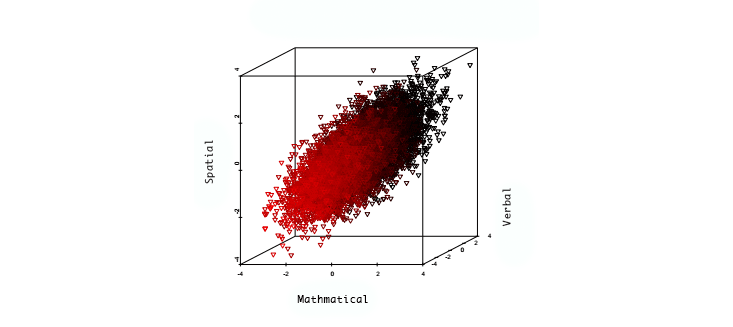
See also Human capital mongering: M-V-S profiles. Note deviation scores (SDs) here are relative to the average among the gifted kids in the sample, not relative to the general population. The people in this sample are probably above average in the general population on each of M-V-S.
The figure below displays the math, verbal and spatial scores of gifted children tested at age 12, and their eventual college majors and career choices. This group is cohort 2 of the SMPY/SVPY study: each child scored better than 99.5 percentile on at least one of the M-V sections of the SAT.


Scores are normalized in units of SDs. The vertical axis is V, the horizontal axis is M, and the length of the arrow reflects spatial ability: pointing to the right means above the group average, to the left means below average; note the arrow for business majors should be twice as long as indicated but there was not enough space on the diagram. The spatial score is obviously correlated with the M score.

Upper right = high V, high M (e.g., physical science)
Upper left = high V, lower M (e.g., humanities, social science)
Lower left = lower V, lower M (e.g., business, law)
Lower right = lower V, high M (e.g., math, engineering, CS)

Big Chickens


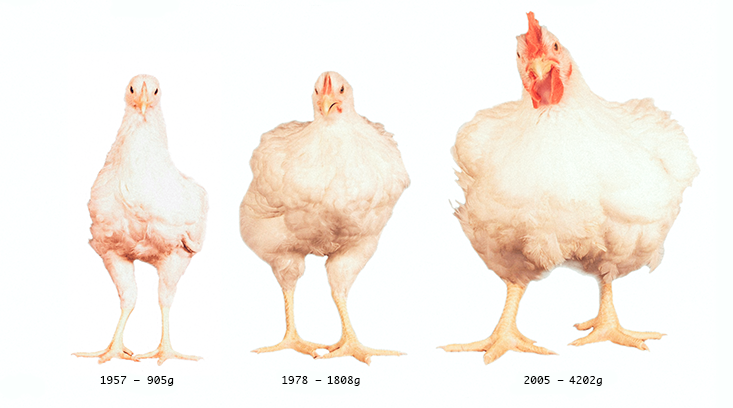
More evidence that common genetic variants can produce many standard deviations of change in average phenotype. Also, while wild chickens lay ~1 egg per month, modern agricultural types lay ~1 per day.

The study is described in more detail here. Thanks to Carl Shulman for the link.

See also Plenty of room at the top and sections 3.1 and 3.3 of On the genetic architecture of intelligence and other quantitative traits.

Wednesday, October 01, 2014

Adventures in the high dimensional space of genomes


2000+ views in 4 months is not bad considering that this is a genomics paper but uses terms like phase transition, sparsity, L1-penalized regression, Gaussian random matrices, etc. I wish I knew how many views the arXiv and BioMed Central versions of the paper have received. Related posts.
Dear Dr Hsu,

We thought you might be interested to know how many people have read your article:

Applying compressed sensing to genome-wide association studies
Shashaank Vattikuti, James J Lee, Christopher C Chang, Stephen D H Hsu and Carson C Chow
GigaScience, 3:10 (16 Jun 2014)
http://www.gigasciencejournal.com/content/3/1/10

Total accesses to this article since publication: 2266

This figure includes accesses to the full text, abstract and PDF of the article on the GigaScience website. It does not include accesses from PubMed Central or other archive sites (see http://www.biomedcentral.com/about/archive). The total access statistics for your article are therefore likely to be significantly higher. ...
My guess is still that it will take some time before these methods become widely understood in genomics.
Crossing boundaries: ... In a similar way Turing found a home in Cambridge mathematical culture, yet did not belong entirely to it. The division between 'pure' and 'applied' mathematics was at Cambridge then as now very strong, but Turing ignored it, and he never showed mathematical parochialism. If anything, it was the attitude of a Russell that he acquired, assuming that mastery of so difficult a subject granted the right to invade others.

PS I will be at the ASHG meeting in San Diego later this month along with (I think) all of the other authors of the paper. Vattikuti will be giving a poster session.

Saturday, September 27, 2014

Twins reared apart


For those interested in studies of identical twins reared apart, see IQ Similarity of Twins Reared Apart: findings and responses to critics, Bouchard (1997). A question sometimes raised by critics concerns the extent to which twins reared apart actually experienced different environments. Norms of reaction, GxE interactions, and other (conceptually trivial but potentially obfuscatory) topics are also discussed.

Susan Farber wrote a 1981 book that was critical of twin studies. Click below for larger image.


See also Heritability 2.0.

Monday, September 22, 2014

Piketty on Capital


Piketty on EconTalk (podcast) -- a lively discussion between Russ Roberts and guest Thomas Piketty. See earlier post here.
Piketty: ... to summarize very quickly our conclusion, we feel that the theory of marginal productivity is a bit naive, I think for this top part of the labor market. That is to say when a manager manages to get a pay increase from $1 million a year to $10 million a year, according to the textbook based on marginal productivity, this should be due to the fact that his marginal contribution to the output of his company has risen from 1 to 10. Now it seems a bit naive. It could be that in practice individual marginal productivities are very hard to observe and monitor, especially in a large corporation. And there is clearly strong incentives for top managers to try to get as much as they can.

... Now, when the top tax rate is 82%, now of course you always want to be paid $1 million more, but on the margin when you get a pay increase of $1 million, 82% is going to go straight to the Treasury, so your incentive to bargain very aggressively and put the right people in the right compensation committee are going to be not so strong. And also your shareholders, your subordinates, maybe will tend to tell you, look, this is very costly. Whereas when the top tax rate goes down to 20, 30% or even 40%, so you keep 2/3rds or 60% of the extra $1 million for you, then the incentives are very, very different. Now, this model seems to explain part of what we observe in the data. In particular, it's very difficult to see any improvement in the performance of managers who are getting $10 million instead of $1 million. When we put together a data base with all the publicly traded companies in North America, Europe, Japan, trying to compare in the companies that are paying their managers $10 million instead of $1 million, it's very difficult to see in the data any extra performance.

... But let me make clear that I love capital accumulation and I certainly don't want to reduce capital accumulation. The problem is the concentration. So let me make very clear that inequality in itself is of course not a problem. Inequality can actually be useful for growth. Up to a point. The problem is when inequality of wealth and concentration of wealth gets too extreme, it is not useful any more for growth. And it can even become bad, because it leads to high perpetuation of inequality over time, so it can reduce social mobility. And it can also be bad for the working or for the democratic institutions. So where is the tipping point--when is it that inequality becomes excessive? Well, I'm sorry to tell you that I don't have a formula for that.

... In the United States right now, the bottom 50% of the population own about 2% of national wealth. And the next 40% own about 20, 22% of national wealth. And this group, the middle 40%, the people who are not in the bottom 50% and who are not in the top 10%, they used to own 25-30% of national wealth. And this has been going down in recent decades, as shown by a recent study by Saez and Zucman and now is closer to 20, 22%. Now, how much should it be? I don't know. I don't know. But the view that we need the middle class share to go down and down and down and that this is not a problem as long as you have positive growth, I think is excessive. You know, I think, of course we need entrepreneurs. I'm not saying, look, if it was perfect equality the bottom 50% should own 50% and the next 40% should own 40. I am not saying that we should have this at all. I'm just saying that when you have 2% for the bottom 50 and 22 for the next 40, you know, the view that we cannot do better than that [[ because ]] you won't have entrepreneurs any more, you won't have growth any more, is very ideological.

... I am actually a lot more optimistic than what some people seem to believe. I'm very sorry some people feel depressed after they read my book because after all this is not the way I wrote it. In fact, I think there are lots of reasons to be optimistic. For instance, one good news coming from the book is that we've never been as rich in terms of net wealth than we are today in developed countries. And we talk all the time about our public debt, but in fact our private wealth as a fraction of GDP has increased a lot more than our public debt as a fraction of GDP, so our national wealth, the sum of private and public wealth, is actually higher than it has ever been. So our countries are rich. It is our governments that are poor, which is a problem; but it raises issues of organization and institution but that can be addressed.

Ivy admissions discussed by parents of gifted kids


At this link you can find pages of discussion about Ivy admissions, stimulated at least in part by Pinker's recent article (see here and here), among parents of highly gifted children. Most of the discussants realize that there is a lot of room in the tail beyond the SAT ceiling. (Hint: parents of gifted kids tend to be fairly sharp themselves ... I wonder why? ;-)

I am not one of the commenters on the thread. Bonus points if you click the link above and read through to the Bezos quote ;-)
####
I suspect the 10 percent comment means something along the lines of 10 percent have been Intel semifinalists, have published significant research, qualified for USAMO, etc. That doesn't mean that the other 90 percent are dumb jocks and clueless legacies. The 90 percent probably includes some very bright, gifted kids, but they haven't cured cancer (not yet at least).
It means that 5%-10% are selected on academic merit alone. The rest are selected on a combination of factors. They may (mostly) have quite high academic merit, but other factors are considered, and so the overall academic merit of the class, though high, is less than it would have been if academic merit played a larger role in admissions. Students are admitted who are less academically meritorious than some who are rejected.

####

Regardless of what colleges supposedly should do, and what they do do, there is still the inescapable fact that SAT/ACT test have too low a ceiling, and the colleges are missing a huge amount of information about the academic ability of their applicants, and there is no excuse for them not actively pushing for harder tests.

####

They have a very good reason for refusing harder tests--it restricts their freedom. The first goal for colleges are self preservation and growth, hence the preference for legacies and athletics, both of which fuel alumni donations. But once self-preservation and growth has been achieved, college believe themselves to be forces for social engineering, helping right what they see as wrong in society.

####

Maybe it isn't about a harder test. Let's say that current perfect scores get you a group at a top school with IQs of 135+. Maybe it is 140+. With a different test, do you get 150+. But do you get a group that you want? Do they have the social skills to have a good mix, good clubs? There are factors that you want to have a certain type of school whether you are Harvard or Penn State. Harvard doesn't want a whole school that could pursue graduate work in Physics. They want fencing teams and rowing and a football team to play Yale. So for those of you wishing for a harder test, what does that mean to the student body, the college experience if you don't take into account all the other things. Because how much does it change if your roommate has an IQ of 175 in math, but 125 in ELA or 145 overall? I can see MIT wanting the 175 in math but Ivy's? Do you really want your kid going to a school where they just sit and have deep discussions about theories with other students?

####

But that assumes that those people are only interested in their peculiar "pointy" things. And that PG people lack social skills. Which is where my A versus B archetypes came from to begin with. Assume that they are BOTH HG+.

HG+ people come in a lot of different varieties there.

Just because someone has a FSIQ of 150+ doesn't mean that s/he is necessarily passionate about particle physics. It might mean that s/he is capable of learning it, but even that probably depends on the individual.

[[ IIUC, PG = Profoundly Gifted ; HG = Highly Gifted ]]

####
Do you really want your kid going to a school where they just sit and have deep discussions about theories with other students?
Where they just talk about big ideas? No. But I suspect that no one talks about nothing but big ideas, so the question is exaggerated.

As for a place where talking about big ideas is a normal part of the culture, yes, absolutely. Isn't that supposed to be the point about being at a place that calls itself a top-tier university --- that the people there are very bright and interested in big ideas in science, philosophy, history, and so on?

Saturday, September 20, 2014

How to build the future

I just bought 10 copies for my team at MSU. More here. The book is based on Thiel's Stanford class CS 183: Startup -- see course notes.

Earlier posts on Thiel.

Blog Archive

Labels